1926 Yellowstone Postcard: Asahel Curtis Northern Pacific
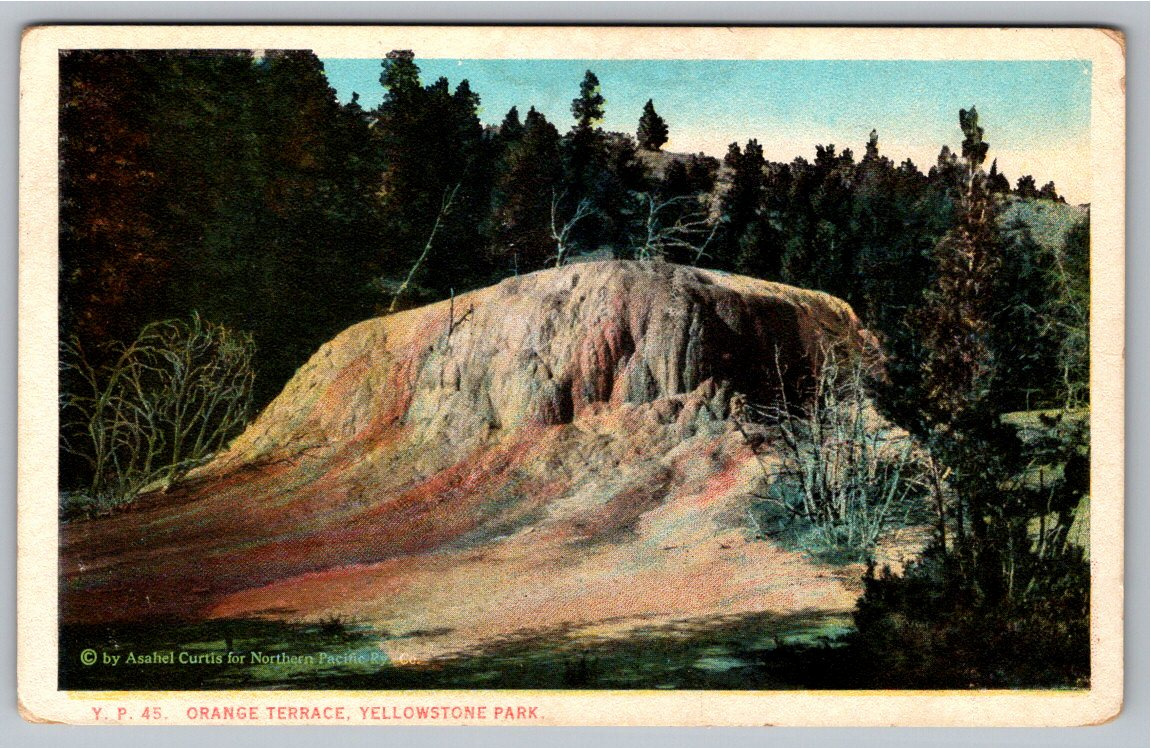
📸 Click any thumbnail to inspect Front, Back & Angles (2 Photos)
As an eBay Partner, we may earn a commission if you make a purchase.
Item Specifications
- Era: 1920s White Border
- Photographer: Asahel Curtis
- Publisher: Bloom Bros. Co. / Northern Pacific Railway
- Location: Mammoth Hot Springs, Yellowstone
- Subject: Orange Terrace Travertine Mound
- Postmark Date: August 21, 1926
- Category: Postcards & Ephemera
- Format / Type: Vintage Postcards
Looking for Modern Alternatives?
Explore top-rated, modern Postcards & Ephemera and related historical accessories on Amazon.
Shop Postcards & Ephemera on Amazon →As an Amazon Associate, we earn from qualifying purchases.
Historical Context & Overview
During the roaring twenties, the American West beckoned travelers with promises of pristine wilderness and geothermal wonders. At the forefront of marketing this natural spectacle was the Northern Pacific Railway, which famously branded Yellowstone as "Wonderland." To capture the scale and rich colors of the nation's first national park, the railway commissioned famed Pacific Northwest photographer Asahel Curtis. This captivating 1926 postcard featuring the Orange Terrace at Mammoth Hot Springs serves as a remarkable testament to Curtis's eye for composition and the railway's golden age of tourism promotion.
Asahel Curtis and the Vision of the American West
While his brother Edward S. Curtis earned historical renown for photographing Native American cultures, Asahel Curtis carved out an extraordinary legacy as a landscape and documentary photographer. Based in Seattle, Asahel spent decades documenting the economic development, mountain ranges, and national parks of the Pacific Northwest. His partnership with the Northern Pacific Railway produced some of the most iconic commercial photography of the early twentieth century.
For this composition, designated as item Y.P. 45 in the series, Curtis focused on the striking thermal formations near Mammoth Hot Springs. The image captures the vibrant orange, red, and golden hues created by thermophilic algae and mineral deposits flowing over the massive travertine mound. Through careful hand-coloring and print preparation, the postcard highlights the contrast between the surreal, steaming mineral dome and the deep green evergreen forests rising in the background.
The Geology of Orange Spring Mound
Known today primarily as Orange Spring Mound, this geological feature in Yellowstone's Mammoth Hot Springs area is built from calcium carbonate precipitate, commonly known as travertine. Superheated underground water saturated with dissolved limestone rises along fault lines. As the water emerges at the surface and cools, carbon dioxide gas escapes, causing calcium carbonate to precipitate out and form delicate, bulbous terraces.
The distinctive warm coloration is produced by cyanobacteria and algae that thrive in the cascading hot waters. As subterranean plumbing shifts over decades, water flow changes, causing inactive areas of the mound to dry into greyish-white rock while newly active vents paint the limestone in brilliant orange and crimson streaks. Curtis’s photograph captures the feature during a period of vigorous growth in the mid-1920s.
A Postal Artifact of a 1926 Yellowstone Road Trip
Beyond its photographic artistry, this physical card preserves a personal snapshot of early automobile and rail travel in the American Intermountain West. Postmarked in Preston, Idaho on August 21, 1926, the reverse carries a 1-cent green George Washington stamp and a handwritten note from a traveler named "J.L.M." bound for Salt Lake City after departing Yellowstone the previous day.
Printed by Curt Teich under the "C.T. American Art" line for Minneapolis-based distributor Bloom Bros. Co., the card displays classic 1920s white-border design characteristics. For collectors of National Park ephemera, Northern Pacific Railway memorabilia, and early Western photography, this authentic 1926 postcard bridges geology, fine art, and human history in a single handheld treasure.