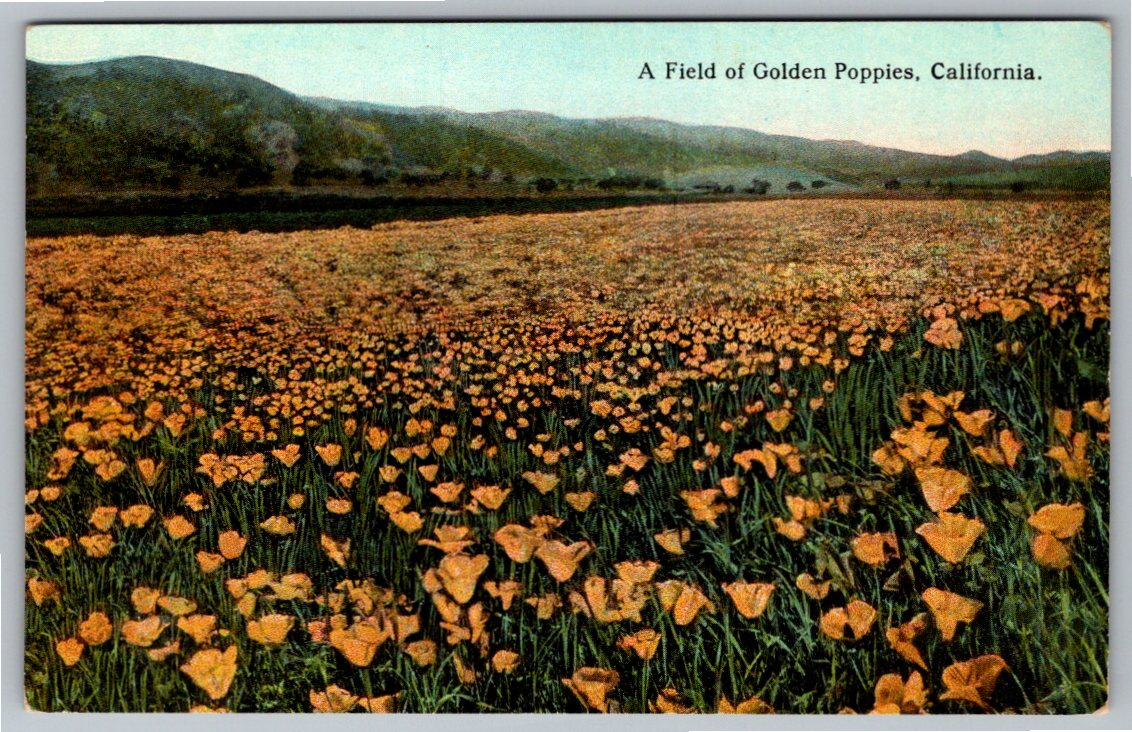
1908 California Field of Golden Poppies Antique Landscape
📸 Click any thumbnail to inspect Front, Back & Angles (2 Photos)
As an eBay Partner, we may earn a commission if you make a purchase.
Item Specifications
- Era: Divided Back (1907-1915)
- Publisher: Cardinell-Vincent Co.
- Location: California
- Subject: Golden Poppies Landscape
- Originality: Original Antique
- Postmark Status: Unposted
- Category: Postcards & Ephemera
- Format / Type: Vintage Postcards
Looking for Modern Alternatives?
Explore top-rated, modern Postcards & Ephemera and related historical accessories on Amazon.
Shop Postcards & Ephemera on Amazon →As an Amazon Associate, we earn from qualifying purchases.
Historical Context & Overview
The Golden State's Emblem in Early 20th Century Print
At the turn of the twentieth century, the breathtaking expanse of California’s landscape captured the imagination of travelers across North America. Central to this visual fascination was the California Golden Poppy (Eschscholzia californica), which was officially designated as the official state flower of California in 1903. Wild, sweeping superblooms blanketed the valleys and coastal hills, transforming rolling pasturelands into shimmering seas of vibrant amber and orange. This circa 1908 vintage postcard titled A Field of Golden Poppies, California preserves a prime historical example of how early publishers immortalized the state’s natural botanical splendor.
Cardinell-Vincent Company and San Francisco Publishing
This particular view was printed and distributed by the Cardinell-Vincent Company, a prominent postcard publisher headquartered in San Francisco. Rising to prominence during the rebuilding efforts following the devastating 1906 San Francisco earthquake and fire, Cardinell-Vincent became a dominant force in West Coast view card publishing. The firm specialized in high-quality landscape photo-chromes, promotional viewbooks, and souvenirs aimed at tourists arriving on expanding transcontinental rail lines. By featuring pristine natural scenes such as lush poppy fields framed by rolling foothills, Cardinell-Vincent actively helped build the romantic image of California as an agrarian paradise overflowing with natural wealth and year-round sunshine.
The Golden Age of the Divided Back Postcard
Technically categorized as a Divided Back postcard, this piece dates precisely to the "Golden Age of Postcards" in the United States (1907–1915). Prior to March 1, 1907, Post Office regulations mandated that the back of a postcard could only be used for the recipient's address, forcing senders to scribble messages across the front artwork. Once the U.S. Postmaster General permitted a vertical dividing line on the back—allocating the left side for correspondence and the right for the address—publishers could print full-bleed, unmarred pictorial imagery across the front.
The imagery on the front of this postcard displays the classic tinting processes of the era. Black-and-white photographic negatives were meticulously hand-colored or lithographically rendered with soft greens, earthy browns, and warm golden hues. These subtle color gradients successfully conveyed the sun-drenched atmosphere of the California countryside to recipients living in eastern industrial cities.
Preservation and Collector Value
For paper ephemera collectors and historians of West Coast Americana, early California floral and landscape postcards represent an enduring genre. Unposted examples retaining clean backs, sharp publishers' insignia, and bright original pigments—such as this Cardinell-Vincent production—offer an authentic window into early 20th-century printing techniques and tourism history. As open agricultural fields have given way to modern municipal development across California, historical depictions of pristine early poppy fields serve as valuable ecological records of a bygone landscape.