1930s First Baptist Church Columbia SC Secession Site Linen
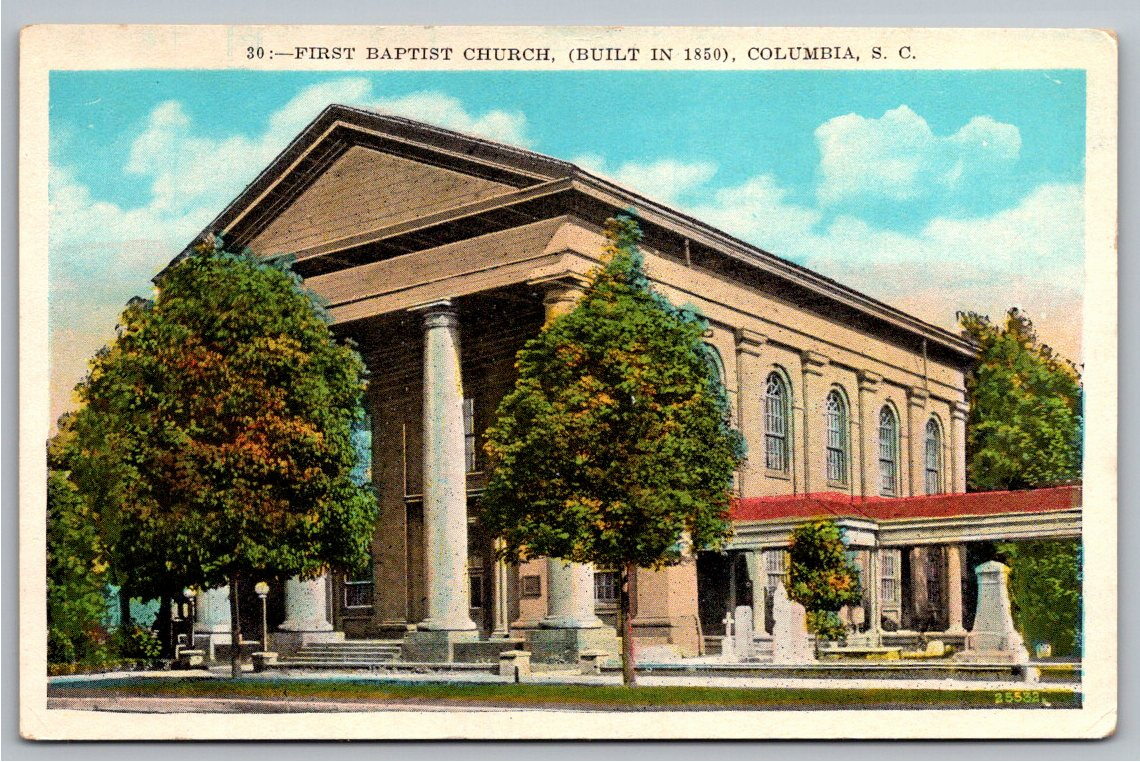
📸 Click any thumbnail to inspect Front, Back & Angles (2 Photos)
As an eBay Partner, we may earn a commission if you make a purchase.
Item Specifications
- Era: 1930s Linen
- Publisher: Asheville Post Card Co.
- Location: Columbia, South Carolina
- Subject: First Baptist Church (Secession Site)
- Condition: Unused Vintage
- Originality: Original
- Category: Postcards & Ephemera
- Format / Type: Printed Postcards
Looking for Modern Alternatives?
Explore top-rated, modern Postcards & Ephemera and related historical accessories on Amazon.
Shop Postcards & Ephemera on Amazon →As an Amazon Associate, we earn from qualifying purchases.
Historical Context & Overview
An Architectural and Historical Landmark of Columbia, South Carolina
Constructed in 1850 on the corner of Hampton and Sumter Streets in Columbia, South Carolina, the First Baptist Church stands as a monumental example of mid-19th-century Greek Revival ecclesiastical architecture. Designed with imposing columns, a grand pediment, and noble proportions, the sanctuary captured the solemn civic aesthetic of the antebellum South. Beyond its architectural significance, the sanctuary occupies a pivotal position in American history as the initial gathering place for South Carolina's Secession Convention.
The Secession Convention of 1860
On December 17, 1860, delegates from across South Carolina convened within the sanctuary of First Baptist Church to organize the state’s official Secession Convention. Spurred by Abraham Lincoln’s election to the presidency, this fateful assembly marked the opening chapter of South Carolina's departure from the Union—making it the first southern state to take formal steps toward secession. Although rumors of a local smallpox outbreak prompted delegates to adjourn after their first meeting and relocate to Charleston to sign the Ordinance of Secession, First Baptist Church remains forever linked to the momentous events that presaged the American Civil War.
Survival Amid the Burning of Columbia
The church’s survival through the final months of the Civil War is the subject of enduring historical lore. In February 1865, Union forces under General William Tecumseh Sherman entered Columbia, laying burn to significant portions of the state capital. According to traditional accounts—summarized on the reverse printed text of this vintage souvenir—when federal soldiers arrived seeking "the Baptist Church" where secession was organized, an astute local resident directed them toward an older, wooden building nearby. Union troops set fire to the wooden structure, unknowingly leaving the magnificent 1850 brick sanctuary untouched.
Mid-Century Lithography by Asheville Post Card Co.
This original vintage linen postcard was manufactured by the renowned Asheville Post Card Company of Asheville, North Carolina, during the 1930s linen era. Printed on textured, high-rag paper with embossed finish lines, the card displays the vivid color palette and painterly retouching characteristic of early-to-mid 20th-century American printmaking. Featuring a detailed historical caption on the reverse, this card serves as both a compelling visual document of Southern architectural heritage and an authentic piece of mid-century postal ephemera.