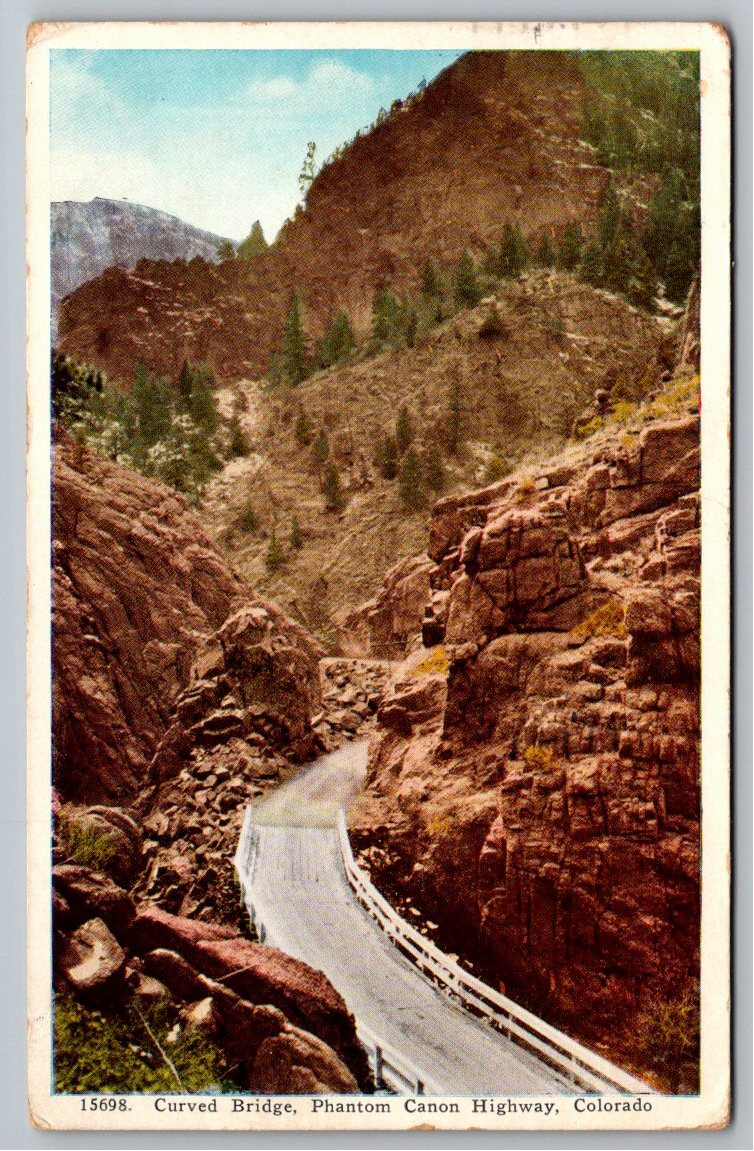
1937 Phantom Canyon Highway Colorado Curved Bridge Linen Postcard
📸 Click any thumbnail to inspect Front, Back & Angles (2 Photos)
As an eBay Partner, we may earn a commission if you make a purchase.
Item Specifications
- Era: 1930s Linen
- Location: Phantom Canyon, Colorado
- Subject: Curved Bridge & Highway
- Postmark Date: 1937
- Originality: Original Vintage Postcard
- Condition: Postally Used
- Category: Postcards & Ephemera
- Format / Type: Printed Postcards
Looking for Modern Alternatives?
Explore top-rated, modern Postcards & Ephemera and related historical accessories on Amazon.
Shop Postcards & Ephemera on Amazon →As an Amazon Associate, we earn from qualifying purchases.
Historical Context & Overview
Winding through the rugged granite gorges of central Colorado, the Phantom Canyon Highway remains one of the American West's most dramatically engineered scenic routes. Originally constructed in the late nineteenth century as the narrow-gauge Florence and Cripple Creek Railroad, the corridor served as a vital lifeline transporting gold ore down from the bustling Cripple Creek Mining District. After torrential flooding dismantled the rail line in 1912, local civic leaders repurposed the right-of-way into a mountain highway, creating an awe-inspiring roadway defined by narrow canyon walls, hand-carved tunnels, and timber trestles spanning steep ravines.
Engineering the Phantom Canyon Road
This vintage linen postcard captures a famous landmark along the stretch: the Curved Bridge over the Phantom Canyon Highway. Designed to navigate the treacherous, tight curves of the canyon floor, this wooden trestle structure mirrored the tight radiuses originally built for steam locomotives. Drivers during the 1930s experienced an exhilarating journey as they maneuvered unpaved roads flanked by towering, rust-colored cliffs and pine-dotted mountain slopes. The photograph highlights the sheer scale of the natural rock formations, illustrating the tension between human engineering and the unyielding wilderness of Colorado's Front Range.
The Aesthetics of the Linen Era
Produced during the golden age of American postcard manufacturing, this piece showcases the distinctive characteristics of mid-century linen printing. Popularized in the 1930s, linen postcards were printed on paper stock with a high rag content, giving them a woven, tactile texture similar to fine cloth. This absorbent surface allowed publishers to use heavily saturated aniline dyes, resulting in vivid turquoise skies, deep burnt-sienna rock faces, and intense forest greens. These bright, romanticized color schemes captured the imagination of road-tripping Americans who flocked to western destinations following the expansion of the US highway system.
A Portal to 1937 Personal History
Adding significant historical interest, the reverse side of this postcard is postmarked November 2, 1937, featuring a classic green one-cent George Washington postage stamp. Hand-written in crisp fountain pen ink, the sender recounts a personal journey across the Midwest, detailing arrival times in Wichita via bus, family correspondence, and everyday domestic life before addressing the card to recipients in Louisburg, Kansas. The printed description on the reverse notes that Phantom Canyon connects Florence to the Cripple Creek district and recommends combining the trip with Skyline Drive and the Royal Gorge, capturing the golden age of Rocky Mountain tourism.
Collector Value and Ephemera Significance
For collectors of Western Americana, Colorado postal history, and early motoring ephemera, this 1937 postcard represents a pristine snapshot of Depression-era travel culture. It seamlessly bridges the transition from late Victorian rail industrialism to early highway motoring, preserved through the rich color reproduction and personal storytelling unique to mid-century vintage postcards.