1947 Yosemite Canvas Tent Cabin Camping Vintage Photo
📸 Click any thumbnail to inspect Front, Back & Angles (2 Photos)
🔗 Embed / Cite This Archival Image (Free with Attribution)Get HTML Code
© USA RESELL. Bloggers, historians, and website owners may embed this image for free by copying the HTML code below (which includes the required credit link back to this page):
USA RESELL is a living historical archive. Because original artifacts are one-of-a-kind and source records change rapidly, use the button above to check live marketplace availability or locate surviving examples. As an eBay Partner, we may earn a commission on qualifying purchases.
Item Specifications
- Type: Photograph
- Original/Licensed Reprint: Original
- Date Of Creation: 1947
- Time Period Manufactured: 1940-1949
- Era: Post-War (1946-1960)
- Subject: Camping Yosemite National Park Canvas Tent Cabin Forest
- Category: Vintage Photography
- Format / Type: Vintage Photographs
Historical Context & Overview
Mid-Century Wilderness Lodging in Yosemite Valley
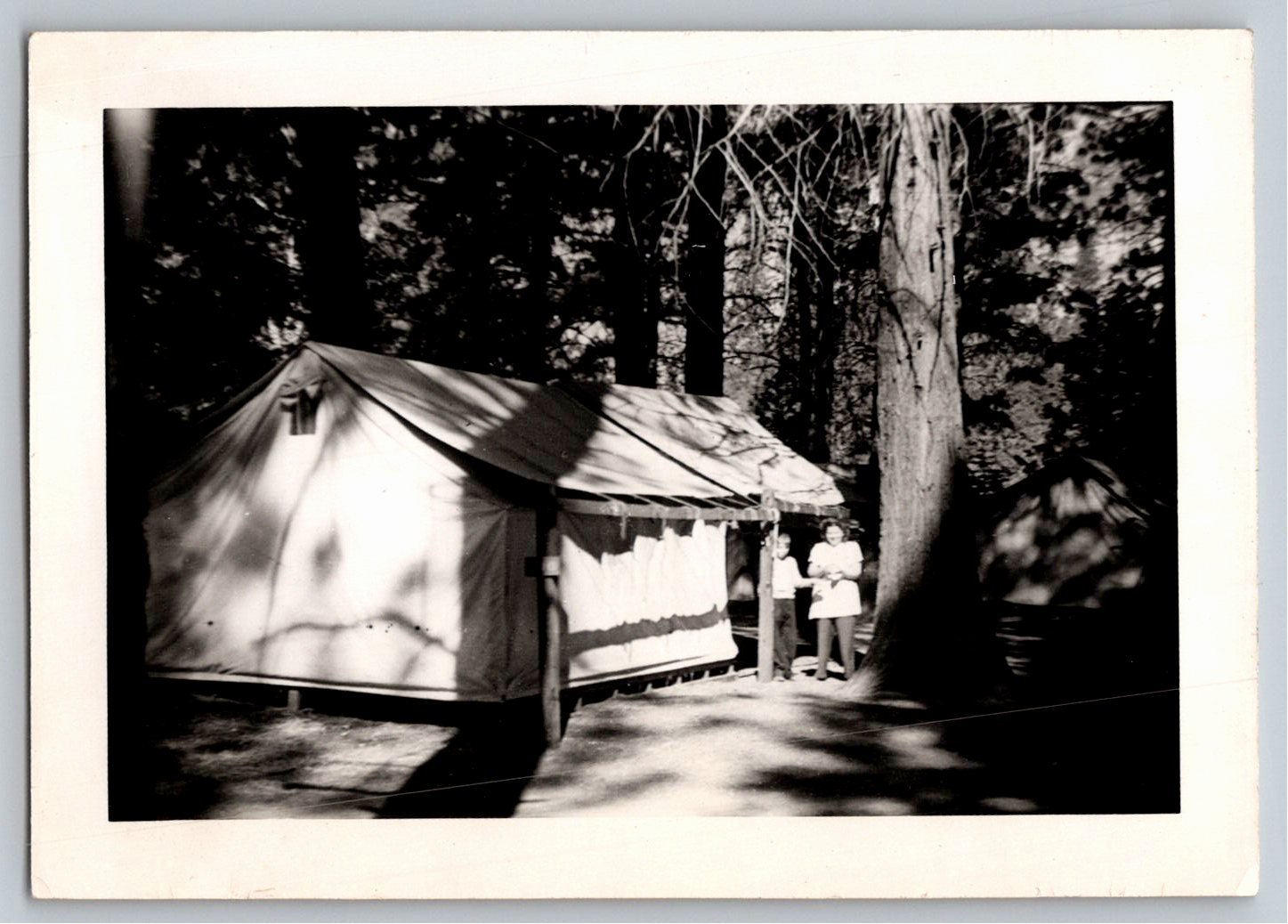
This authentic 1947 black-and-white gelatin silver photograph presents an evocative window into post-World War II outdoor recreation within Yosemite National Park. Framed against the dense timberland of the Sierra Nevada, the central focus of the composition is a substantial canvas wall tent cabin raised upon a wooden sub-floor. Distinctive patterns of sun and shadow dapple the sloping roof and fabric walls, filtering through the surrounding canopy of towering evergreen pines. Next to the rustic timber frame supporting the sheltered entryway, two vacationers pose comfortably, fully immersed in their summer holiday.
The scene highlights the classic accommodations that defined Yosemite's public hospitality during the mid-20th century, particularly within communal lodging grounds such as Camp Curry. These heavy-duty canvas cabins provided an accessible balance between true backcountry ruggedness and organized comfort, offering motorists and families a dry shelter complete with wooden framing, decking, and screened ventilation. The peaceful forest backdrop captures the quiet allure that drew thousands of Americans westward to California’s natural landmarks following years of wartime travel constraints.
Post-War Tourism and Personal Inscriptions
The immediate post-war era between 1946 and 1950 witnessed an extraordinary renaissance in American road trips, spurred by the lifting of fuel rationing, the expansion of the automotive market, and increased leisure time. Families journeyed en masse to the national parks, documenting their encounters with towering granite cliffs, fragrant pinewoods, and simple campground living. This vernacular snapshot preserves that cultural movement on an intimate scale, illustrating the casual attire and everyday reality of travelers inhabiting temporary timber-and-canvas hamlets deep in Yosemite Valley.
Turned to the reverse, the photograph retains a charming personal provenance preserved in vintage blue ink. The handwritten cursive note reads: "me and Duhie and her tent at Yosemite, July 1947," providing an exact temporal anchor and affectionate context for the two figures visible on the front. Below the script along the lower margin rests a crisp, dark stamped processing number "417," typical of commercial photo-finishing laboratories that developed tourist film rolls during the late 1940s.
Print Characteristics, Condition, and Archival Value
Measuring approximately 4.5 by 3.2 inches, the photograph was produced using classic gelatin silver chemistry on glossy photographic stock, yielding strong contrast, rich tonal gradations, and deep black shadows that define the forest expanse. The print exhibits crisp resolution across the canvas grain and tree bark, framed within clean, unclipped white margins that remain true to original lab specifications. The reverse confirms its status as an authentic private camera snapshot rather than a mass-market photograph, featuring pure paper ground with gentle, natural age toning.
In very good vintage condition, the emulsion shows only minimal handling wear, retaining remarkable clarity and surface luster over seven decades after its exposure. For historians of California tourism, collectors of early National Park Service memorabilia, and enthusiasts of vintage vernacular photography, this snapshot stands as a tangible, historic artifact honoring mid-century American wilderness culture.