1930s Tucson Arizona Saguaro Desert Park Snapshot Photo
📸 Click any thumbnail to inspect Front, Back & Angles (2 Photos)
🔗 Embed / Cite This Archival Image (Free with Attribution)Get HTML Code
© USA RESELL. Bloggers, historians, and website owners may embed this image for free by copying the HTML code below (which includes the required credit link back to this page):
USA RESELL is a living historical archive. Because original artifacts are one-of-a-kind and source records change rapidly, use the button above to check live marketplace availability or locate surviving examples. As an eBay Partner, we may earn a commission on qualifying purchases.
Item Specifications
- City: Tucson
- State: Arizona
- Country: United States
- Era: 1930s
- Subject: Desert Saguaro Cactus Tucson Mountain Park Vernacular Life
- Theme: Americana
- Category: Vintage Photography
- Format / Type: Snapshots
Historical Context & Overview
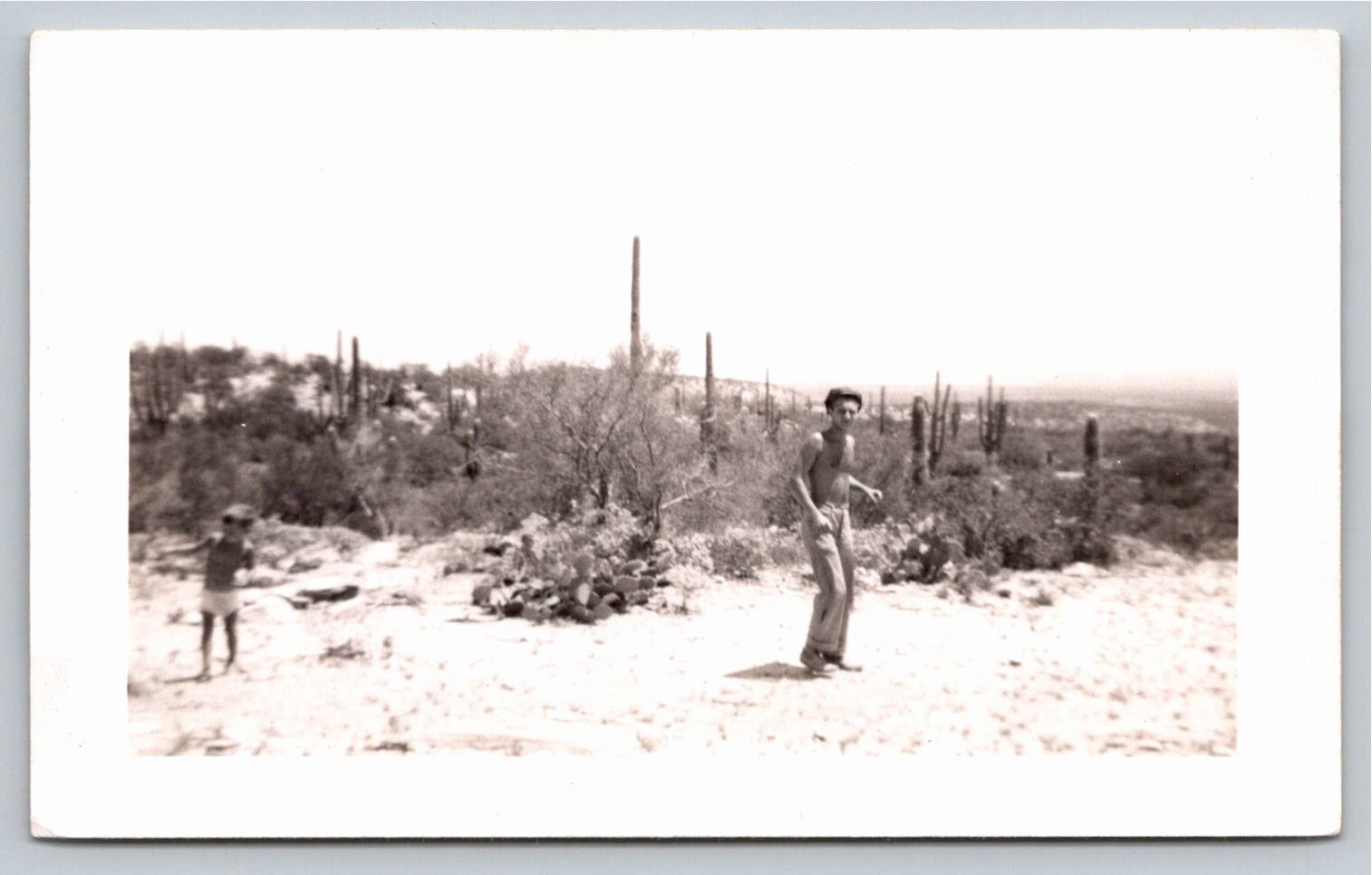
Visual & Historical Overview: A Sunlit Southwestern Vista
This striking original gelatin silver photograph offers an authentic snapshot of life in the American Southwest during the mid-1930s. Captured under the radiant desert sun near Tucson, Arizona, the scene balances human presence with the raw majesty of the Sonoran Desert. In the foreground, a young man clad in work trousers and a traditional newsboy cap stands shirtless upon the caliche-rich hillside, looking directly toward the camera lens. To his left, a young boy in summer shorts pauses on the desert incline, adding an intimate sense of everyday family leisure during the Great Depression era.
Beyond the figures, the rugged topography rolls toward the horizon, punctuated by iconic southwestern flora. Towering saguaro cacti thrust vertically against an expansive, pale sky, flanked by thick clumps of prickly pear, creosote, and desert scrub. The wide landscape framing reveals how communities around southern Arizona embraced outdoor recreation amidst scenic desert preserves during an era defined by economic hardship and simple pastimes.
Regional Geography and Archival Context
The reverse side of the print features period blue ink cursive handwriting reading "Freddie, Manuel / Tucson Park, Ariz." accompanied by a light vintage developer or darkroom stamp "33" near the bottom margin. This inscription firmly ties the location to the scenic public preserves surrounding the city, most likely Tucson Mountain Park, established in the late 1920s to safeguard Pima County’s pristine saguaro habitats. During the 1930s, federal initiatives like the Civilian Conservation Corps (CCC) constructed stone structures, roads, and overlooks across the Tucson Mountains, making these breathtaking desert vistas accessible to everyday residents and travelers alike.
Personal vernacular snapshots such as this one provide historians with invaluable visual ethnography that commercial promotional photographs often missed. The candid postures of Freddie and Manuel reflect an unpretentious moment of regional recreation. In an era when hand-held roll-film cameras like Kodak Brownies were ubiquitous across American households, photographs like this transformed private outings into lasting archival records of community life and natural topography.
Print Medium, Dimensions, and Collector Condition
Printed on authentic vintage silver gelatin paper, the snapshot measures approximately 4.7 by 2.9 inches. It features the characteristic broad, uneven white borders typical of amateur contact printing and period commercial processing laboratories of the interwar decade. The emulsion displays rich tonal depth, moving from sun-drenched highlights across the desert ground to deep earthy shadows within the surrounding vegetation and cactus ridges.
The print remains in remarkable vintage condition, showing only gentle, honest age across its glossy surface without invasive creasing, pinholes, or edge tears. The clean corners and clear reverse inscription make it an appealing artifact for regional historians of Pima County and the Sonoran Desert. It stands as an evocative piece of pre-World War II Americana, ideally suited for collections dedicated to vintage Arizona photography, Southwestern landscapes, and authentic 1930s vernacular culture.