1948 Theatrical Jail Cell Couple Romantic Stage Photo
📸 Click any thumbnail to inspect Front, Back & Angles (2 Photos)
🔗 Embed / Cite This Archival Image (Free with Attribution)Get HTML Code
© USA RESELL. Bloggers, historians, and website owners may embed this image for free by copying the HTML code below (which includes the required credit link back to this page):
USA RESELL is a living historical archive. Because original artifacts are one-of-a-kind and source records change rapidly, use the button above to check live marketplace availability or locate surviving examples. As an eBay Partner, we may earn a commission on qualifying purchases.
Item Specifications
- City: Unspecified
- Country: United States
- Era: 1940-1949
- Subject: Men Women Actors Prison Romance
- Theme: Americana People Theater
- Year of Production: 1948
- Category: Vintage Photography
- Format / Type: Snapshots
Historical Context & Overview
Visual Overview: A Dramatic Prison Encounter
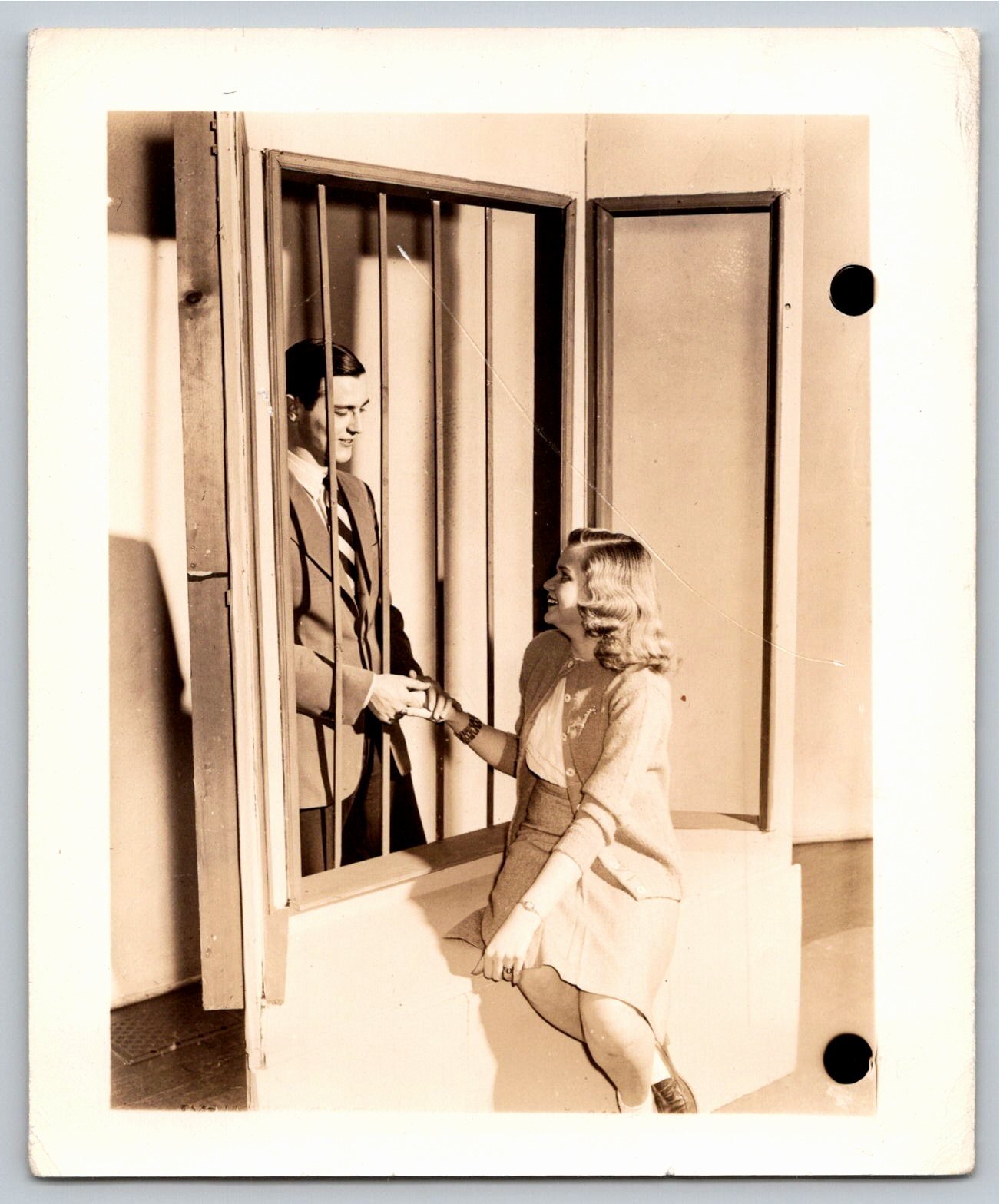
Dating to circa 1948, this striking black-and-white theatrical production still captures an expressive romantic tableau staged behind simulated prison bars. The scene centers on a sharp-dressed young man in a tailored two-piece suit and boldly striped necktie, standing inside an open-timbered jail cell frame. Extending his hand outward through the slender vertical bars, he clasps the hand of a seated young woman who gazes upward toward him with an affectionate, luminous smile. The composition blends narrative melodrama with lighthearted romantic playfulness, evoking the storytelling tropes of post-war stage plays and early television sketches.
The styling of the female subject exemplifies quintessential late-1940s post-war fashion. Her hair is arranged in sculpted rolls and Victory-style waves that frame her face, complemented by a soft knit cardigan sweater over an open-collared blouse and an A-line skirt. Seated gracefully along the painted lower ledge of the faux cell structure, her posture conveys emotional intimacy despite the physical separation implied by the bars. Harsh studio key lighting casts crisp, angular shadows against the stark flat backdrop, accentuating the crafted wood framing and the expressive faces of both performers.
Mid-Century Stagecraft and Studio Ephemera
The physical construction of the set pieces highlights the ingenuity of mid-century community theater, collegiate drama workshops, and regional television sets. Rather than heavy wrought iron, the jail bars and frame are clearly built from light carpentry stock and painted wood, joined with simple hinges visible along the left upright timber. The minimalist environment relies on lighting angles and the actors' emotive body language to establish narrative atmosphere, a hallmark of mid-20th-century amateur stagecraft where budget constraints fostered imaginative minimalism.
During the immediate post-World War II period, local drama societies and regional repertoires flourished across the United States. Productions frequently mixed screwball comedy with light crime drama, giving rise to humorous scenes of law-abiding suitors temporarily locked away while their sweethearts visited. Snapshots like this served multiple archival purposes, acting as rehearsal reference photos, promotional lobby display proofs, or commemorative personal keepsakes preserved in dramatic scrapbooks by the cast members themselves.
Archival Format, Physical Attributes, and Condition
This original vintage artifact is rendered as a traditional gelatin-silver print on semi-gloss photographic paper, measuring approximately 4.0 by 4.9 inches. The reverse remains unprinted and blank, exhibiting a clean white surface with natural age toning around the outer margins. The print demonstrates rich tonal contrast, retaining crisp highlight details on the woman's hair and clothing alongside deep, velvety shadows within the interior of the timbered jail structure.
Physical preservation reflects authentic period storage within an actor's personal production binder or rehearsal scrapbook. Two clean round hole punches are present down the right-hand margin, placed neatly clear of the primary central figures. A faint diagonal surface crease extends across the upper-center quadrant through the cell bars, accompanied by minor handling marks and light edge wear typical of vintage paper ephemera. Despite these honest signs of age, the image retains wonderful display appeal and represents an engaging slice of mid-century Americana, performance history, and vintage romantic photography.