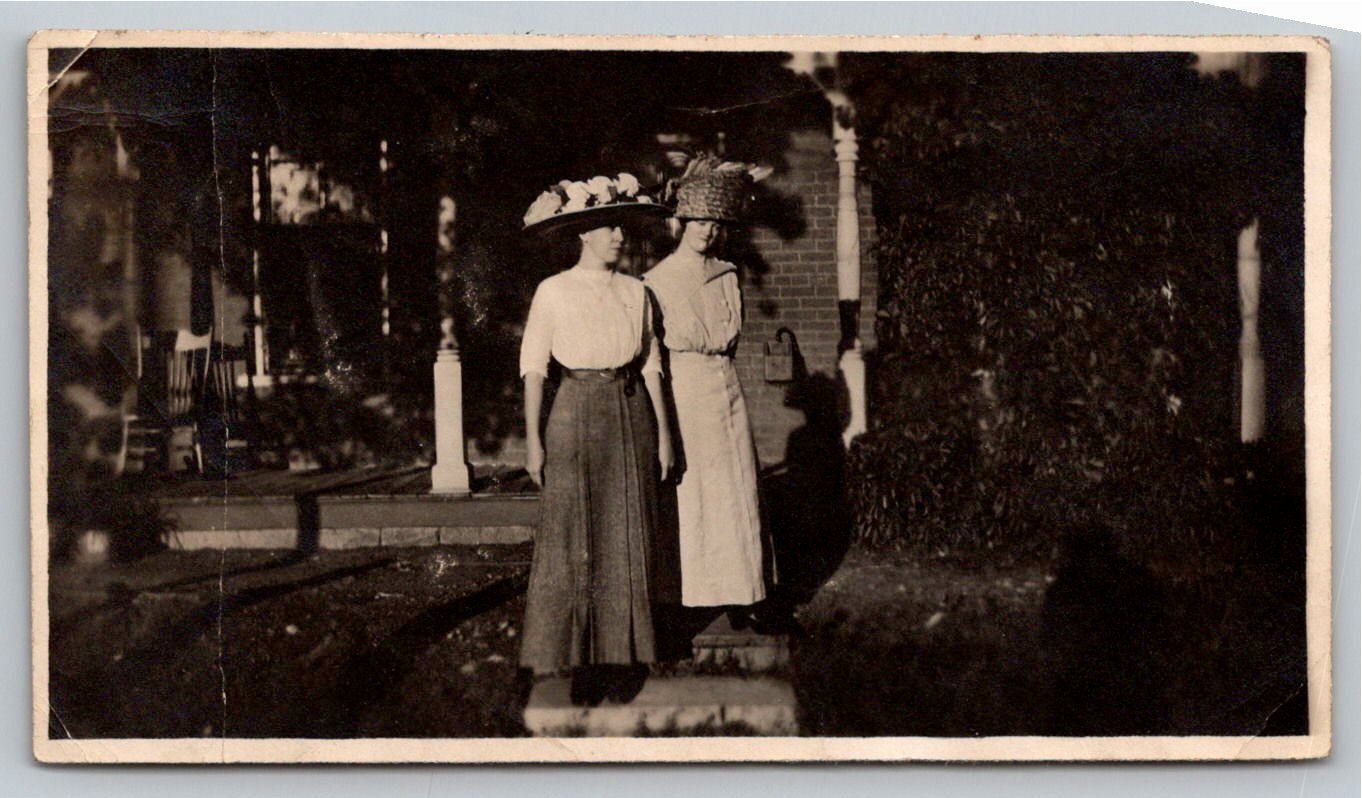
1910 Edwardian Women in Large Hats Porch Vintage Photo
📸 Click any thumbnail to inspect Front, Back & Angles (2 Photos)
🔗 Embed / Cite This Archival Image (Free with Attribution)Get HTML Code
© USA RESELL. Bloggers, historians, and website owners may embed this image for free by copying the HTML code below (which includes the required credit link back to this page):
USA RESELL is a living historical archive. Because original artifacts are one-of-a-kind and source records change rapidly, use the button above to check live marketplace availability or locate surviving examples. As an eBay Partner, we may earn a commission on qualifying purchases.
Item Specifications
- City: Unspecified
- Country: United States
- Era: Edwardian
- Subject: Women Fashion Millinery
- Theme: Fashion
- Year of Production: 1910
- Category: Vintage Photography
- Format / Type: Vintage Photographs
Historical Context & Overview
Visual Elegance and Edwardian Porch Portraiture
This striking original vintage black-and-white photograph offers an intimate glimpse into women's sartorial elegance during the late Edwardian era, circa 1910. Posed gracefully upon outdoor stone porch steps, two fashionable women stand side by side, bathed in direct sunlight while deep, atmospheric shadows frame the surrounding architecture. Behind them, an inviting residential brick facade features classical porch columns, shaded entryways, and dense garden foliage that epitomize early twentieth-century domestic life in the United States.
Central to the composition is the remarkable millinery fashion on display. Both women wear dramatic, wide-brimmed Edwardian hats characteristic of the period—one adorned with abundant floral arrangements and the other boasting woven textures and decorative plumage. Their attire reflects the transitioning silhouettes of the 1900s to 1910s, highlighted by high-collared shirtwaist blouses, tailored waistbands or buckled belts, and graceful, floor-length skirts that cascade smoothly toward the brick step tread.
Millinery Splendor and Early Vernacular Snapshots
The late Edwardian period witnessed the height of the extravagant "picture hat" trend, popularized in theatrical culture and high-fashion magazines of the day. Such grand headwear, often referred to as the Merry Widow style, required significant structural craft, utilizing wire frames, rich fabrics, ribbons, and botanical flourishes. The women depicted here showcase how high-fashion trends rapidly filtered into middle-class vernacular wardrobes, transforming an everyday backyard or porch gathering into a runway of contemporary style.
Beyond its fashion appeal, this print exemplifies the golden age of vernacular snapshot photography. With the proliferation of portable roll-film cameras introduced around the turn of the century, everyday families could effortlessly step outside and preserve fleeting moments of leisure. The casual yet dignified stance of the sitters captures the intersection between formal studio tradition and the burgeoning spontaneous outdoor photography movement that flourished prior to the First World War.
Physical Dimensions, Condition, and Archival Significance
Rendered on authentic silver gelatin photo paper, the piece measures approximately 4.2 by 2.4 inches. Developed with a classic matte finish, it retains fine contrast between the bright whites of the tailored blouses and the deep, rich tonality of the garden shadows. The reverse side remains blank aside from incidental pencil markings and light graphite rubbing, completely free from machine-printed photograph graphics, confirming its status as an authentic personal print.
The photograph presents in good antique condition, showing signs of honest handling consistent with its century-long journey. A subtle vertical handling crease is visible along the left side, accompanied by gentle corner softening and mild, natural age toning along the outer borders. For fashion historians, millinery collectors, and devotees of early American photography, this original Edwardian print stands as a charming, tactile document of early 1900s textile and domestic history.