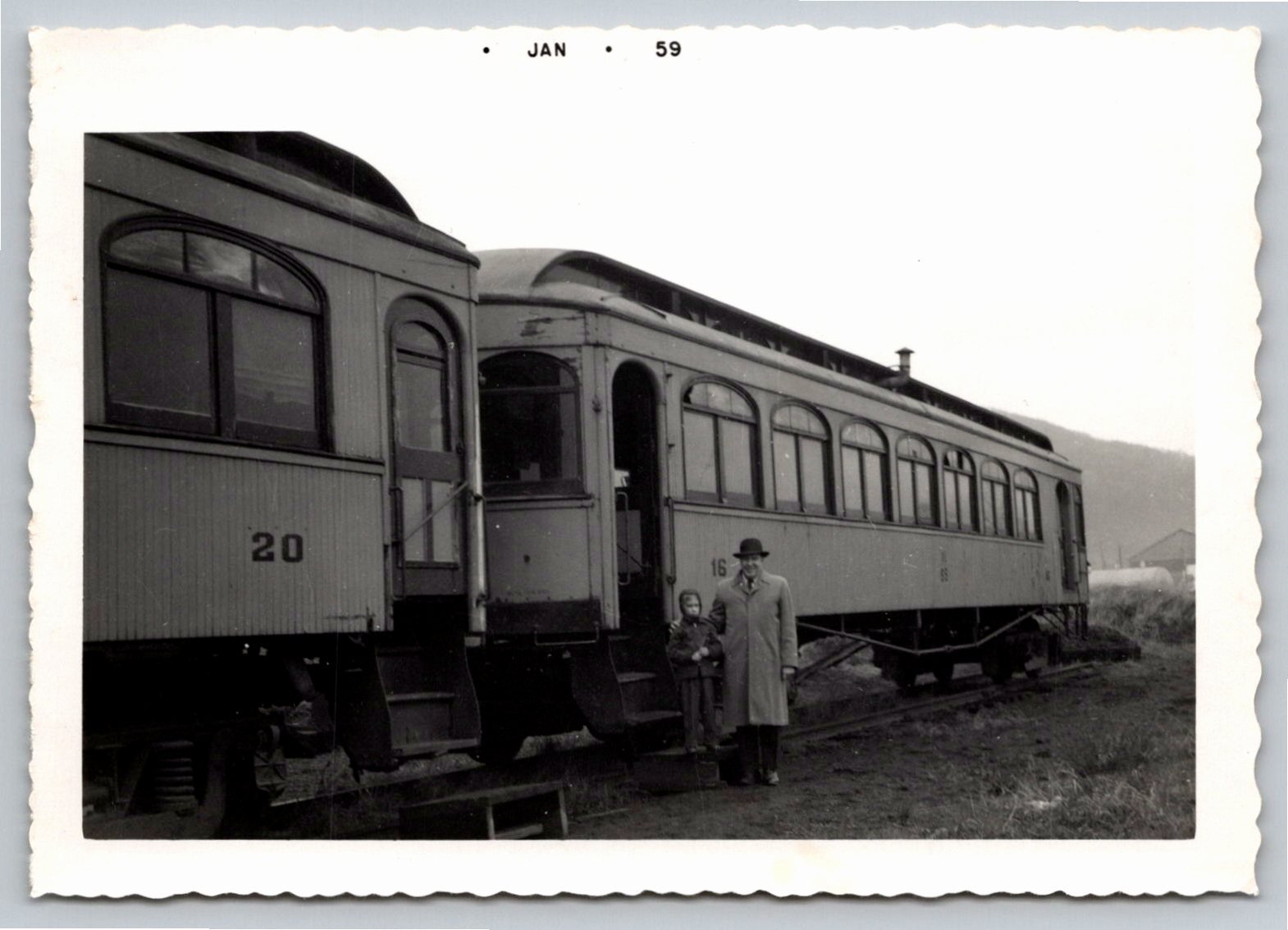
1959 Vintage Electric Interurban Streetcar Trolley Photo
📸 Click any thumbnail to inspect Front, Back & Angles (2 Photos)
🔗 Embed / Cite This Archival Image (Free with Attribution)Get HTML Code
© USA RESELL. Bloggers, historians, and website owners may embed this image for free by copying the HTML code below (which includes the required credit link back to this page):
USA RESELL is a living historical archive. Because original artifacts are one-of-a-kind and source records change rapidly, use the button above to check live marketplace availability or locate surviving examples. As an eBay Partner, we may earn a commission on qualifying purchases.
Item Specifications
- City: Unspecified
- Country: United States
- Era: 1950s
- Subject: Streetcar
- Theme: Transportation
- Year of Production: 1959
- Category: Vintage Photography
- Format / Type: Vintage Photographs
Historical Context & Overview
This original vintage black-and-white snapshot offers a compelling window into mid-century American electric railway preservation and transit heritage. Stamped with a clear top margin date of "JAN 59," the photograph captures two vintage wooden electric interurban streetcars—clearly designated as cars No. 20 and No. 16—resting along a dedicated trackway. Positioned in the foreground, an adult in a formal overcoat and fedora stands beside a young child, providing scale and a personal touch to the impressive industrial machinery behind them.
Historical Context of Interurban Electric Railways
Electric interurban systems revolutionized regional travel across North America during the late 19th and early 20th centuries. Pioneered by innovators like Frank Julian Sprague, these heavy-duty electric streetcars connected rural communities, small towns, and major urban centers long before highway networks and private automobiles became dominant. Operating primarily on overhead wire electrification, interurban cars offered frequent, clean, and reliable transportation for passengers and light freight alike.
By the late 1950s, when this photograph was taken, many original interurban lines had ceased commercial operations, leaving remaining cars to be preserved by early railway historical societies, museological lines, or private enthusiasts. The wooden construction and arched window detailing seen on cars 20 and 16 reflect early 20th-century rolling stock manufacturing techniques, making this image a valuable record of early transit equipment surviving into the post-war era.
Physical Attributes and Condition
Measuring 4.9 by 3.5 inches, this authentic paper snapshot features classic deckled (scalloped) edges, a characteristic finishing technique popular among photo developers during the mid-20th century. The photograph demonstrates strong contrast and clarity across its glossy surface, detailing the wooden paneling, step-wells, and rooflines of both railcars. The reverse side remains blank with light, natural aging along the borders, preserving its original integrity for transit ephemera collectors and railfans.
Mid-Century Photography Craft and Preservation
Produced as a traditional gelatin-silver print, this original snapshot highlights the refined photo-finishing standards of late-1950s photographic labs. The image displays a balanced tonal scale, with silver halide chemistry providing crisp separation between the dark undersides of the streetcar undercarriages, the track ballast, and the bright highlights on the glossy paper surface. Archival care for mid-century paper ephemera of this nature involves housing the photograph in acid-free, inert polypropylene sleeves away from UV light and humidity fluctuations. Proper storage prevents further perimeter age-toning and guards the delicate emulsion layer against fading, maintaining its visual clarity for generations.
Collector Significance in Transit Ephemera
Beyond its visual charm, this 1959 photo holds specialized value for transit historians, railway ephemera collectors, and streetcar preservationists. During the post-WWII era, when municipal trackways were systematically dismantled in favor of expanding highway systems, early railfans took to the field to record surviving interurban rolling stock. Images capturing specific fleet designations like Nos. 20 and 16 offer vital visual documentation for researchers tracing equipment origins, carbody designs, and early trolley museum acquisitions. As a primary source document, this original mid-century snapshot remains an essential addition to any curated historic transportation collection.