Historic 1908 Petticoat Lane Postcard: Kansas City Shopping
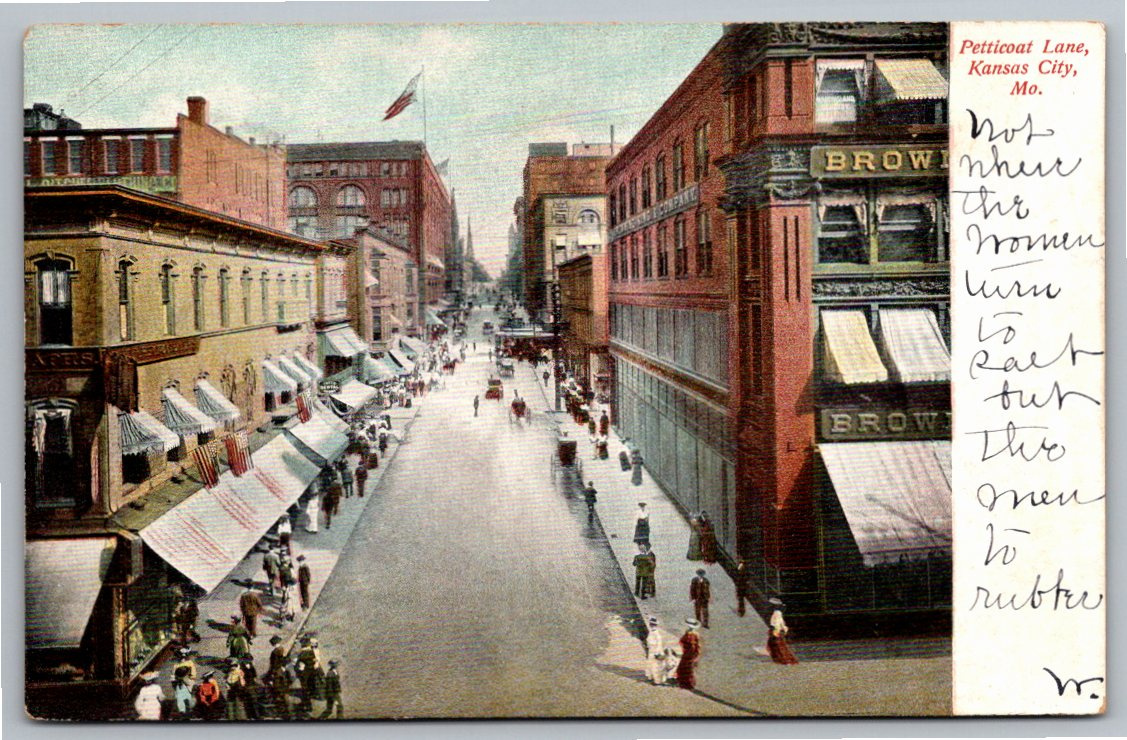
📸 Click any thumbnail to inspect Front, Back & Angles (2 Photos)
As an eBay Partner, we may earn a commission if you make a purchase.
Item Specifications
- Era: Divided Back (1907–1915)
- Year: 1908
- Publisher: S. H. Knox & Co.
- Location: Kansas City, Missouri
- Subject: Petticoat Lane / 11th Street
- Originality: Original Vintage
- Category: Postcards & Ephemera
- Format / Type: Vintage Postcards
Looking for Modern Alternatives?
Explore top-rated, modern Postcards & Ephemera and related historical accessories on Amazon.
Shop Postcards & Ephemera on Amazon →As an Amazon Associate, we earn from qualifying purchases.
Historical Context & Overview
The Bustling Charm of Petticoat Lane in Early 20th-Century Kansas City
At the turn of the twentieth century, Kansas City, Missouri, was rapidly evolving into a prominent Midwestern metropolis. At the heart of its commercial boom was 11th Street, a vibrant stretch between Main and Grand avenues that became nationally famous under the charming moniker "Petticoat Lane." Lined with premier department stores, millinery shops, and dry goods purveyors, this bustling thoroughfare was the indisputable fashion epicenter of the city during the Edwardian era.
The nickname "Petticoat Lane" was born out of local legend and urban wind patterns. The steep topography of downtown Kansas City created strong wind tunnels along 11th Street. As stylishly dressed women navigated the sidewalks, sudden gusts of wind frequently whipped up their long, floor-length skirts, offering brief glimpses of their decorative petticoats beneath. The cheeky nickname caught on so thoroughly that even period postcard publishers embraced the title over the street's official numerical designation.
A Captivating Snapshot of Edwardian Street Life
This color lithograph, produced in 1908, captures Petticoat Lane at the height of its gilded glory. The street scene is alive with movement and detail. Canvas awnings stretch across elegant masonry storefronts to shelter shoppers from the sun, while well-dressed pedestrians in suits, bowler hats, and elaborate Edwardian gowns stroll the wide sidewalks. Down the center of the avenue, early automobiles, horse-drawn carriages, and streetcars share the paving, documenting a unique moment of technological transition in American transportation.
Adding an extraordinary layer of personal history to this particular piece is the handwritten marginalia along the right side of the image. The sender penned a playful, humorous observation directly on the front border: "Not where the women turn to look but the men to rubber," referencing the century-old slang term "rubbernecking" to poke fun at male passersby lingering on the famous windy street corner.
Printing Quality and Postcard History
Published by S. H. Knox & Co. and printed in Germany, this card exemplifies the superior color printing techniques of the early postcard era. Before World War I, German lithographers set the global standard for postcard art, utilizing fine-grain chromolithography that imbued urban view cards with rich depth, subtle shading, and lifelike hues.
The Divided Back Era (1907–1915)
The reverse side of the card features a classic divided back layout, which was authorized by the United States Postal Service in early 1907. Prior to this change, message writing was strictly prohibited on the address side of American postcards. The divided back format revolutionized postal communication by allowing senders to write personal notes on the left half of the card back while reserving the right half exclusively for the recipient's address. Addressed to Miss Annie Mansfield in Shannon, Kansas, this original souvenir remains a cherished artifact of early Midwestern history and early 20th-century retail culture.