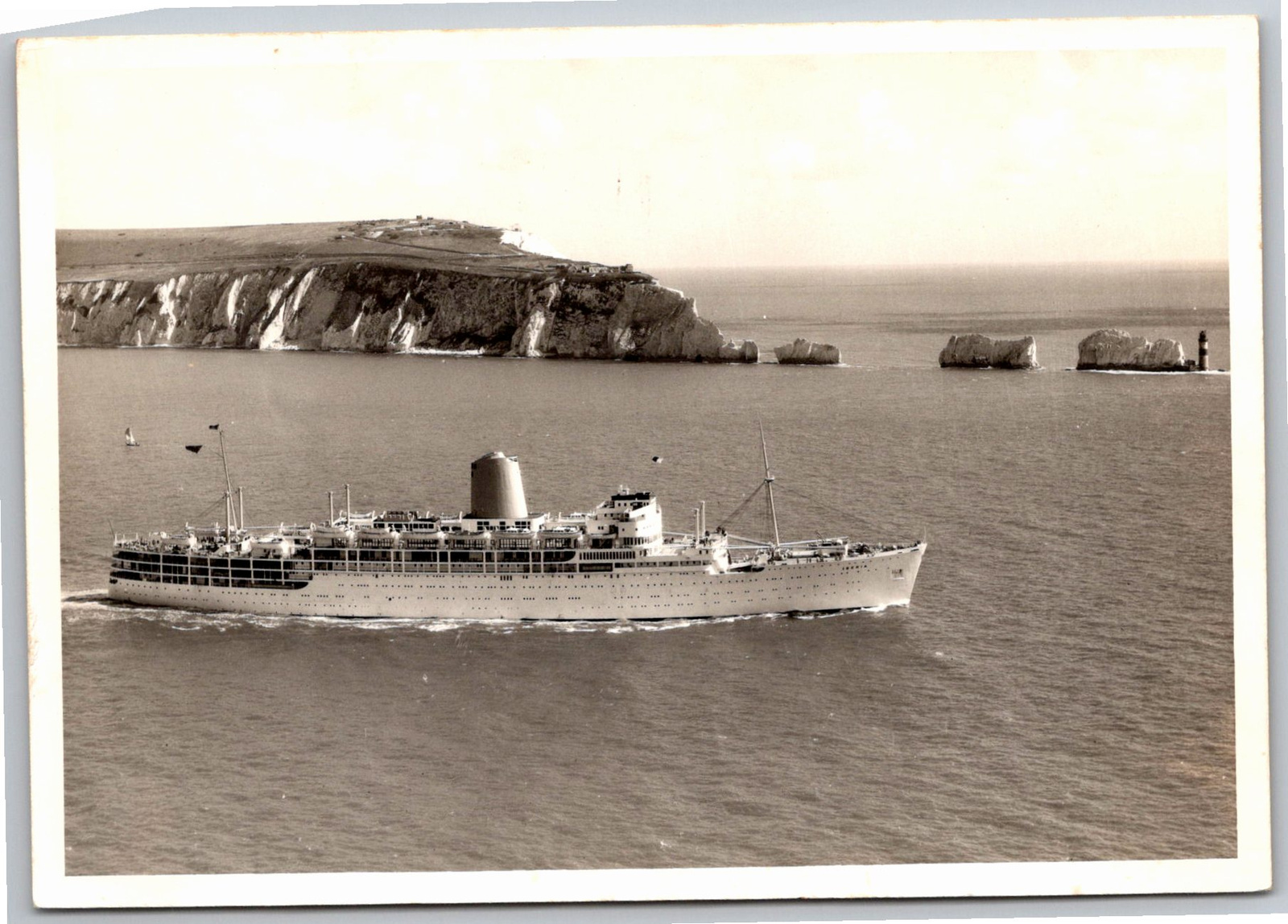
RMS Ivernia Cunard Ocean Liner at The Needles 1950s Photo
📸 Click any thumbnail to inspect Front, Back & Angles (2 Photos)
🔗 Embed / Cite This Archival Image (Free with Attribution)Get HTML Code
© USA RESELL. Bloggers, historians, and researchers may embed this image for free by keeping the credit link below intact:
As an eBay Partner, we may earn a commission if you make a purchase.
Item Specifications
- City: Totland
- State: Isle of Wight
- Country: United States
- Era: 1950s
- Subject: RMS Ivernia Ocean Liner
- Original/Licensed Reprint: Original Vintage
- Category: Vintage Photography
- Format / Type: Vintage Photographs
Looking for Modern Alternatives?
Explore top-rated, modern Vintage Photography and related historical accessories on Amazon.
Shop Vintage Photography on Amazon →As an Amazon Associate, we earn from qualifying purchases.
Historical Context & Overview
Mid-Century Maritime Elegance: The RMS Ivernia at The Needles
During the golden twilight of transatlantic passenger travel in the 1950s, ocean liners were more than mere transport—they were triumphs of naval architecture and symbols of national pride. This authentic mid-century photograph captures the ocean liner RMS Ivernia as she glides past the dramatic chalk stacks and lighthouse of The Needles off the western coast of the Isle of Wight. Recorded from an elevated vantage point, the composition presents a stunning juxtaposition between British natural geology and mid-twentieth-century maritime engineering.
The Legacy of Cunard's Canadian Service
Constructed by the world-famous John Brown & Company shipyard in Clydebank, Scotland, and launched in 1954, the RMS Ivernia was specifically designed to bolster Cunard Line's passenger and cargo operations between Great Britain and Canada. Alongside her sister vessel, the RMS Saxonia, the Ivernia provided vital transatlantic service, catering to post-war travelers and transatlantic immigrants bound for Montreal and Quebec.
The ship's distinct design featured a dark hull balanced by a bright white superstructure and a rounded single funnel, engineered to divert smoke away from passenger decks. Operating during an era when transatlantic air travel was rapidly gaining market share, vessels like the Ivernia represented the peak of comfortable ocean crossing before many liners were eventually converted to cruise duties or renamed—in Ivernia's case, becoming the RMS Franconia in 1963.
A Strategic Maritime Location: The Needles
The geography rendered in this photograph adds immense historic depth. The Needles, a trio of distinctive chalk rocks projecting off the tip of the Isle of Wight, have long served as a crucial navigational landmark for ships entering and departing the Solent near the bustling port of Southampton. Capturing a named Cunard vessel passing this iconic cliffside location offers a rare visual document of British maritime traffic in the post-WWII decade.
Photographic Details & Collector Appeal
Printed on classic fiber-based photographic paper measuring 5.7 by 4.0 inches, this gelatin-silver print demonstrates crisp focus and rich monochromatic tonal graduation. The slight vintage warmth across the light values reflects authentic natural aging. The verso remains completely unprinted, marked only by light period pencil inventory numbers, confirming its origin as a genuine photographic print rather than a printed postcard or later restrike.
For collectors of Cunard Line memorabilia, ocean liner history, and vintage British photography, original prints depicting named vessels navigating iconic home waters represent highly desirable archival pieces.