Vintage 1960s MS Flavia Ocean Liner Photo - Cogedar Line
📸 Click any thumbnail to inspect Front, Back & Angles (2 Photos)
🔗 Embed / Cite This Archival Image (Free with Attribution)Get HTML Code
© USA RESELL. Bloggers, historians, and researchers may embed this image for free by keeping the credit link below intact:
As an eBay Partner, we may earn a commission if you make a purchase.
Item Specifications
- City: Unspecified
- Country: United States
- Era: 1960s
- Subject: Ocean Liner MS Flavia
- Original/Licensed Reprint: Original Vintage
- Image Color: Black and White
- Category: Vintage Photography
- Format / Type: Snapshots
Looking for Modern Alternatives?
Explore top-rated, modern Vintage Photography and related historical accessories on Amazon.
Shop Vintage Photography on Amazon →As an Amazon Associate, we earn from qualifying purchases.
Historical Context & Overview
Mid-Century Maritime Elegance: The MS Flavia
During the post-war era of mid-century passenger navigation, transoceanic travel underwent a remarkable transformation. Liners originally designed for cargo-passenger services were reimagined into modern cruise ships and immigrant carriers connecting Europe with Australia and the Americas. Among these celebrated vessels was the MS Flavia, a sleek passenger ship operated by the renowned Italian shipping firm Cogedar Line during the 1960s.
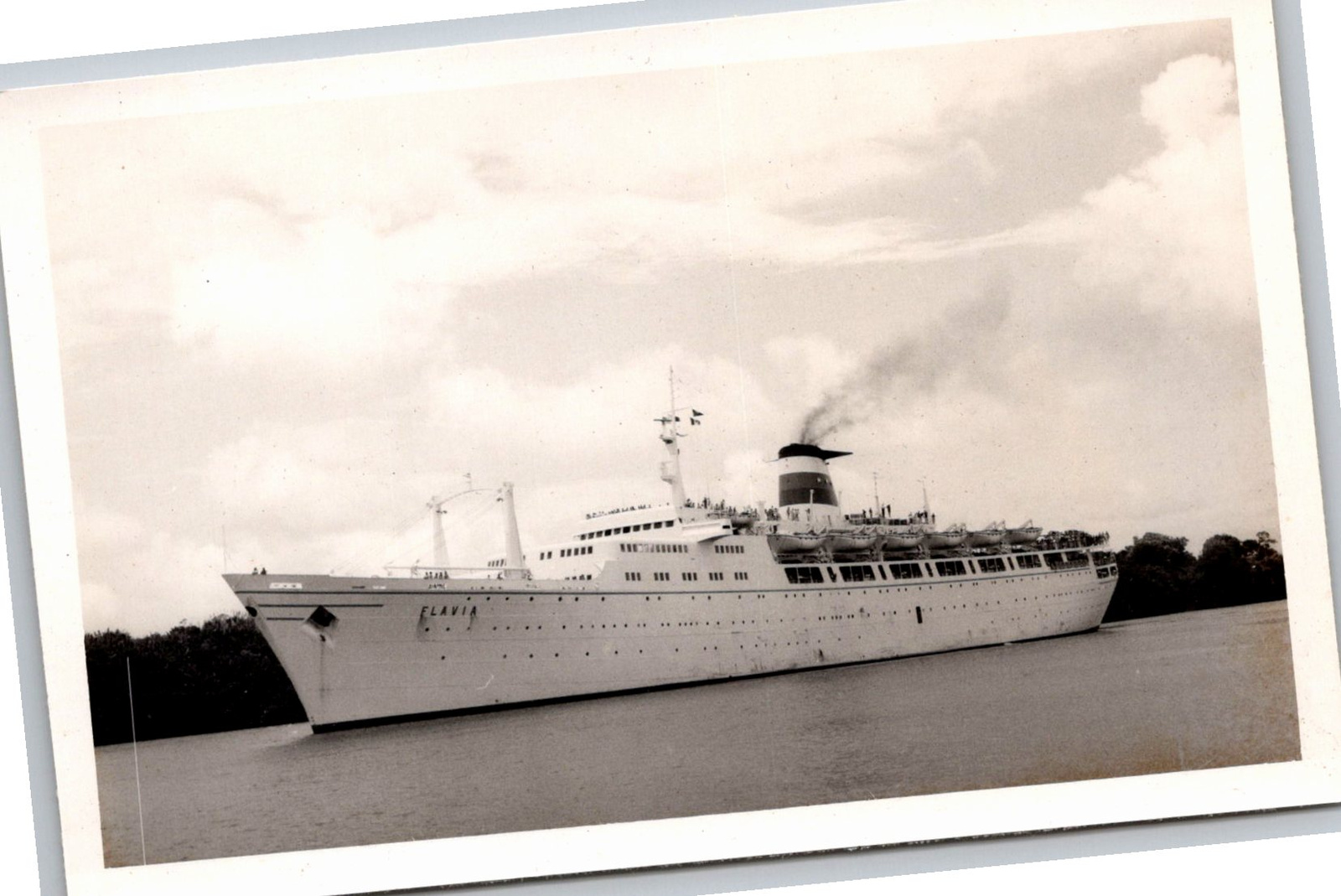
This authentic 1960s gelatin-silver snapshot photograph offers a candid profile view of the MS Flavia as she glides across open waters. Preserved on period snapshot paper with classic white borders, the image conveys the grace and functional design that characterized passenger liners of the mid-20th century.
From RMS Media to Cogedar Line's Modern Flagship
The vessel’s history represents a fascinating chapter in 20th-century naval architectural adaptation. Built in 1947 by John Brown & Company in Clydebank, Scotland, the ship initially entered service as the RMS Media for the prestigious Cunard Line. Designed as a combination cargo and passenger vessel for transatlantic service between Liverpool and New York, she served Cunard faithfully into the late 1950s.
In 1961, the Italian company Compagnia Genovese d'Armamento (Cogedar Line) purchased the ship and undertook an extensive conversion at the modern Genoa shipyards. Rebuilt into a dedicated passenger liner, she was rechristened the MS Flavia. The redesign added contemporary air-conditioned accommodations, expanded passenger decks, and a signature modernized funnel structure, transforming her into a stylish vessel suited for long-distance voyages between Europe and Australia, as well as cruising duties.
Visual Details and Collector Significance
This original black-and-white print highlights key structural features that made the MS Flavia instantly recognizable. The photo displays her clean white hull, prominent bow line, elevated bridge structure, and neatly arranged lifeboat davits lining the upper deck promenade. Dark smoke drifts gently from her single stylized funnel, capturing a vibrant moment of active navigation.
Personal photo prints from this period offer maritime historians and ocean liner enthusiasts an authentic look at mid-century shipping away from staged commercial promotional photography. Printed on period photographic stock, the reverse of the image remains plain without postcard printing, confirming its provenance as an authentic amateur camera snapshot taken by a passenger or shipboard spectator.
Preservation and Ephemera Collecting
As digital photography has replaced silver-halide printing, genuine mid-century physical photographs of famous ocean liners have become increasingly sought after by ephemera collectors. This snapshot remains in very good vintage condition, exhibiting minor edge toning consistent with age while maintaining strong visual contrast and detail. It serves as a compelling tangible keepsake from the twilight years of line voyages and the early dawn of modern ocean cruising.