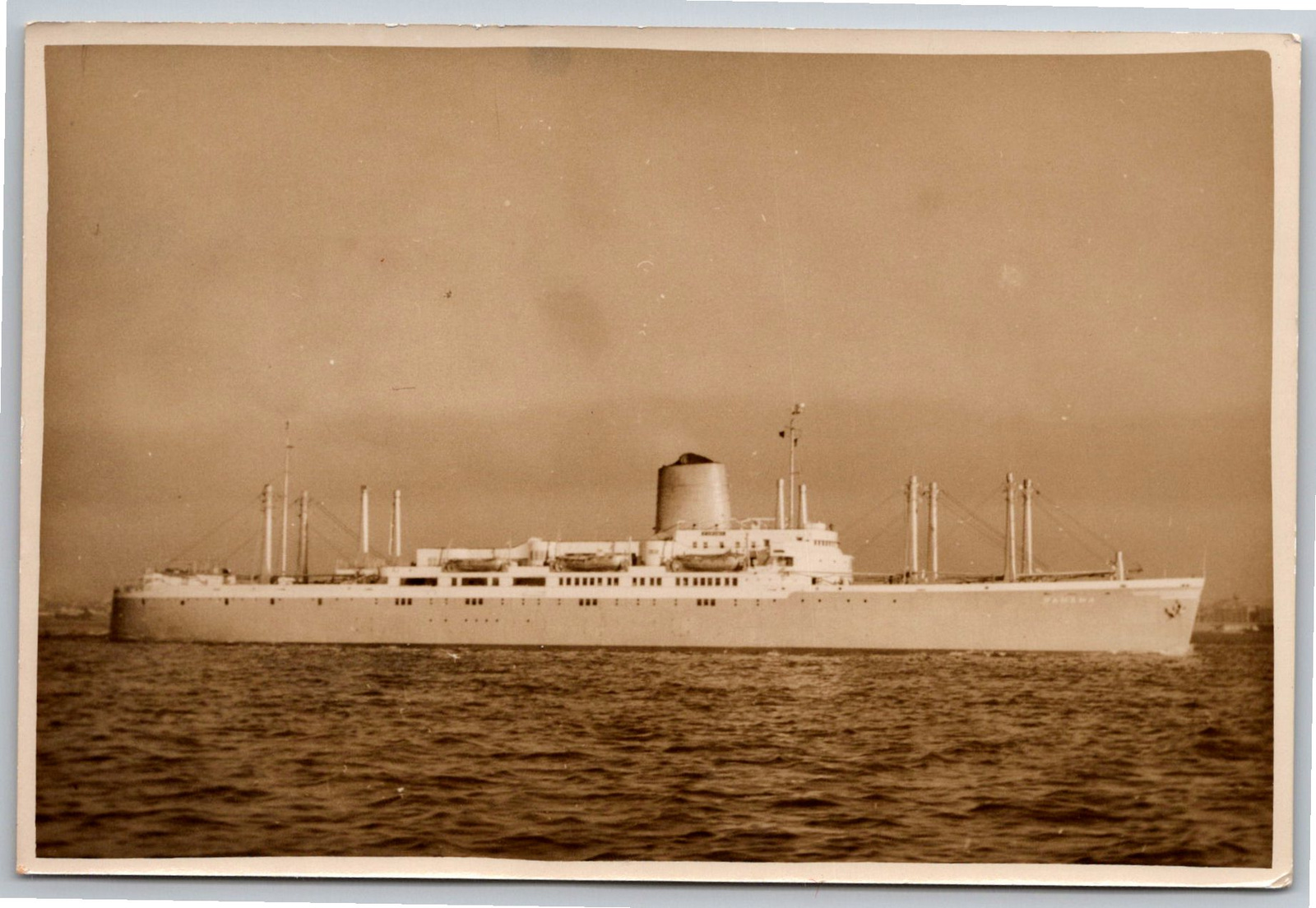
1930s SS Panama Ocean Liner Photo by R. Scozzafava Brooklyn
📸 Click any thumbnail to inspect Front, Back & Angles (2 Photos)
🔗 Embed / Cite This Archival Image (Free with Attribution)Get HTML Code
© USA RESELL. Bloggers, historians, and researchers may embed this image for free by keeping the credit link below intact:
As an eBay Partner, we may earn a commission if you make a purchase.
Item Specifications
- City: Brooklyn
- State: New York
- Country: United States
- Era: 1930s
- Subject: SS Panama Ocean Liner Maritime
- Original/Licensed Reprint: Original Vintage
- Category: Vintage Photography
- Format / Type: Vintage Photographs
Looking for Modern Alternatives?
Explore top-rated, modern Vintage Photography and related historical accessories on Amazon.
Shop Vintage Photography on Amazon →As an Amazon Associate, we earn from qualifying purchases.
Historical Context & Overview
A Golden Era Marvel of Maritime Engineering
In the late 1930s, American commercial shipbuilding underwent a remarkable modern transformation, combining sleek streamlined aesthetics with utilitarian efficiency. At the forefront of this evolution was the S.S. Panama, a passenger-cargo liner built by the Bethlehem Shipbuilding Corporation at Quincy, Massachusetts, for the Panama Railroad Company line. Launched in 1939, the vessel represented a sophisticated new class of ocean liners designed in collaboration with pioneering naval architects like George G. Sharp, establishing a luxurious and vital maritime link between the port of New York and the Panama Canal Zone.
This striking original silver gelatin photograph offers a crisp profile view of the vessel moving smoothly through open harbor waters during her initial pre-war operating era. The composition highlights the ship's balanced profile, showcasing her single stack funnel, superstructure decks, cargo booms, and distinct bow profile. Her distinct combination of passenger comforts and substantial freight capacity made her a cornerstone of American coastal and Caribbean transit during a dynamic period in maritime history.
Wartime Service and Postwar Legacy
With the onset of World War II, the S.S. Panama was drafted into military duty alongside her sister ships. Recommissioned into armed transport service and designated USAT James Parker, the liner traversed hazardous global waters to deliver thousands of Allied troops to front-line theaters across both the Atlantic and Pacific oceans. Her reliable speed and high capacity allowed her to operate effectively throughout some of the conflict's most critical supply routes.
Following the conclusion of hostilities, the vessel returned to civilian ownership and underwent extensive refurbishment to resume commercial passenger and freight routes. The vessel's long operational journey eventually led to subsequent chapters under foreign and domestic registry, including service as the President Hoover for American President Lines, illustrating the enduring longevity of late-1930s American ship construction.
Local Photography & Collector Details
What distinguishes this specific photographic print is its authentic regional provenance. Stamped cleanly on the reverse is the original artist attribution reading "Photograph By R. SCOZZAFAVA Brooklyn, N.Y.", along with a soft graphite pencil identification on the upper margin. Brooklyn was a thriving epicenter for maritime commerce and nautical photography during the mid-20th century, with local photographers actively documenting iconic liners departing and arriving through New York Harbor.
Measuring approximately 5.8 inches by 3.9 inches, this vintage black-and-white print displays a warm, age-developed tone characteristic of period silver gelatin paper development. Preserved in remarkable historical condition, the photo exhibits light natural margin toning appropriate to its era, free from heavy fold creases or significant tears. It stands as a compelling piece for ocean liner archivists, maritime historians, and regional New York photography collections.