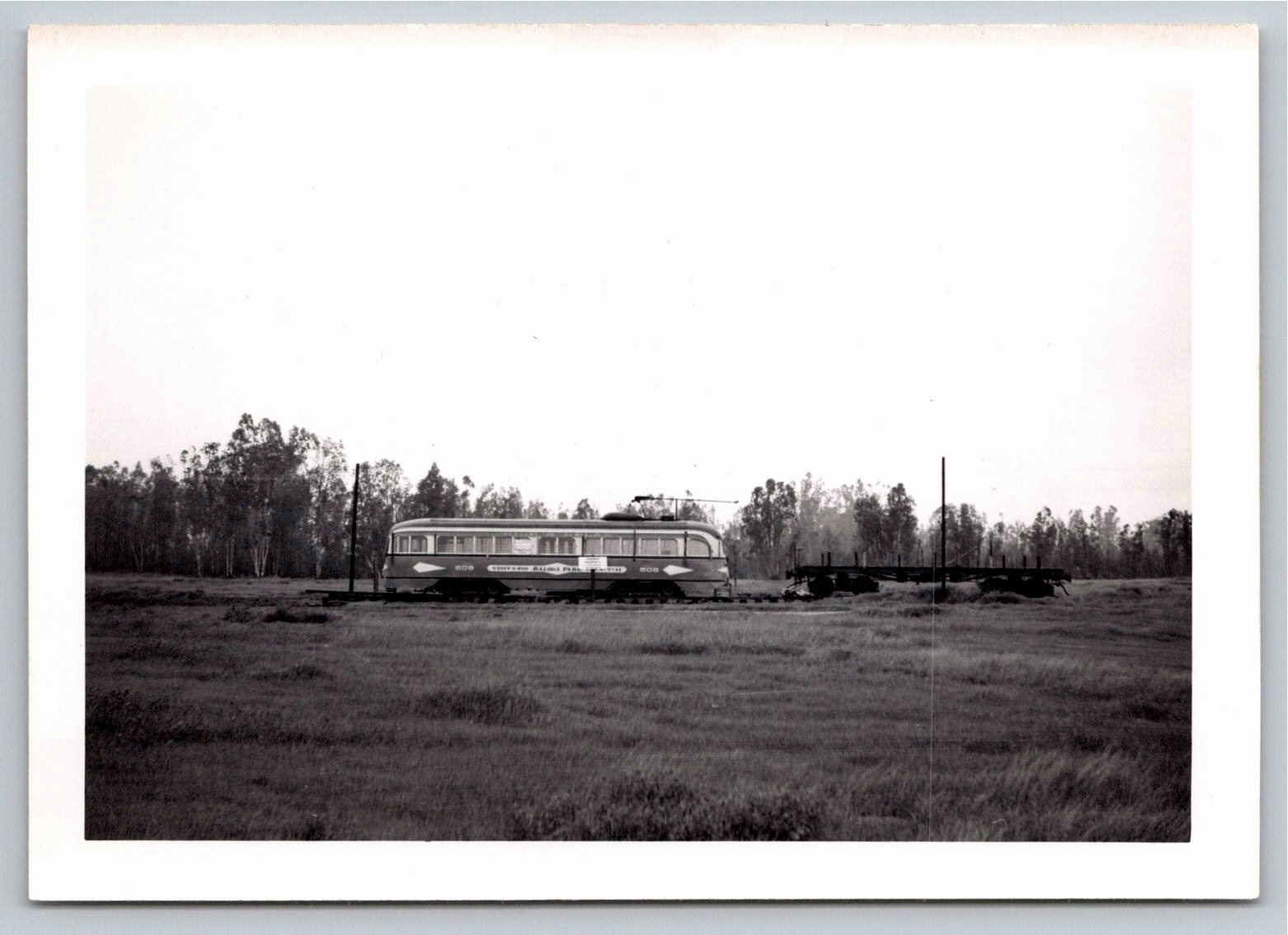
1958 PCC Streetcar 508 Photo Perris California Railway Track
📸 Click any thumbnail to inspect Front, Back & Angles (2 Photos)
🔗 Embed / Cite This Archival Image (Free with Attribution)Get HTML Code
© USA RESELL. Bloggers, historians, and website owners may embed this image for free by copying the HTML code below (which includes the required credit link back to this page):
USA RESELL is a living historical archive. Because original artifacts are one-of-a-kind and source records change rapidly, use the button above to check live marketplace availability or locate surviving examples. As an eBay Partner, we may earn a commission on qualifying purchases.
Item Specifications
- City: Perris
- State: California
- Country: United States
- Era: 1950s
- Subject: Streetcar Trolley Rail Transit
- Theme: Transportation Americana
- Category: Vintage Photography
- Format / Type: Vintage Photographs
Historical Context & Overview
Mid-Century Transit Preservation in Perris, California
This original vintage black-and-white photograph, stamped April 1, 1958, provides a rare window into the early foundation of electric railway preservation in Southern California. Taken in an open field in Perris, California, the image captures PCC (Presidents' Conference Committee) Streetcar 508 resting alongside Flatcar 9614 on dual-gauge railway tracks. Prominently displayed along the side of the streetcar is an authentic period advertisement for the Balboa Park Zoo, adding a nostalgic touch of regional Americana.
PCC streetcars were a hallmark of mid-20th-century urban transit across North America, celebrated for their streamlined design and improved acceleration. As modern bus fleets replaced municipal rail systems during the post-war era, dedicated transit enthusiasts worked tirelessly to rescue historical rolling stock from scrapping. Perris quickly emerged as a central sanctuary for these displaced streetcars, ultimately giving rise to major heritage railway operations that continue to celebrate American transit history.
Photographic Provenance and Technical Details
Measuring approximately 4.9 by 3.5 inches, this crisp print exhibits high tonal contrast, fine focal clarity, and well-preserved glossy paper stock. The reverse side features rich historic documentation, including handwritten notes indicating "Perris, calif. PCC 508 and flat 9614 (two different gauges)." It is further authenticated by a reference code ("B 371"), a purple date stamp of "1 APR 1958", and a photographer imprint reading "Photo by Norman K. Johnson." This piece serves as a vital historical artifact for collectors of streetcar history, California rail transit, and 1950s transportation photography.
Dual-Gauge Alignment and Transit Documentary Value
The dual-gauge track layout captured in this view holds technical significance for electric railway historians. Rescued urban streetcars and industrial flatcars often possessed differing wheel gauges, requiring specialized track configurations to maneuver diverse rolling stock across shared sidings during the initial staging phase in Perris. Photographer Norman K. Johnson meticulously framed PCC 508 alongside Flatcar 9614 to document these physical alignment challenges, providing valuable visual evidence of early transport logistics amidst the open rural landscape.
Gelatin-Silver Craftsmanship and Archival Collector Appeal
Produced using standard mid-century gelatin-silver processing techniques, the photograph displays strong tonal contrast, defined line details, and resilient glossy paper stock. The darkroom emulsion has maintained high clarity over the decades, displaying minimal surface oxidation or edge wear. Preserving vintage transportation prints of this quality requires proper archival handling, such as storing the item in acid-free polypropylene sleeves away from high humidity and direct UV light to protect the silver halide image layer.
For rail archivists and regional history enthusiasts, documented prints featuring verified photographer back stamps and handwritten track notations hold exceptional research value. Norman K. Johnson’s precise back-stamp attribution, reference coding, and calendar date mark elevate this item into a fully authenticated primary document. Images capturing the foundational years of California's streetcar preservation movement remain highly sought after by historical societies and specialized transit photography collectors alike.