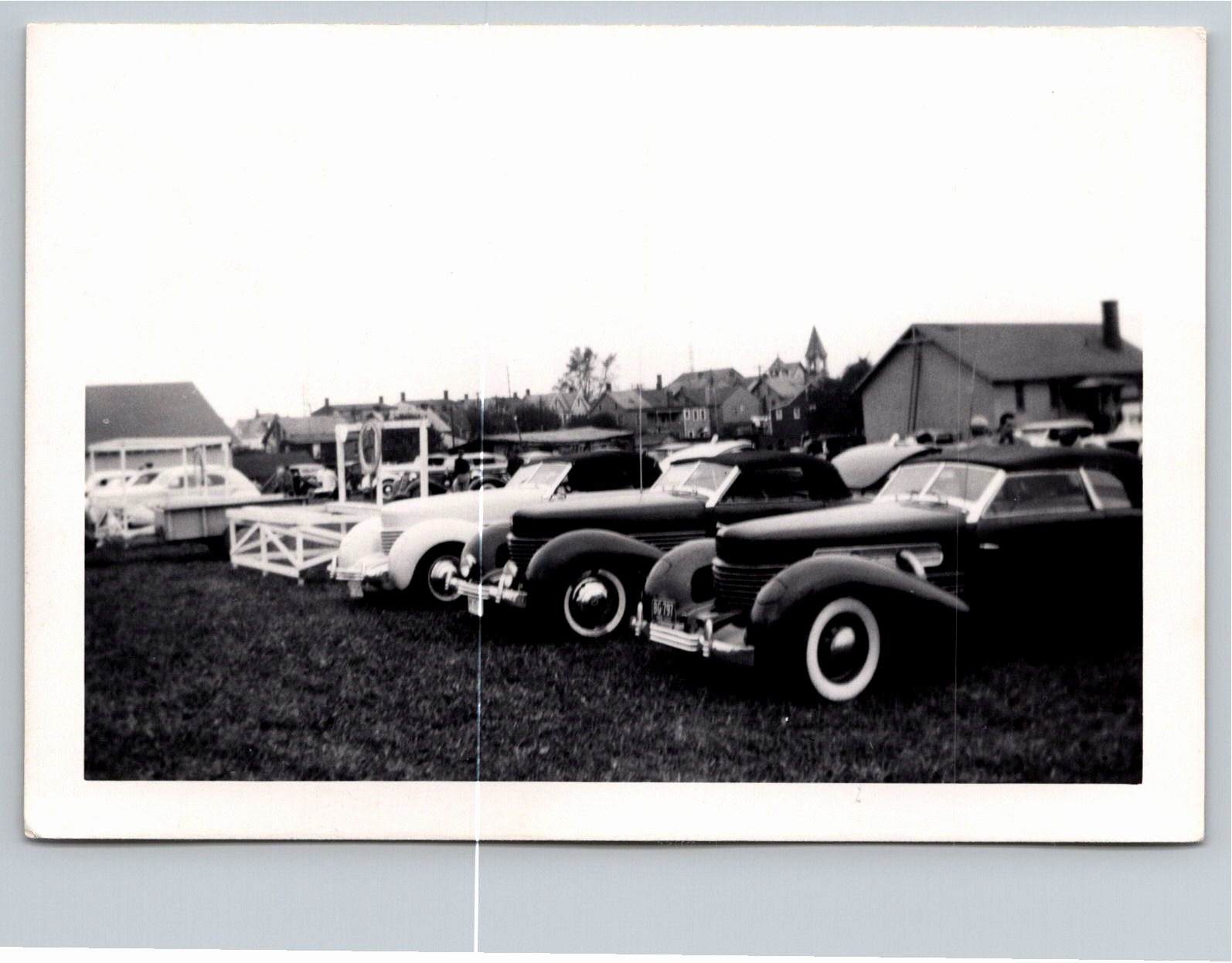
1930s Cord 810 812 Convertible Phaeton Lineup Vintage Photo
📸 Click any thumbnail to inspect Front, Back & Angles (2 Photos)
🔗 Embed / Cite This Archival Image (Free with Attribution)Get HTML Code
© USA RESELL. Bloggers, historians, and researchers may embed this image for free by keeping the credit link below intact:
As an eBay Partner, we may earn a commission if you make a purchase.
Item Specifications
- Country: United States
- Era: 1930s
- Subject: Classic Cars
- Original/Licensed Reprint: Original Vintage
- Image Color: Black and White
- Production Technique: Gelatin-Silver Print
- Category: Vintage Photography
- Format / Type: Snapshots
Looking for Modern Alternatives?
Explore top-rated, modern Vintage Photography and related historical accessories on Amazon.
Shop Vintage Photography on Amazon →As an Amazon Associate, we earn from qualifying purchases.
Historical Context & Overview
A Rare Glimpse of Art Deco Automotive Brilliance
Few automobiles in American history evoke the glamour, innovation, and avant-garde aesthetic of the Great Depression era quite like the Cord 810 and 812 series. Introduced by the Auburn Automobile Company under the visionary direction of designer Gordon Buehrig, these magnificent machines shattered traditional styling conventions when they debuted in the mid-1930s. This original gelatin-silver snapshot captures an extraordinary moment in vintage motoring history: a side-by-side gathering of open-top Cord Phaeton convertibles assembled outdoors for a period car meet or regional exhibition.
Groundbreaking Engineering Meets Streamlined Styling
The Cord 810, launched in 1936 followed by the 812 in 1937, represented a quantum leap forward in automotive architecture. Unlike their contemporary counterparts, which retained upright radiators and towering grilles, Buehrig’s design introduced the iconic wrap-around horizontal louvers—affectionately nicknamed the "coffin nose." The cars were engineered with front-wheel drive, eliminating the need for a traditional driveshaft and allowing for a dramatically lowered floorboard and sleek, ground-hugging profile.
In this candid black-and-white photograph, the defining hallmarks of these legendary convertibles are on full display. The wide pontoon fenders frame immaculate white-wall tires, while the hidden hand-cranked headlights sit flush within the front fenders—an industry first that presaged modern luxury car styling. The prominent external side exhaust pipes visible on select models further signal the formidable supercharged V8 power plant humming beneath the louvered bonnet.
Capturing the Dawn of Historic Car Culture
Beyond its value as a visual document of industrial design, this candid photograph offers an intimate portrait of early classic car preservation culture. Set against a backdrop of wooden spectator booths and residential clapboard houses, the image records an era when passionate collectors first began organizing field meets to showcase these groundbreaking vehicles. Seeing multiple original Phaetons parked together on the grass highlights the camaraderie among early enthusiasts who recognized the historic weight of these short-lived manufacturing masterpieces.
Artifact Details and Provenance
Printed on authentic vintage silver-halide photographic paper, this historic image measures approximately 5.0 by 3.9 inches. The reverse remains unprinted and blank, bearing only a light numeric reference stamp of "282"—a classic marker characteristic of personal snapshot photography rather than commercial souvenir production. The print retains rich tonal contrast, deep shadow detail, and subtle highlights across the reflective chrome trim and polished lacquered bodywork. Preserved in good original condition, the print exhibits minor handling wear along the borders and a faint vertical age crease near the lower center section, adding genuine character to an authentic 20th-century automotive artifact.