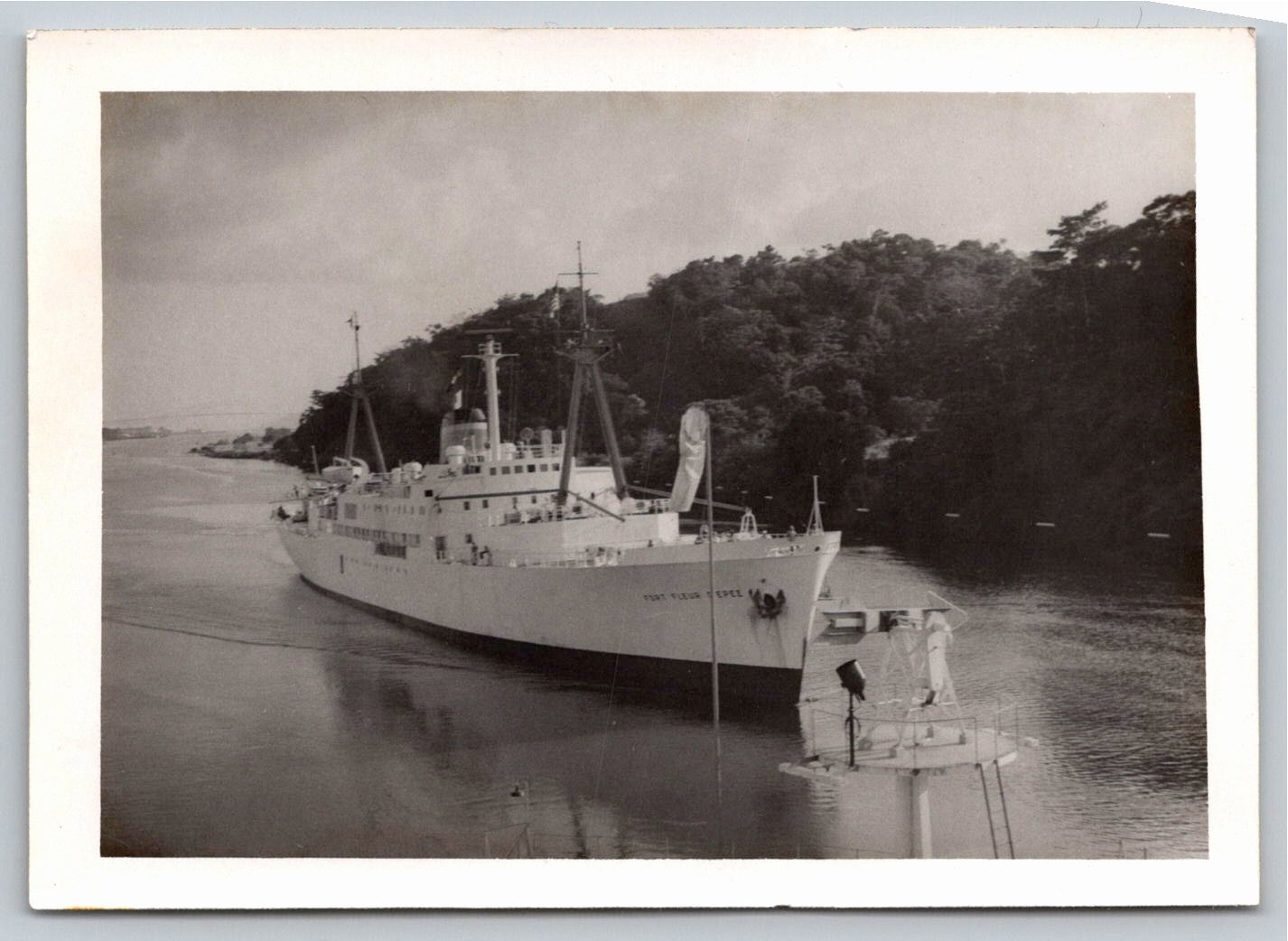
Vintage 1960s French Line Fort Fleur d'Epee Vessel Photo
📸 Click any thumbnail to inspect Front, Back & Angles (2 Photos)
🔗 Embed / Cite This Archival Image (Free with Attribution)Get HTML Code
© USA RESELL. Bloggers, historians, and researchers may embed this image for free by keeping the credit link below intact:
As an eBay Partner, we may earn a commission if you make a purchase.
Item Specifications
- Country: United States
- Era: 1960s
- Subject: Maritime
- Original/Licensed Reprint: Original Vintage
- Image Color: Black and White
- Production Technique: Gelatin-Silver Print
- Category: Vintage Photography
- Format / Type: Vintage Photographs
Looking for Modern Alternatives?
Explore top-rated, modern Vintage Photography and related historical accessories on Amazon.
Shop Vintage Photography on Amazon →As an Amazon Associate, we earn from qualifying purchases.
Historical Context & Overview
Mid-Century Transatlantic Maritime Heritage
During the decades following World War II, international commercial shipping underwent a remarkable transformation. High-speed, specialized cargo vessels were designed to bridge the distance between European markets and tropical trade outposts. Among the foremost operators driving this golden age of merchant shipping was the celebrated French Line, formally known as the Compagnie Générale Transatlantique (CGT). Renowned for its luxurious ocean liners, the French Line also maintained a crucial fleet of fast banana carriers—known as bananiers—and express merchant freighters connecting France with the Caribbean and Central America.
This striking original vintage photograph features the French Line vessel Fort Fleur d'Epée as she makes a controlled passage through a narrow waterway, flanked by dense tropical foliage and rising hillsides indicative of the Panama Canal or a Caribbean approach. Named in honor of the historic 18th-century military fortification located in Grande-Terre, Guadeloupe, the ship represents the elegant design language and modern engineering of mid-20th-century French naval architecture.
Architectural Details and Technical Craftsmanship
The composition provides an excellent perspective on the vessel's upper superstructure, bow profile, and deck layout. The streamlined white hull was specifically designed for temperature-controlled fruit transport and general cargo routes, equipped with high-capacity cargo derricks, tall rigging masts, and sophisticated ventilation systems needed to maintain perishable cargo during equatorial voyages.
In the foreground, a channel marker light and navigational signal tower emphasize the careful seamanship required when piloting a vessel of this scale through restricted inland waterways. The sharp contrast between the gleaming white superstructure, dark hull, and surrounding jungle canopy illustrates the exceptional dynamic range achievable with mid-century silver halide emulsion processes.
Photographic Medium and Collector Significance
Printed on classic glossy fiber paper, this original black-and-white gelatin-silver print exhibits the fine grain, deep tonal contrast, and dimensional depth prized by maritime historians and vintage photographic collectors. The reverse side remains unprinted except for light era pencil annotations identifying the vessel's name, confirming its status as an authentic period artifact rather than a modern reproduction.
For enthusiasts of merchant marine history, ship spotters, and nautical art collectors, this photograph serves as a crisp visual document of mid-century maritime commerce. It stands as a lasting testament to the French Line's enduring legacy across transatlantic trade routes.