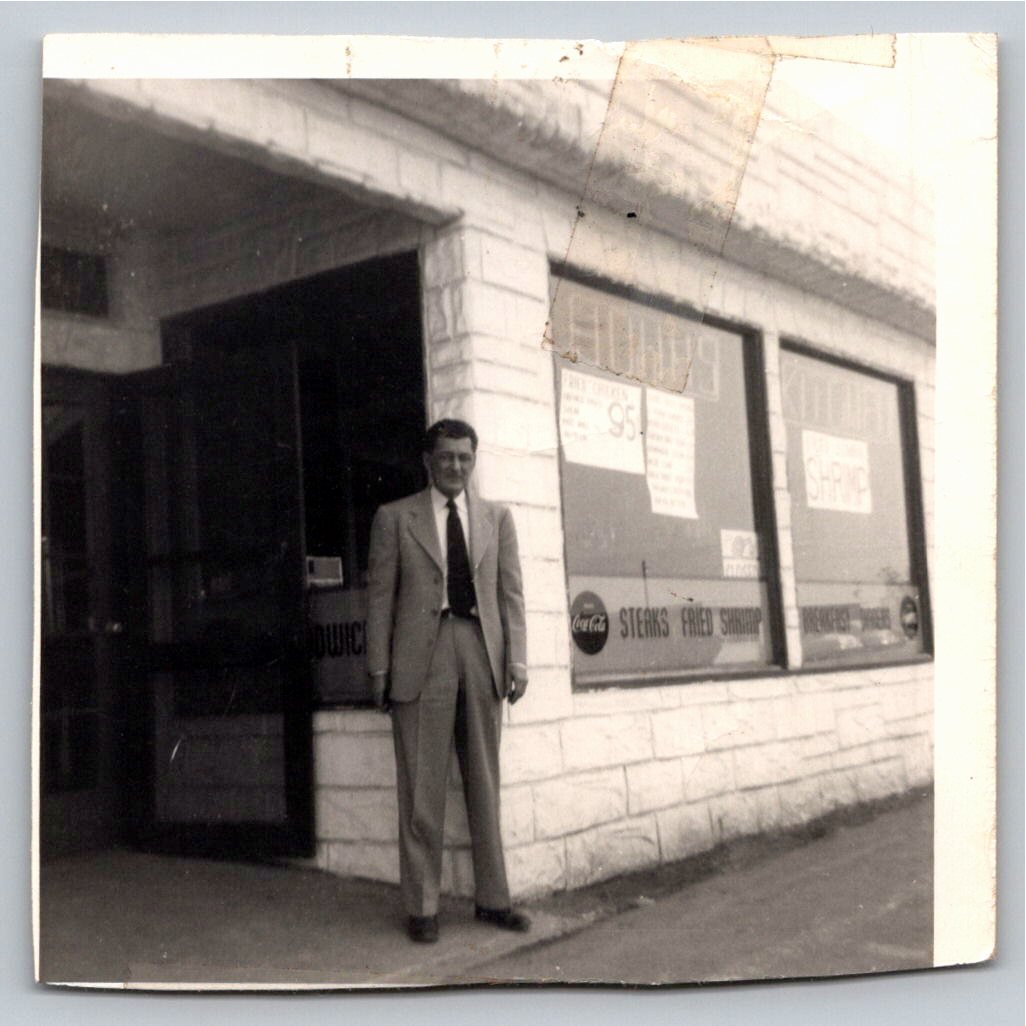
1950s Compton California Diner & Coca-Cola Sign Photo
📸 Click any thumbnail to inspect Front, Back & Angles (2 Photos)
🔗 Embed / Cite This Archival Image (Free with Attribution)Get HTML Code
© USA RESELL. Bloggers, historians, and website owners may embed this image for free by copying the HTML code below (which includes the required credit link back to this page):
USA RESELL is a living historical archive. Because original artifacts are one-of-a-kind and source records change rapidly, use the button above to check live marketplace availability or locate surviving examples. As an eBay Partner, we may earn a commission on qualifying purchases.
Item Specifications
- City: Compton
- State: California
- Country: United States
- Era: 1950s
- Subject: Restaurants Advertising Mens Fashion Street Scene
- Theme: Americana
- Category: Vintage Photography
- Format / Type: Snapshots
Historical Context & Overview
Post-War Roadside Americana and Southern California Diner Culture
This striking color vernacular snapshot offers an evocative glimpse into post-World War II commercial life in Compton, California. The scene centers on an elegantly dressed gentleman standing proudly near the entryway of a thriving roadside restaurant. The building exhibits classic mid-century roadside vernacular architecture, constructed with textured faux-stone ashlar block masonry, large cantilevered roof molding, and expansive commercial plate-glass display windows designed to attract passing motorists traveling through rapidly expanding Los Angeles County.
Visible within the expansive windows is a treasure trove of authentic mid-century advertising and culinary ephemera. Most prominent is an original circular Coca-Cola button sign mounted inside the glass, accompanied by bold window lettering announcing staples of mid-century comfort dining: "STEAKS FRIED SHRIMP" and "BREAKFAST DINNERS." Paper promotional signs taped directly against the glass advertise classic diner fare, including "FRIED CHICKEN .95" and special shrimp platters, reflecting the accessible restaurant pricing and car-centric culture defining 1950s Southern California.
Mid-Century Menswear Sartorial Style and Identity
The subject of the photograph embodies the sharp sartorial standards of 1950s American business and casual dress. Posing confidently with an upright posture and gentle expression, he wears a handsomely cut two-piece tailored suit featuring prominent wide peak lapels, a crisp collared dress shirt, a neatly knot-tied dark necktie, and straight-leg trousers. He completes his quintessential mid-century look with classic dark-rimmed eyeglasses, presenting a poised image of post-war enterprise and dignity.
Turning the print over reveals period handwriting inscribed in blue ink reading: "Roger C Sherman / Compton Calif / Year ?" along with an ink production control stamp "760H." While the handwritten notation left the precise year open to question, the subject's distinct fashion silhouette, the typographic window lettering, and the recognizable brand motifs anchor the capture firmly within the mid-to-late 1950s. Whether Roger was the proud proprietor of this suburban eatery or an appreciative customer stopping during a business journey, the image preserves a personal narrative against a backdrop of quintessential mid-century commerce.
Format, Physical Characteristics, and Collector Value
The photograph is rendered on authentic vintage square-format silver gelatin paper stock, measuring approximately 3.1 by 3.1 inches. This square composition was characteristic of popular post-war amateur roll-film cameras such as the Kodak Brownie or 127/120 format medium-format rollfilm systems, which democratized personal and commercial documentation across suburban America.
In terms of condition, this piece displays wonderful, authentic physical provenance. A light diagonal crease with faint age-related tonal discoloration is evident across the upper-right quadrant of the image, accompanied by softened corners and subtle surface handling patina typical of loose prints kept in vintage family photograph albums. For collectors of roadside Americana, early Coca-Cola commercial advertising ephemera, Southern California regional history, and post-war fashion photography, this original snapshot remains an exceptional, singular historical artifact.