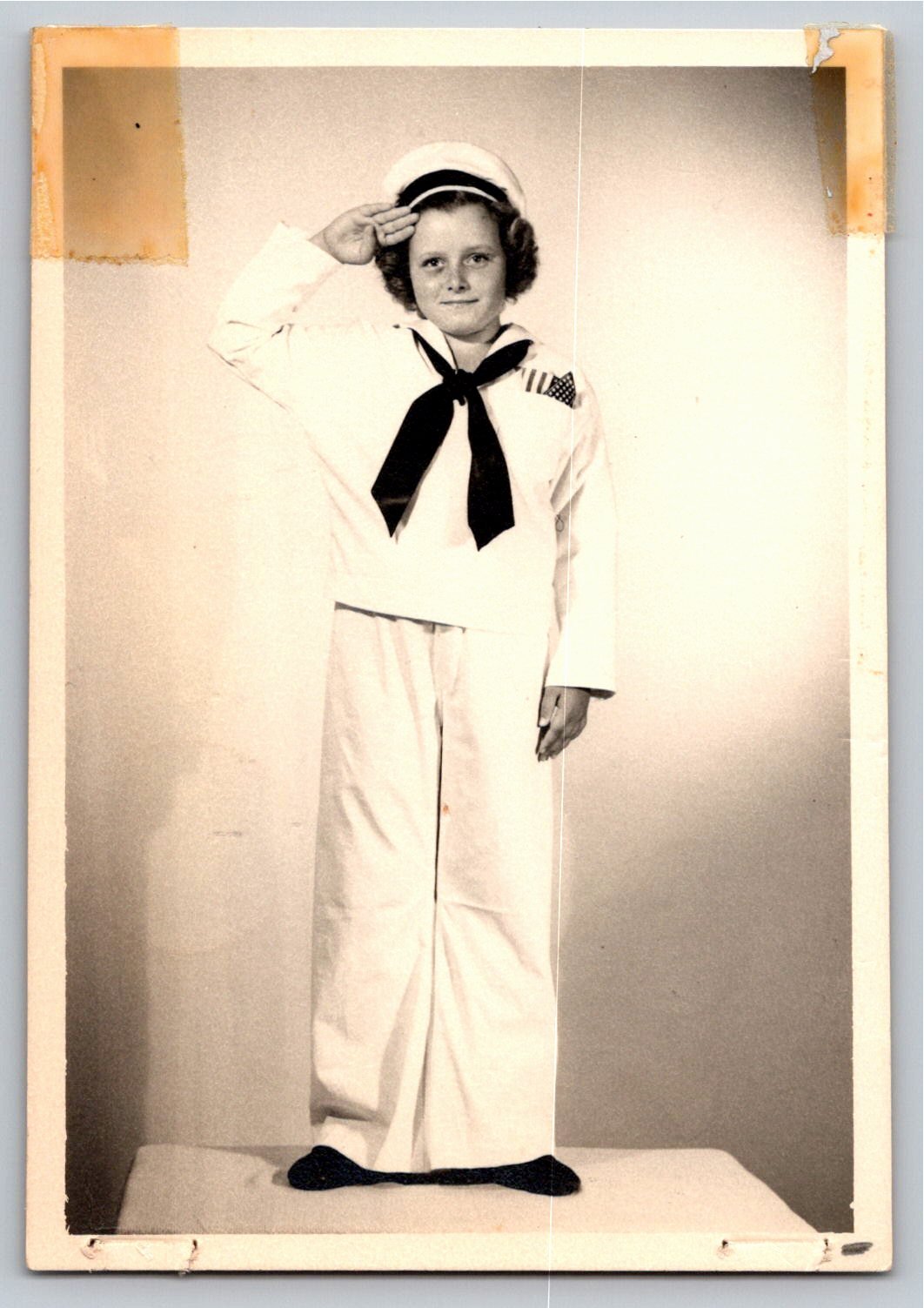
1943 WWII Child Sailor Uniform Saluting Studio Photograph
📸 Click any thumbnail to inspect Front, Back & Angles (2 Photos)
🔗 Embed / Cite This Archival Image (Free with Attribution)Get HTML Code
© USA RESELL. Bloggers, historians, and website owners may embed this image for free by copying the HTML code below (which includes the required credit link back to this page):
USA RESELL is a living historical archive. Because original artifacts are one-of-a-kind and source records change rapidly, use the button above to check live marketplace availability or locate surviving examples. As an eBay Partner, we may earn a commission on qualifying purchases.
Item Specifications
- Type: Photograph
- Original/Licensed Reprint: Original Vintage
- Image Color: Color
- Production Technique: Gelatin-Silver Print
- Theme: Americana
- Subject: Military Uniform Child Navy Sailor WWII Homefront
- Category: Vintage Photography
- Format / Type: Vintage Photographs
Historical Context & Overview
Homefront Patriotism and Mid-Century Studio Portraiture
Dating to the height of the Second World War in 1943, this compelling gelatin silver studio photograph captures a deeply resonant expression of American homefront culture. The composition centers on a young child standing at attention atop a low studio riser, executing a crisp, formal military salute. Outfitted in a remarkably detailed United States Navy enlisted dress white uniform, often affectionately called a "crackerjack" suit, the youth embodies the widespread public pride and emotional solidarity that defined civilian life across the United States during the war years.
Every element of the child's attire mirrors the standard naval issue of the period, featuring expansive wide-leg bell-bottom trousers, a dark contrasting neckerchief neatly tied beneath the sailor collar, and a crisp white Dixie cup cover tilted over curled hair. Pinned proudly above the breast pocket is a vibrant American flag ribbon bar, providing a poignant patriotic flourish. Such styled portraits were exceptionally popular between 1941 and 1945, functioning as miniature homages to fathers, older brothers, and extended family members battling in the Atlantic and Pacific theaters.
The Cultural Significance of Children in Military Dress
During the mobilization of World War II, commercial photo studios across American cities and small towns catered to families seeking tangible connections to loved ones deployed abroad. Miniature military uniforms tailored for children became widely available through mail-order catalogs and specialty clothiers, allowing youngsters to emulate the heroic figures they followed in newsreels and newspapers. Having a son or daughter pose in uniform offered families a meaningful way to celebrate duty and service while assembling morale-boosting keepsakes for overseas mail call.
On the reverse of this print, handwritten notations in graphite pencil read "2- 5x7 / 1- 8x10," accompanied by an initial checkmark in the upper corner. These marks identify the photograph as a working photographer's studio proof, produced specifically so parents could preview the pose and select their print package for framing and postal dispatch. The presence of these production records adds an authentic layer of documentary provenance, illuminating the commercial workflow of mid-century professional portrait photography studios.
Physical Characteristics, Condition, and Archival Appeal
The print measures approximately 3.2 by 4.7 inches and is executed on matte-finish photographic paper, exhibiting warm, sepia-leaning gelatin silver tonal depth. The lighting is characteristic of wartime studio work, using soft fill and high-key illumination against a neutral backdrop to emphasize the subject's expression and crisp uniform creases. The central figure remains sharply focused, retaining excellent facial clarity and delicate midtone gradation throughout the white garment folds.
Reflecting its historical function as a studio-handled master proof, the piece bears visible physical traits of age and display. These include aged cellophane adhesive residue and slight paper toning along the upper two corners, small staple holes through the lower border margin, and a fine vertical handling crease running near the center right. Far from detracting, these authentic imperfections underscore its genuine provenance as a surviving WWII homefront artifact, making it an evocative acquisition for collectors of military memorabilia, vintage childhood fashion, and vernacular mid-century photography.