1950s Kaiser Deluxe Sedan Car Farm Snapshot Photograph
📸 Click any thumbnail to inspect Front, Back & Angles (2 Photos)
🔗 Embed / Cite This Archival Image (Free with Attribution)Get HTML Code
© USA RESELL. Bloggers, historians, and website owners may embed this image for free by copying the HTML code below (which includes the required credit link back to this page):
USA RESELL is a living historical archive. Because original artifacts are one-of-a-kind and source records change rapidly, use the button above to check live marketplace availability or locate surviving examples. As an eBay Partner, we may earn a commission on qualifying purchases.
Item Specifications
- City: Unspecified
- Country: United States
- Era: 1950s
- Subject: Automobiles
- Theme: Transportation
- Year of Production: 1952
- Category: Vintage Photography
- Format / Type: Snapshots
Historical Context & Overview
Mid-Century Motoring: The 1950s Kaiser Sedan in Rural America
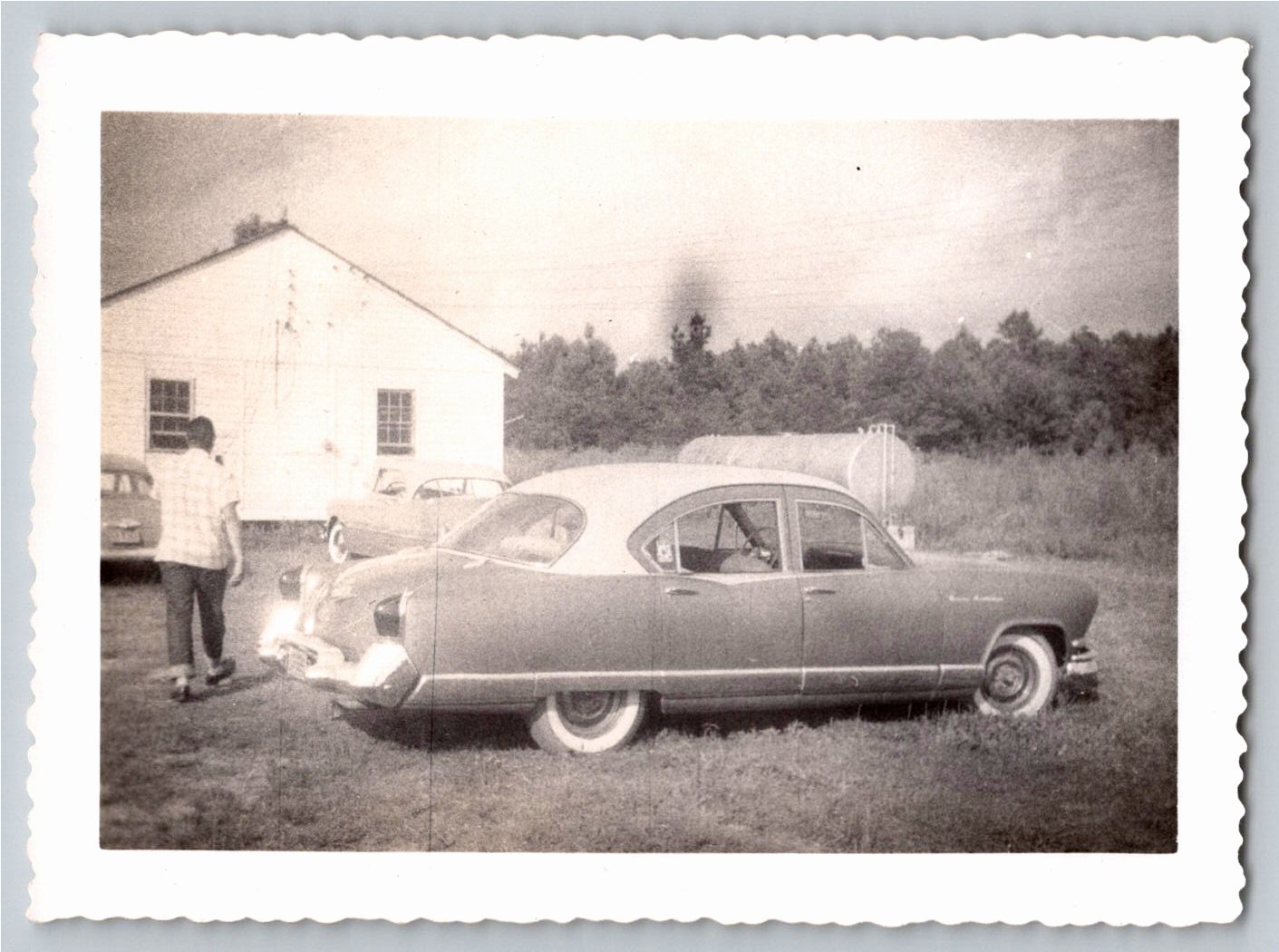
This authentic 1950s black-and-white snapshot captures an quintessential moment of post-war American rural life, framed by the unmistakable design of mid-century automotive manufacturing. Centered in a grassy clearing stands a handsome, two-tone Kaiser four-door sedan, displaying the fluid curves and ground-breaking aerodynamic aesthetic that defined independent automakers of the period. Fitted with bold whitewall tires, polished rocker panel trim, and rear fender fins, the vehicle exemplifies the progressive styling that set Kaiser apart on postwar American roadways.
Surrounding the main vehicle, the rustic environment brings texture and narrative to the composition. To the left, a man clad in a short-sleeved patterned shirt and cuffed denim trousers walks past a clapboard farm structure toward another parked vehicle. In the midground, a substantial horizontal fuel storage tank rests near the tree line, underscoring the working agricultural setting. The combination of everyday workwear, utilitarian farming infrastructure, and a stylish family sedan paints a vivid picture of rural family life during the early 1950s.
Design Legacy of the Kaiser-Frazer Corporation
The car in the photograph highlights the remarkable creative achievements of the Kaiser-Frazer Corporation during its golden design phase, overseen by legendary industrial stylist Howard "Dutch" Darrin. Kaiser automobiles broke free from pre-war styling far quicker than the Big Three, introducing expansive glass surfaces, integrated fender lines, and a signature sweeping dip along the side window sills. This photograph clearly preserves those distinct profile accents, illustrating the sophisticated look Kaiser offered motorists seeking something unconventional yet elegant.
Operating out of Willow Run, Michigan, Kaiser-Frazer fought courageously against Detroit’s automotive giants throughout the late 1940s and early 1950s. While independent manufacturing faced immense competitive pressure during this era, vehicles like the Kaiser Deluxe earned enduring admiration for their innovative safety features, spacious interiors, and luxurious exterior appointments. This snapshot stands as an enduring document of independent automotive ingenuity resting in an authentic, unvarnished countryside context.
Physical Attributes, Paper Stock, and Collector Significance
Dating to circa 1952, this original gelatin-silver photographic print measures approximately 4.4 by 3.2 inches, retaining its classic vintage scalloped deckle border. The glossy paper surface displays rich tonal range, sharp foreground detail, and balanced contrast, holding clarity from the car's chrome brightwork to the texture of the surrounding field. The reverse side features clean white photographic paper, marked near the upper edge with an original green developer processing stamp reading "94."
As a candidate for transportation archives and vernaculer photo collections, this print offers genuine documentary value. Unstaged vernacular snapshots that clearly depict rarer orphan-make automobiles in natural domestic settings are prized by both automotive historians and photography curators. With minor, age-appropriate edge tone and superb preservation, the image remains a compelling artifact from the golden age of American road culture.