1940s Rural Hillside Village Terraced Farm Huts Vintage Photo
📸 Click any thumbnail to inspect Front, Back & Angles (2 Photos)
🔗 Embed / Cite This Archival Image (Free with Attribution)Get HTML Code
© USA RESELL. Bloggers, historians, and website owners may embed this image for free by copying the HTML code below (which includes the required credit link back to this page):
USA RESELL is a living historical archive. Because original artifacts are one-of-a-kind and source records change rapidly, use the button above to check live marketplace availability or locate surviving examples. As an eBay Partner, we may earn a commission on qualifying purchases.
Item Specifications
- Type: Photograph
- Original/Licensed Reprint: Original
- Subject: Farming Village Architecture
- Theme: Americana Agriculture Topographical
- Image Color: Black and White
- Production Technique: Gelatin-Silver Print
- Category: Vintage Photography
- Format / Type: Vintage Photographs
Historical Context & Overview
Panoramic View of Vernacular Hillside Agrarian Architecture
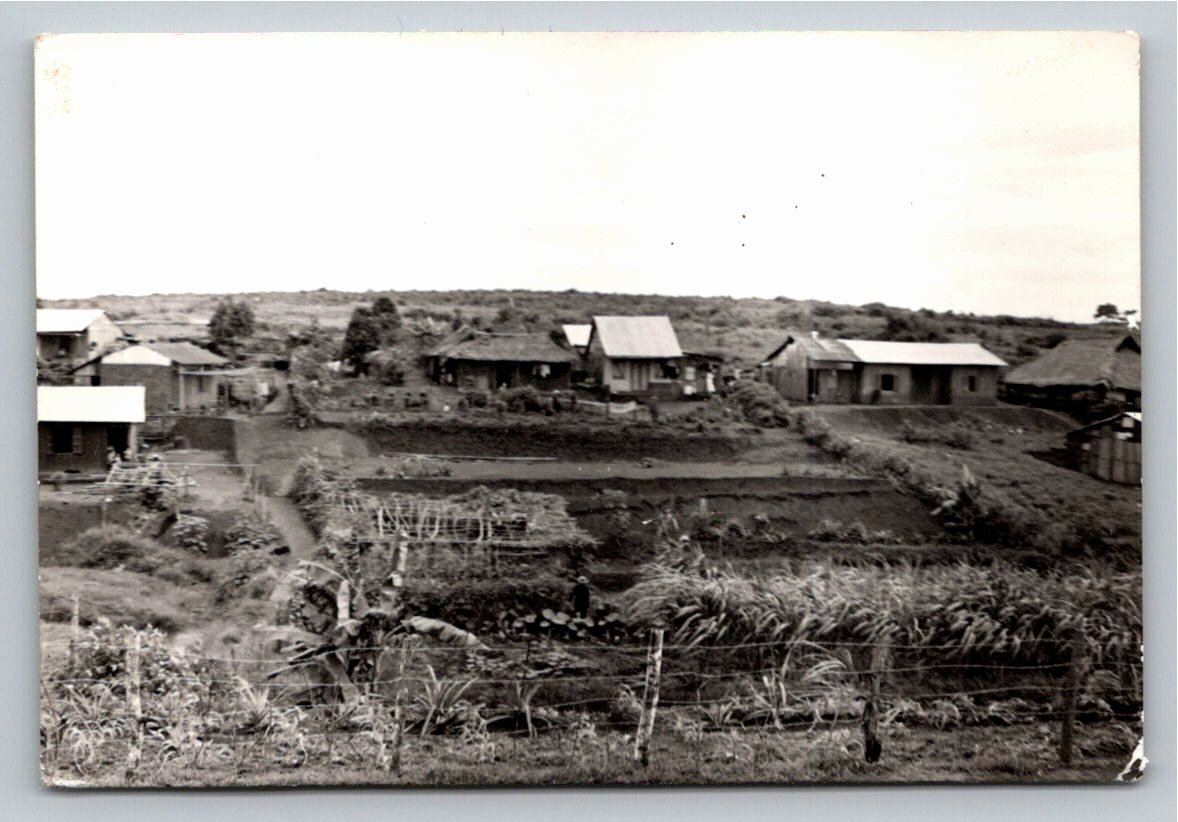
This striking original vintage gelatin silver photograph presents an expansive, candid overview of an upland rural settlement shaped entirely by subsistence agriculture. Spread across an undulating hillside, the community features a diverse cluster of vernacular homes exhibiting a fascinating transition between traditional thatched roofing and modern corrugated tin materials. The terraced hillside forms a series of carefully leveled agricultural shelves, demonstrating how rural agrarian families engineered sloping landscapes to retain soil and cultivate crops in challenging topography.
In the foreground, a rustic fence composed of hand-hewn wooden posts and weathered strands of barbed wire establishes depth and delineation across the pastoral scene. Flourishing along the perimeter are hardy tropical flora, including spiked agave plants, wide-leafed banana foliage, and thick stands of wild grass. This lush, unvarnished foreground contrasts with the manicured plots above, creating an evocative visual document that captures daily agrarian living and the resourcefulness of mid-twentieth-century rural settlements.
Agrarian Traditions and Mid-Century Vernacular Landscapes
Dating approximately to the 1930s through the 1940s, this photograph reflects the enduring methods of regional farming before industrial mechanization reshaped small-scale cultivation. Hillside terracing was a labor-intensive tradition passed down through generations, allowing families to grow root crops, maize, and household vegetables by mitigating runoff and maximizing natural irrigation. The visible footpaths winding between the humble dwellings emphasize the tightly knit communal framework inherent to these self-sustaining hamlets.
The architectural hybridity captured in this snapshot offers valuable insight into material culture during the mid-century era. While thatched gables speak to time-honored local construction methods utilizing natural grasses and timber framing, the introduction of corrugated metal sheets illustrates the growing reach of manufactured roofing supplies. Such functional details highlight how remote farming populations adapted contemporary building materials to bolster weather resistance while maintaining traditional architectural footprints.
Physical Attributes, Photographic Technique, and Collector Value
Produced on authentic period silver gelatin photographic paper, this original snapshot measures approximately 3.6 by 2.4 inches. The print displays crisp tonal balance, presenting deep, rich contrast alongside subtle mid-tone delineation that renders fine textures—from individual corrugated ridges on rooftops to intricate agricultural furrows—with exceptional clarity. Its glossy emulsion retains excellent luster without the heavy fading or chemical yellowing often observed in field snapshots of this vintage.
The reverse side of the print is completely blank, clean, and unwritten, bearing no back stamps, postal layout markings, or mounting adhesive residue. Preserved in very good vintage condition, the photograph exhibits only light handling wear, gentle corner rounding, and minor natural age toning along the perimeter edges. For collectors of vernacular photography, mid-century agrarian history, and traditional architectural studies, this authentic visual artifact represents a remarkable window into twentieth-century rural life.