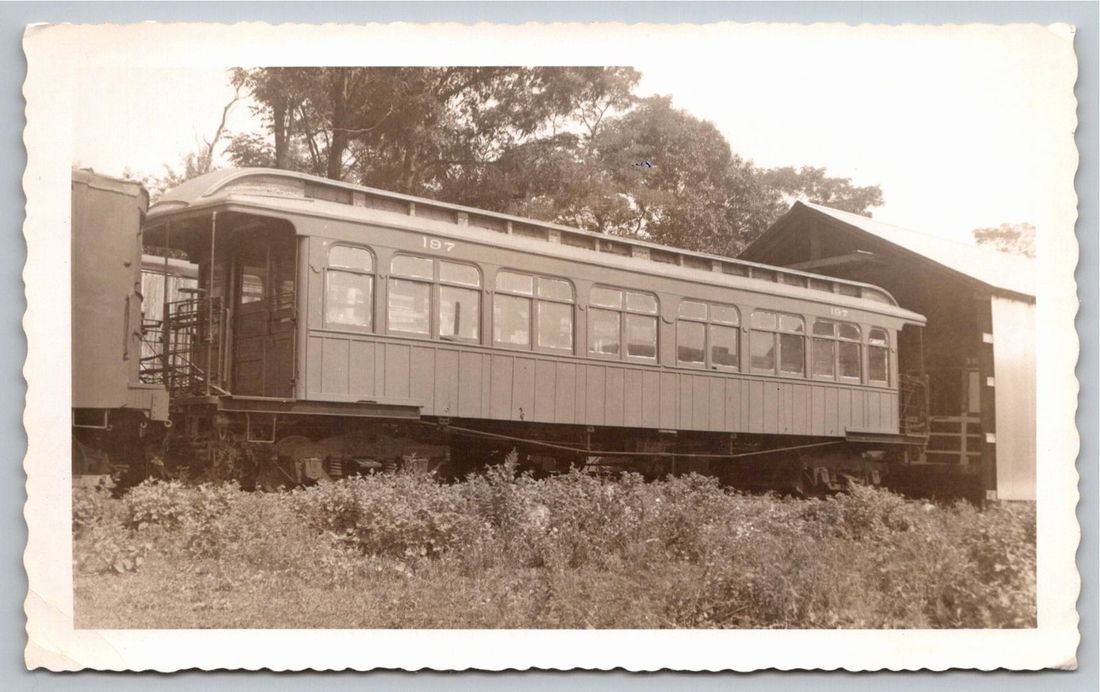
1950s Trolley Photo Kings County Elevated Car 197 Branford CT
📸 Click any thumbnail to inspect Front, Back & Angles (2 Photos)
🔗 Embed / Cite This Archival Image (Free with Attribution)Get HTML Code
© USA RESELL. Bloggers, historians, and website owners may embed this image for free by copying the HTML code below (which includes the required credit link back to this page):
USA RESELL is a living historical archive. Because original artifacts are one-of-a-kind and source records change rapidly, use the button above to check live marketplace availability or locate surviving examples. As an eBay Partner, we may earn a commission on qualifying purchases.
Item Specifications
- City: Branford
- State: Connecticut
- Country: United States
- Era: Vintage (1950s)
- Subject: Streetcar Trolley Rail Transit
- Theme: Transportation Railiana Americana
- Category: Vintage Photography
- Format / Type: Vintage Photographs
Historical Context & Overview
This original mid-century vintage photograph captures a detailed profile view of Kings County Elevated Railway trailer car #197 preserved on the tracks at the Branford Electric Railway Association in Branford, Connecticut. Printed on classic paper with decorative deckled edges, the crisp image highlights the historic open-platform design of this landmark piece of American urban rapid transit history.
A Century of Rapid Transit Service
Car #197 boasts a long, distinguished operational lifespan that mirrors the evolution of public transportation in the Greater New York area. Originally constructed in 1888 as car #167 for the Kings County Elevated Railway, the wooden trailer car saw decades of continuous service across shifting transit eras. As urban rail networks consolidated, the vehicle operated under the Brooklyn Rapid Transit (BRT), the Brooklyn-Manhattan Transit (BMT), and ultimately the New York City Board of Transportation before retiring from active municipal duty.
Following its retirement, the historic car found a permanent home at the Branford Electric Railway Association (BERA) in Connecticut—one of the earliest operating trolley museums in the United States dedicated to preserving electric traction equipment, interurban cars, and street railway heritage.
Mid-Century Photographic Details
Dating to approximately 1955, this original gelatin-silver photograph measures 5.7 by 3.5 inches and features distinct scalloped border trims characteristic of 1950s personal snapshot prints. The composition captures the wooden car positioned beside a storage shed and surrounding greenery, showing off its arched window frames, double-clere-story roofline, and open end platforms.
The reverse side of the print features period handwritten identification notes in blue ink detailing the car number and location ('#197 El. Car. C.T. Co. (trailer) at Branford. Rwy'), accompanied by a clean machine stamp reading '755A'. Featuring sharp focus and well-balanced contrast, this original piece is a ideal acquisition for collectors of New York transit history, Connecticut railway archives, and 20th-century traction ephemera.
The Evolution of Urban Transit Infrastructure
The construction of wooden elevated equipment during the late nineteenth century represents a crucial turning point in American municipal transportation. Before electric traction standardized city transit under pioneers like Frank Julian Sprague, rapid transit operators relied on elevated timber rolling stock to bypass congested metropolitan street traffic. Cars such as #197 served as vital links in Brooklyn's rapid expansion, moving thousands of daily commuters and accelerating the suburbanization of outlying boroughs. As steel-hulled subway cars eventually rendered wooden elevated units obsolete on active municipal lines, surviving specimens became irreplaceable relics of the transition from horse-drawn omnibuses to high-capacity electric rail networks.
Archival Preservation and Collector Value
Preserved on high-gloss gelatin-silver stock, this mid-century print exemplifies the meticulous documentation undertaken by rail enthusiasts during the post-war era of transit preservation. The fiber-based paper has retained its structural integrity, exhibiting natural light toning along the margins while preserving the crisp tonal range of the original negative. For archivists and traction ephemera specialists, mid-1950s photographic records taken at early preservation sites like Branford offer essential provenance documentation. Images capturing equipment in early museum settings serve as primary historical sources, showcasing physical details of classic rolling stock before modern restoration efforts altered their vintage patina.