1950s Sailor on Ship Rigging Boom Ocean Vintage Photo
📸 Click any thumbnail to inspect Front, Back & Angles (2 Photos)
🔗 Embed / Cite This Archival Image (Free with Attribution)Get HTML Code
© USA RESELL. Bloggers, historians, and website owners may embed this image for free by copying the HTML code below (which includes the required credit link back to this page):
USA RESELL is a living historical archive. Because original artifacts are one-of-a-kind and source records change rapidly, use the button above to check live marketplace availability or locate surviving examples. As an eBay Partner, we may earn a commission on qualifying purchases.
Item Specifications
- City: Unspecified
- Country: United States
- Era: Mid-Century (1950s)
- Subject: Sailor Naval Ship Rigging Ocean
- Theme: Maritime
- Year of Production: 1950
- Category: Vintage Photography
- Format / Type: Vintage Photographs
Historical Context & Overview
Mid-Century Shipboard Life: A Sailor Suspended Above the Sea
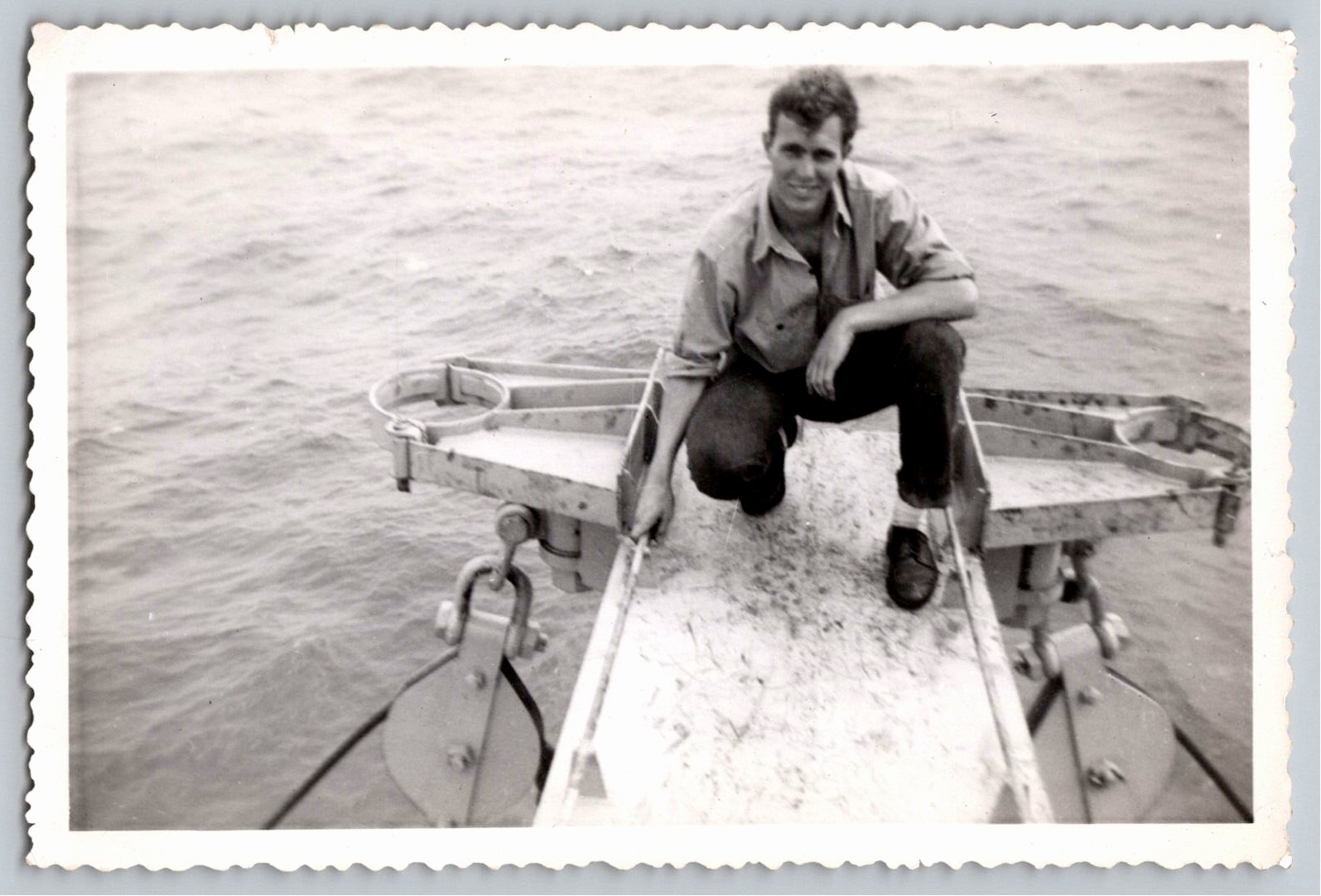
This striking original black-and-white photograph presents a rare and candid snapshot of naval life during the 1950s. Balanced with practiced ease, a youthful mariner perches atop a steel outrigger or boom framework extending well past the hull of an ocean-going vessel. Dressed in utilitarian service dungarees and an open-collar work shirt with rolled sleeves, the subject smiles effortlessly toward the camera, unfazed by the churning sea rolling beneath him. The framing captures both the sheer drop toward the rolling ocean waves and the raw physical daring routine to mid-century naval service.
The industrial architecture of the vessel forms a compelling counterpoint to the organic texture of the open water. Directly below the platform structure, heavy steel tackle blocks, massive sheaves, and tensioned rigging cables extend downward, revealing the complex mechanical gear necessary for high-seas operations. Whether designed for underway replenishment, cargo handling, or auxiliary ship operations, the rigging details offer maritime researchers and historians an unvarnished view of mid-twentieth-century naval engineering in active deployment.
The Cold War Maritime Context and Shipboard Routine
Dating to the era spanning the Korean War and the early Cold War, this photograph exemplifies the daily realities encountered by young servicemen operating far from home. Life aboard mid-century naval vessels demanded relentless physical adaptability, where routine maintenance, lookout watches, and rigging inspections frequently required personnel to navigate narrow walkways and exposed booms suspended over open ocean water. The relaxed, confident demeanor of the young sailor captures the distinct camaraderie and poise characteristic of sailors of this historic generation.
The absence of contemporary safety harnesses underscores the era's operational practices, where trust in heavy steel rigging and sure-footed balance took precedence. Such vernacular photographic documentation serves as a vital historical record, bridging the gap between official military portraiture and the genuine, lived experiences of enlisted crew members aboard capital ships, auxiliaries, or destroyers traversing international waters.
Print Characteristics, Scalloped Border Design, and Condition
The photograph is produced on classic single-weight paper stock and measures approximately 5.0 inches wide by 3.3 inches tall. Distinctive serrated, deckled margins frame the image, a quintessential finishing hallmark of commercial and shipboard photographic lab processing during the late 1940s and mid-1950s. The exposure exhibits deep, resonant shadow tones in the clothing and hardware, cleanly rendered highlights on the boom deck, and smooth mid-tones throughout the undulating surface of the ocean.
On the reverse, the paper stock is blank and unposted, bearing only minor, faint processing indentations that confirm its status as an authentic private darkroom print rather than a commercial card. The borders remain sharp and intact, with minimal handling wear consistent with careful historic preservation. As an authentic piece of mid-century Americana and nautical documentation, this photograph stands as a prized addition for collectors specializing in vintage naval archives and historic maritime photography.