Vintage 1950s Japanese Fishing Vessels at Pier 9 Honolulu Photo
📸 Click any thumbnail to inspect Front, Back & Angles (2 Photos)
🔗 Embed / Cite This Archival Image (Free with Attribution)Get HTML Code
© USA RESELL. Bloggers, historians, and researchers may embed this image for free by keeping the credit link below intact:
As an eBay Partner, we may earn a commission if you make a purchase.
Item Specifications
- City: Honolulu
- State: Hawaii
- Country: United States
- Era: 1950s
- Subject: Japanese Fishing Ships
- Original/Licensed Reprint: Original Vintage
- Category: Vintage Photography
- Format / Type: Snapshots
Looking for Modern Alternatives?
Explore top-rated, modern Vintage Photography and related historical accessories on Amazon.
Shop Vintage Photography on Amazon →As an Amazon Associate, we earn from qualifying purchases.
Historical Context & Overview
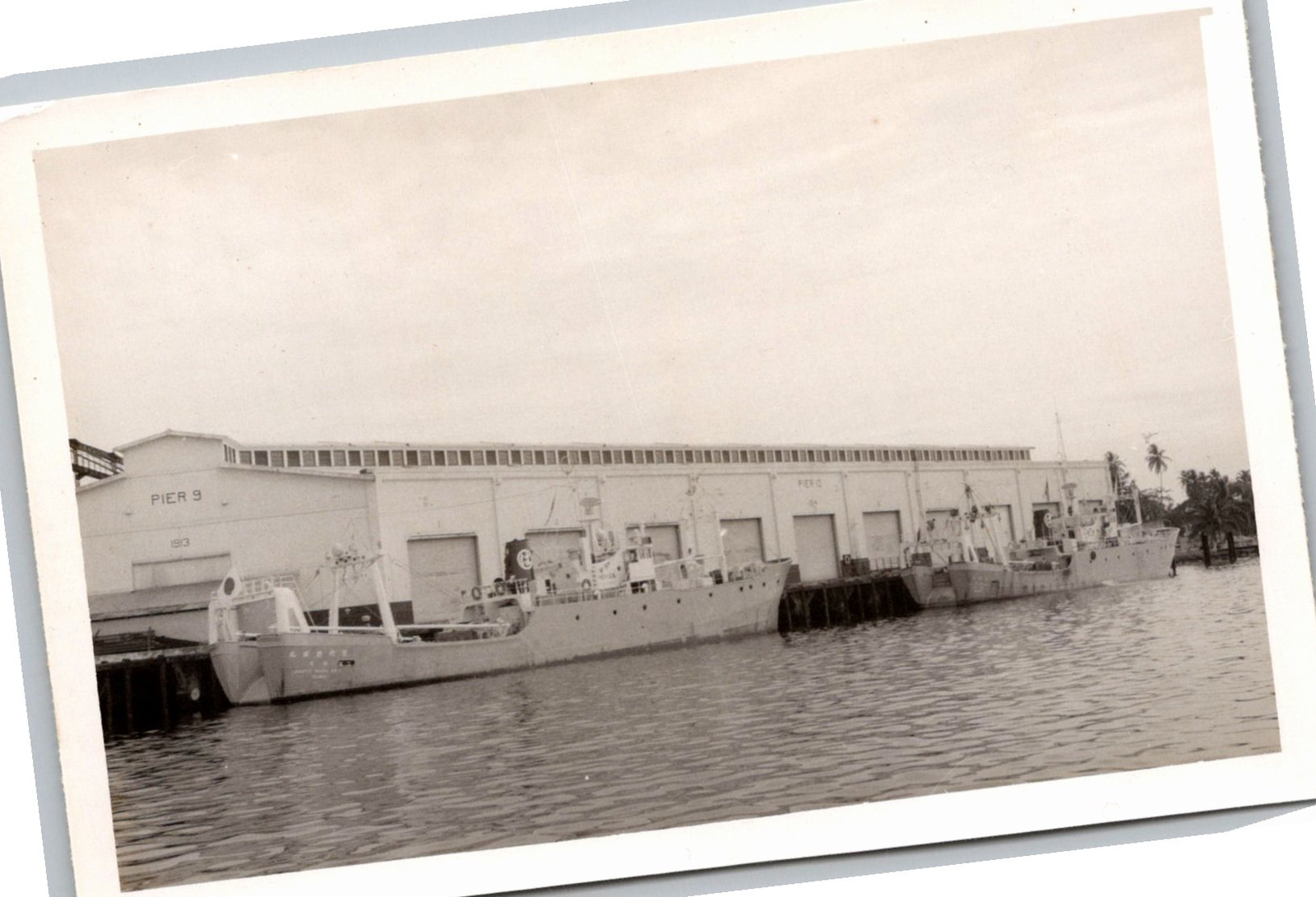
During the post-war era of the 1950s, Honolulu Harbor functioned as the beating heart of commercial ocean transit in the Central Pacific. As international shipping lanes reopened and global trade expanded, the waterfront of Oahu transformed into a thriving nexus for cargo vessels, passenger liners, and international fishing fleets. This original mid-century snapshot records a compelling slice of maritime life along the Hawaiian waterfront, depicting two Japanese commercial fishing ships docked at Honolulu's historical Pier 9.
Post-War Japanese Fishing Fleets and Hawaiian Ports
Following the reconstruction of Japan's commercial marine industry in the late 1940s and early 1950s, the nation's deep-sea fishing fleet expanded rapidly throughout the Pacific Ocean. Modernized longline vessels and trawlers embarked on multi-month oceanic expeditions targeting tuna and other valuable pelagic species. To sustain these distant-water operations, ships regularly called at Hawaiian ports to restock supplies, purchase fuel and ice, perform maintenance, and allow crew members valuable shore leave. Honolulu served as an indispensable haven in the middle of the vast ocean, bridging Asian commercial fleets with American Pacific territories.
This photograph captures the detailed structural anatomy of these hardworking vessels resting quietly in harbor. The primary vessel in the foreground reveals distinct Japanese maritime iconography, including the circular emblem painted on its smokestack and official hull markings. Deck equipment, boom rigging, navigation bridges, and mechanical gear are all rendered in sharp focus, illustrating the specialized architecture engineered for grueling deep-water marine operations.
Honolulu Waterfront Architecture and Harbor Atmosphere
Framing the background is the distinct warehouse infrastructure of Pier 9. The long, white concrete structure features prominent signage identifying the location, along with rows of high clerestory windows designed to illuminate the interior cargo bays before widespread fluorescent lighting. A series of large roll-up bay doors opens directly onto the apron where ocean freight was loaded and unloaded. Rising just beyond the edge of the pier, distant palm fronds reinforce the distinct tropical Hawaiian backdrop, contrasting with the utilitarian lines of the iron-hulled ships.
Preservation, Silver Gelatin Medium, and Collector Value
Developed on classic silver gelatin photographic paper measuring roughly 5.1 by 3.4 inches, the photograph exhibits the signature contrast and tonal graduation inherent to mid-20th-century black-and-white printmaking. The deep shadows along the hull and highlighted water reflections demonstrate the artistic potential of candid snapshooting during this era. The reverse side of the snapshot is completely blank and free of postal markings, confirming its status as a private photographic document created by a visitor, sailor, or local harbor enthusiast rather than a mass-produced tourist postcard.
Today, candid photographic records of mid-century commercial shipping in Hawaii remain highly prized among maritime archivists, nautical historians, and collectors of Pacific heritage. Preserved with light natural handling wear and subtle edge toning, this authentic 1950s photograph offers an extraordinary visual record of cross-Pacific commercial heritage.