1925 Vintage Electric Elevated Railway Train No 46 Photo
📸 Click any thumbnail to inspect Front, Back & Angles (2 Photos)
🔗 Embed / Cite This Archival Image (Free with Attribution)Get HTML Code
© USA RESELL. Bloggers, historians, and website owners may embed this image for free by copying the HTML code below (which includes the required credit link back to this page):
USA RESELL is a living historical archive. Because original artifacts are one-of-a-kind and source records change rapidly, use the button above to check live marketplace availability or locate surviving examples. As an eBay Partner, we may earn a commission on qualifying purchases.
Item Specifications
- City: Unspecified
- Country: United States
- Era: 1920-1929
- Subject: Elevated Railway Train
- Theme: Transportation
- Year of Production: 1925
- Category: Vintage Photography
- Format / Type: Vintage Photographs
Historical Context & Overview
1920s Urban Transit: Electric Elevated Railway Train Car No 46
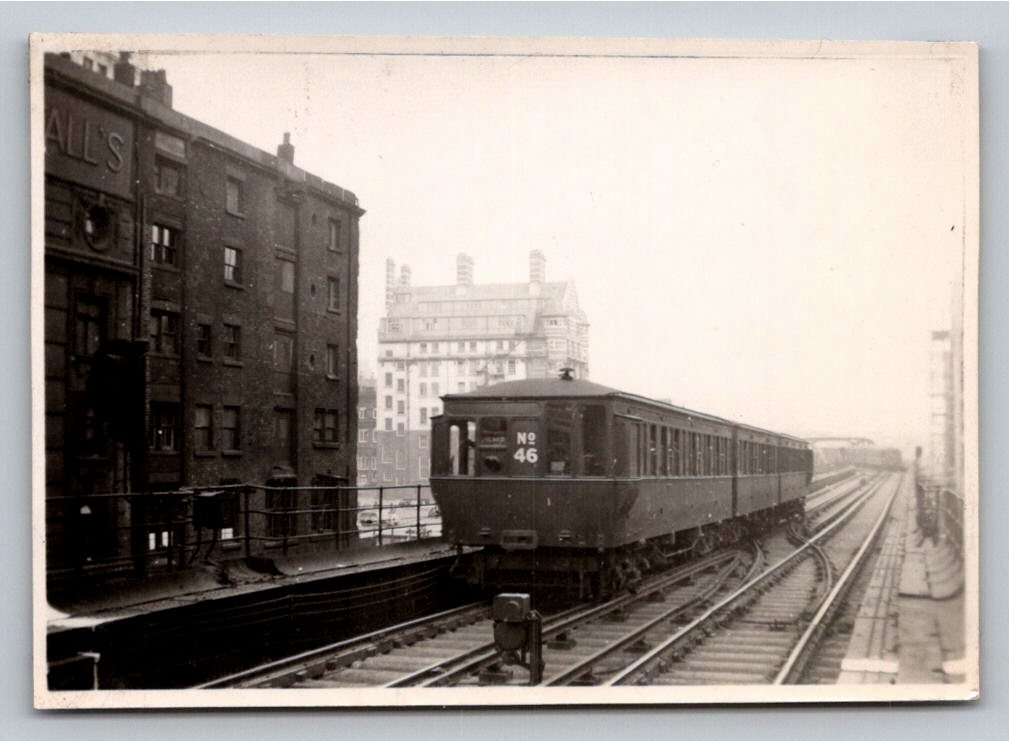
During the roaring 1920s, metropolitan centers underwent an unprecedented expansion powered by rapid electric mass transit systems. This rare original vintage snapshot captures an authentic piece of early public transportation history: electric elevated train car 'No 46' navigating high elevated tracks framed by towering brick urban architecture. As industrial cities outgrew traditional surface transit, elevated rail lines offered an efficient solution, bypassing crowded streets to move thousands of daily commuters swiftly across expanding municipal boundaries.
Visual Details & Engineering Infrastructure
The composition provides an exceptional view of early 20th-century municipal engineering. Train car No 46 is clearly visible front-and-center, featuring its distinct multi-windowed passenger carriage, front cab face, and streamlined roof structure. Below the carriage, the elevated superstructure showcases complex steel track assembly, switching gear, and third-rail electrical infrastructure. Behind the train, multi-story brick industrial facades and distant city structures emphasize the dense, working-class urban environment through which these elevated lines operated.
Physical Condition & Archival Characteristics
Measuring precisely 3.1 by 2.2 inches, this historic snapshot is printed on period matte paper stock, rendering sharp black-and-white tonal contrast across the train body, tracks, and surrounding masonry. The reverse side remains unprinted and clean, exhibiting light pencil markings along with dark mounting residue remnants at the four corners—a classic hallmark of mid-century photo album display. Preserved in remarkable condition, this original piece serves as a compelling collectible for enthusiasts of vintage rail transit, urban history, and historical transportation photography.
The Golden Age of Municipal Electric Transit
Produced in 1925, this snapshot captures a pivotal era when major industrial cities were rapidly modernizing their public infrastructure. The early 20th century marked a dramatic shift away from horse-drawn carriages and soot-heavy steam locomotives toward high-efficiency, third-rail electric power. Mid-tier elevated cars like No 46 served as the workhorses of metropolitan mobility, allowing dense urban centers to expand outward by offering fast, affordable transit for millions of factory workers and office employees during the post-WWI industrial boom.
Gelatin-Silver Craftsmanship and Collector Value
Developed using traditional gelatin-silver print chemistry on matte paper, the photograph exhibits the exceptional tonal range characteristic of 1920s vernacular photography. Handheld cameras of the period captured remarkable detail, preserving the intricate riveted steel beams, electric contact shoes, and architectural masonry with sharp clarity. Silver-based photographic prints from this era possess remarkable longevity, allowing the fine details of early rapid transit infrastructure to remain vivid nearly a century after exposure.
For transportation historians and vintage ephemera collectors, original photographs of mid-1920s elevated equipment offer irreplaceable primary-source documentation. The corner mounting residue on the reverse provides authentic provenance of home album display, reflecting how ordinary citizens documented the changing urban landscapes around them. As surviving physical artifacts of the golden age of city transit grow increasingly scarce, this 1925 snapshot stands as a tangible link to the foundation of modern mass transit.