1920s Mountain River Gorge & Forest Cascade Snapshot
📸 Click any thumbnail to inspect Front, Back & Angles (2 Photos)
🔗 Embed / Cite This Archival Image (Free with Attribution)Get HTML Code
© USA RESELL. Bloggers, historians, and website owners may embed this image for free by copying the HTML code below (which includes the required credit link back to this page):
USA RESELL is a living historical archive. Because original artifacts are one-of-a-kind and source records change rapidly, use the button above to check live marketplace availability or locate surviving examples. As an eBay Partner, we may earn a commission on qualifying purchases.
Item Specifications
- Type: Photograph
- Production Technique: Gelatin-Silver Photograph
- Original/Licensed Reprint: Original
- Date Of Creation: 1920-1939
- Image Color: Black and White
- Subject: Landscape Mountains River Canyon Forest
- Category: Vintage Photography
- Format / Type: Snapshots
Historical Context & Overview
Visual & Historical Overview: A Roaring Alpine Cascade
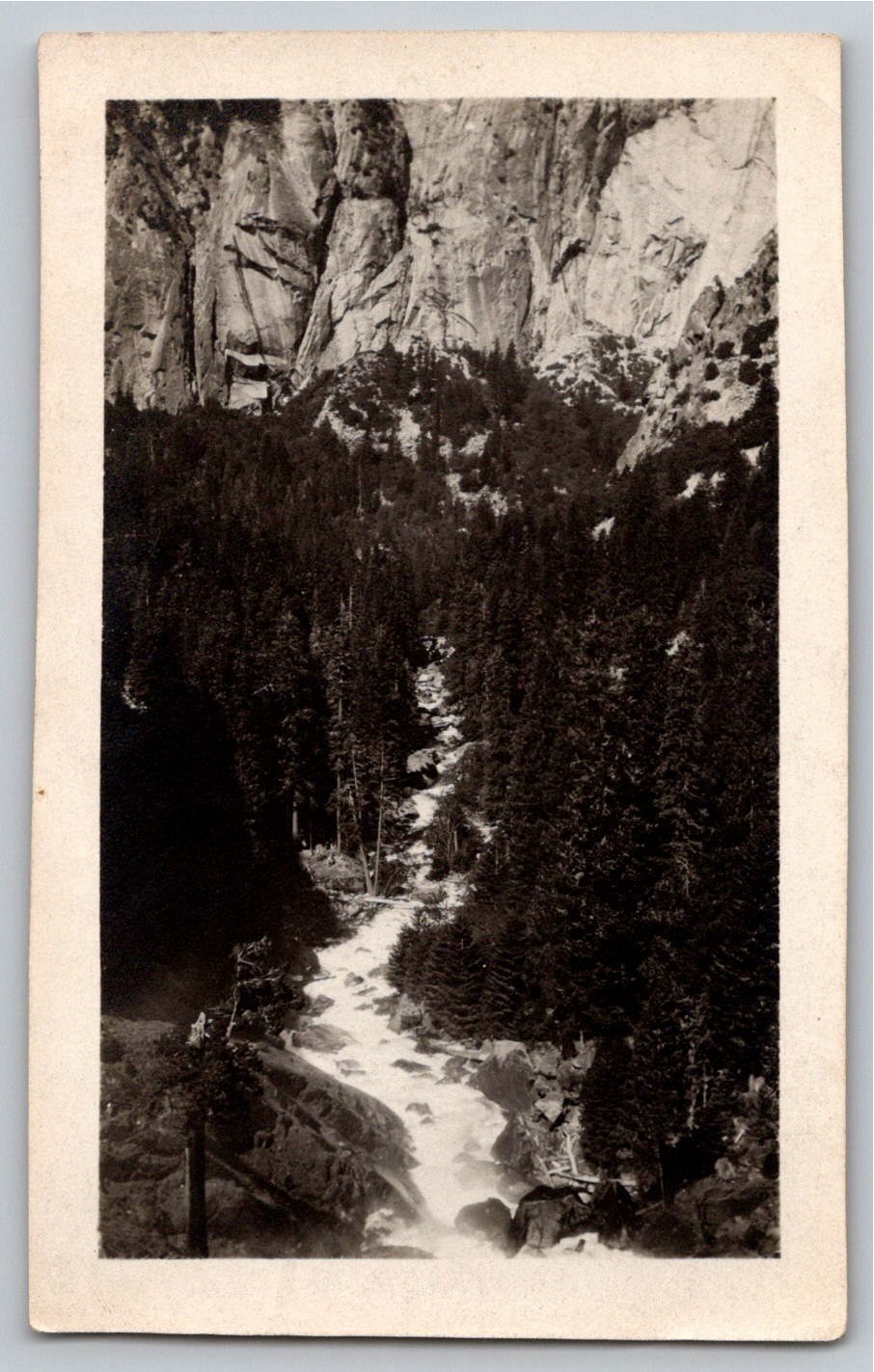
This striking original vintage black-and-white photograph captures the raw, kinetic energy of an alpine torrent cutting through a steep wilderness ravine. Rushing whitewater rapids surge through the bottom of the frame, framed by a dense canopy of mature evergreen timber. Towering above the tree line in the upper register, dramatic, vertical granite cliffs catch direct sunlight, creating an imposing natural amphitheater that evokes iconic high-elevation landscapes of the American West such as Yosemite Valley or the High Sierra.
Dating to the interwar era of the 1920s to 1930s, the composition exemplifies early twentieth-century outdoor photography. The unknown photographer captured this dynamic scene from an elevated vantage point, balancing the churning, foam-flecked water in the foreground against the immense geological mass of the sun-drenched canyon walls above. The deep contrasts between sunlit rock faces and shadow-draped pine groves produce remarkable atmospheric depth.
Early Outdoor Leisure and Wilderness Exploration in America
During the 1920s and 1930s, the expansion of the National Park Service and the rise of personal automobile travel ignited a golden age of American wilderness touring. Everyday adventurers equipped with portable roll-film cameras, such as the Kodak Brownie or folding Autographic models, ventured beyond rail corridors into rugged mountain gorges. These cameras democratized landscape documentation, allowing travelers to bring back tactile records of nature’s untamed grandeur.
While studio landscape photographers like Ansel Adams and Carleton Watkins brought heavy view cameras to monumental vistas, snapshots like this represent the authentic vernacular eye of the traveler. The unscripted framing captures nature as it was directly encountered—tumbling over fallen timber, slicing through ancient metamorphic rock, and existing entirely independent of human development or infrastructure.
Physical Specifications, Process, and Archival Condition
Developed using the traditional gelatin silver development process on glossy photographic paper, the image retains impressive tonal range. The print measures approximately 2.7 by 4.4 inches, a classic rectangular snapshot format of the period. The silver emulsion reveals crisp textural detail across the rock crevices, fine pine foliage, and the mist of the cascading water, demonstrating proficient chemical exposure and darkroom handling.
The reverse side of the print is completely blank, displaying the unprinted paper substrate typical of personal photo prints rather than commercially printed photographs. In terms of preservation, the artifact remains in very good vintage condition, exhibiting clean white borders, sharp corners, and only slight, natural age toning along the back edges. Free of tears, pinholes, or heavy creases, it stands as an exceptional collector piece representing early twentieth-century American landscape photography.