Antique 1908 Forest Park Bridge & River Des Peres St. Louis
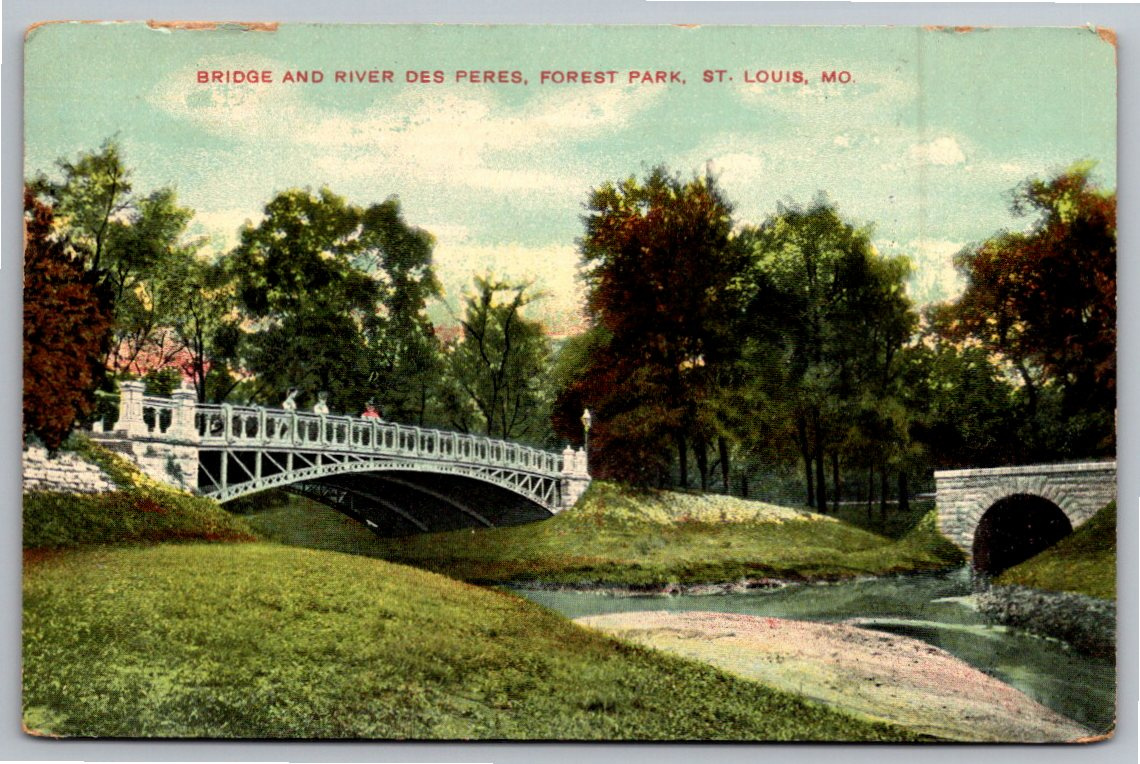
📸 Click any thumbnail to inspect Front, Back & Angles (2 Photos)
As an eBay Partner, we may earn a commission if you make a purchase.
Item Specifications
- Era: Divided Back (1907-1915)
- Postmark Year: 1908
- Publisher: S. H. Knox & Co.
- Printer: Printed in Germany
- Location: Forest Park, St. Louis, Missouri
- Subject: Bridge & River Des Peres
- Category: Postcards & Ephemera
- Format / Type: Vintage Postcards
Looking for Modern Alternatives?
Explore top-rated, modern Postcards & Ephemera and related historical accessories on Amazon.
Shop Postcards & Ephemera on Amazon →As an Amazon Associate, we earn from qualifying purchases.
Historical Context & Overview
In the early twentieth century, Forest Park stood as the crowning jewel of St. Louis, Missouri, fresh off its internationally celebrated role as the host site for the 1904 Louisiana Purchase Exposition. Postcards from this vibrant era serve as essential visual records of an era when municipal leaders across America embraced the tenets of the City Beautiful movement, blending structured civil architecture with scenic natural sanctuaries. This striking 1908 antique color postcard captures a serene, pastoral scene featuring a detailed ornamental bridge spanning the gentle, winding waters of the River Des Peres within the park grounds.
A Vanished Landscape: River Des Peres Before Channelization
To modern collectors and historians familiar with the geography of St. Louis, this postcard offers a captivating look at a landscape that transformed dramatically in subsequent decades. In 1908, the River Des Peres meandered naturally through Forest Park, bordered by grassy banks, elegant iron-railed bridges, and lush foliage displaying rich rustic hues. Following repeated severe flooding in the 1910s and 1920s, urban engineers embarked on massive municipal works projects that eventually channelized the river and enclosed large portions of it within concrete culverts underground. Consequently, early color lithographs like this one preserve a rare, authentic vision of the river's original natural course, revealing how landscape architects integrated rustic waterways into public recreational spaces.
German Lithography and the S. H. Knox Retail Legacy
Produced during the peak of the Golden Age of Postcards (1907–1915), this piece displays the exquisite color separation and fine detail characteristic of early German printing press technology. Before World War I disrupted global trade, American postcard distributors routinely relied on German printers, who were recognized worldwide for their mastery of multi-tint chromolithography. The image renders the subtle cyan gradient of the sky, soft reflections upon the river's surface, and detailed ironwork along the bridge span with remarkable fidelity.
The card was manufactured expressly for S. H. Knox & Co., a prominent five-and-ten-cent store operator founded by Seymour H. Knox in 1884. Knox stores were famous across the Midwest and Northeast for offering high-quality, affordable goods, including souvenir views of regional landmarks. In 1912, S. H. Knox & Co. merged with several rival variety store chains to establish the world-renowned F. W. Woolworth Company. Surviving postcards bearing the Knox imprint represent a fascinating bridge between early retail history and local souvenir publishing.
Authentic 1908 Postal Ephemera
The reverse side features the classic divided back layout authorized by the United States Postal Service in 1907, allowing senders to write messages on the left side while reserving the right side exclusively for the recipient's address. A crisp machine postmark from the St. Louis, MO Annex Station dated November 21, 1908, cancels a green 1-cent Benjamin Franklin stamp. Accompanied by a heartfelt handwritten message sent to family in Gallatin, Missouri, this postcard stands as a wonderfully preserved, educational piece of turn-of-the-century Midwestern history.