1920 Shaw's Garden Floral Display House St. Louis Vintage
📸 Click any thumbnail to inspect Front, Back & Angles (2 Photos)
As an eBay Partner, we may earn a commission if you make a purchase.
Item Specifications
- Era: 1920s Divided Back
- Location: St. Louis, Missouri
- Subject: Shaws Garden Floral Display House
- Postmark Date: 1920
- Cancellation: Join The Navy Slogan
- Originality: Original Vintage
- Category: Postcards & Ephemera
- Format / Type: Vintage Postcards
Looking for Modern Alternatives?
Explore top-rated, modern Postcards & Ephemera and related historical accessories on Amazon.
Shop Postcards & Ephemera on Amazon →As an Amazon Associate, we earn from qualifying purchases.
Historical Context & Overview
A Window into Botanical History: Shaw's Garden in 1920
In the summer of 1920, a traveler named Agnes boarded a train for St. Louis, arriving at 6:45 in the evening. Her visit to the city included a trip to one of America’s premier horticultural sanctuaries: Shaw’s Garden, officially known as the Missouri Botanical Garden. Captivated by the lush greenery and architectural splendor of the Floral Display House, Agnes sent a postcard home to Louisburg, Kansas, capturing a vivid moment in early twentieth-century American garden culture.
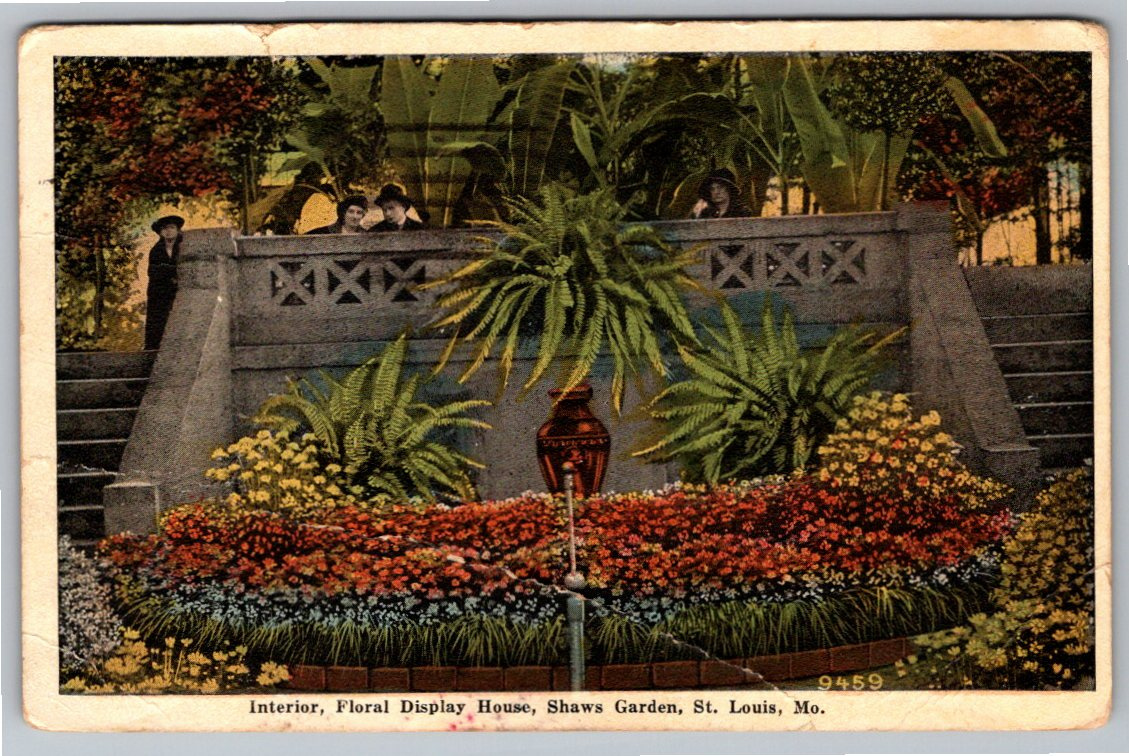
This original vintage postcard offers a fascinating glimpse into the grand conservatory interior of Shaw’s Garden during a key era of institutional expansion. With rich hand-colored tones depicting terraced stone staircases, ornamental urns, elevated balustrades, and meticulously arranged beds of vibrant blossoms, the image reflects the late Gilded Age and Progressive Era passion for civic botany and landscape design.
Henry Shaw and the Legacy of the Missouri Botanical Garden
Founded in 1859 by businessman and philanthropist Henry Shaw, the Missouri Botanical Garden is the oldest continuously operating botanical institution in the United States and a recognized National Historic Landmark. Shaw envisioned an urban sanctuary that served dual purposes: scientific research and public aesthetic enjoyment. By the early twentieth century, the garden had established world-renowned glasshouses designed to showcase exotic flora gathered from across the globe.
The Floral Display House, featured on this card, was constructed during a period when conservatory engineering allowed for sweeping indoor garden landscapes. Visitors strolled along stone terraces framed by soaring tropical fronds, lush ferns, and artfully layered seasonal flowerbeds. As seen in the postcard's artwork, patrons dressed in period attire—including wide-brimmed hats and tailored coats—frequented these indoor sanctuaries year-round, experiencing exotic plant species previously inaccessible to the average Midwesterner.
Postal Artifacts: The 1920 Navy Slogan Cancel and Personal History
The reverse side of this card carries rich historical documentation beyond its botanical subject matter. Postmarked on August 2, 1920, in Saint Louis, Missouri, the card features a distinctive "Join the Navy – Training – Travel" machine cancellation banner alongside a classic red two-cent George Washington postage stamp. Post-World War I military recruitment cancellations were widely utilized across major American postal centers, turning everyday mail into a canvas for national public service messaging.
The handwritten message offers an endearing slice-of-life snapshot from August 1920. Agnes writes about her rail journey on the Q.C. train, meeting family, and personal greetings. Printed historical notes at the upper left describe the garden's famous location at Flora and Tower Grove avenues, noting its founding mission of "developing to perfection every known variety of flower, plant, and shrub."
An Authentic Artifact for Garden and Postal Historians
For collectors of Missouri ephemera, horticultural history, or early twentieth-century American color printing, this vintage postcard represents a tangible link to Midwestern heritage. Its vibrant illustration, crisp 1920 cancellation, and authentic personal correspondence make it a standout piece of historical paper Americana.