1910 Antique Embossed Thanksgiving Turkey & Harvest Vintage
📸 Click any thumbnail to inspect Front, Back & Angles (2 Photos)
As an eBay Partner, we may earn a commission if you make a purchase.
Item Specifications
- Era: Divided Back (1907-1915)
- Year: 1910
- Theme: Thanksgiving Holiday
- Features: Embossed, Gilded Accents
- Postmark Date: Nov 15, 1910
- Postmark Location: St. Louis, Missouri
- Category: Postcards & Ephemera
- Format / Type: Vintage Postcards
Looking for Modern Alternatives?
Explore top-rated, modern Postcards & Ephemera and related historical accessories on Amazon.
Shop Postcards & Ephemera on Amazon →As an Amazon Associate, we earn from qualifying purchases.
Historical Context & Overview
The Golden Age of Holiday Greeting Cards
During the early twentieth century, the American postcard boom—often celebrated as the Golden Age of Postcards (1898–1915)—transformed how families commemorated seasonal holidays. Among all the annual occasions, Thanksgiving prompted some of the most vibrant and intricately produced ephemera. Printed predominantly in Germany, where chromolithographic technology and heavily relief-embossed die-cutting reached their artistic zenith, these cards served as small, affordable works of art sent through the mail to connect distant loved ones.
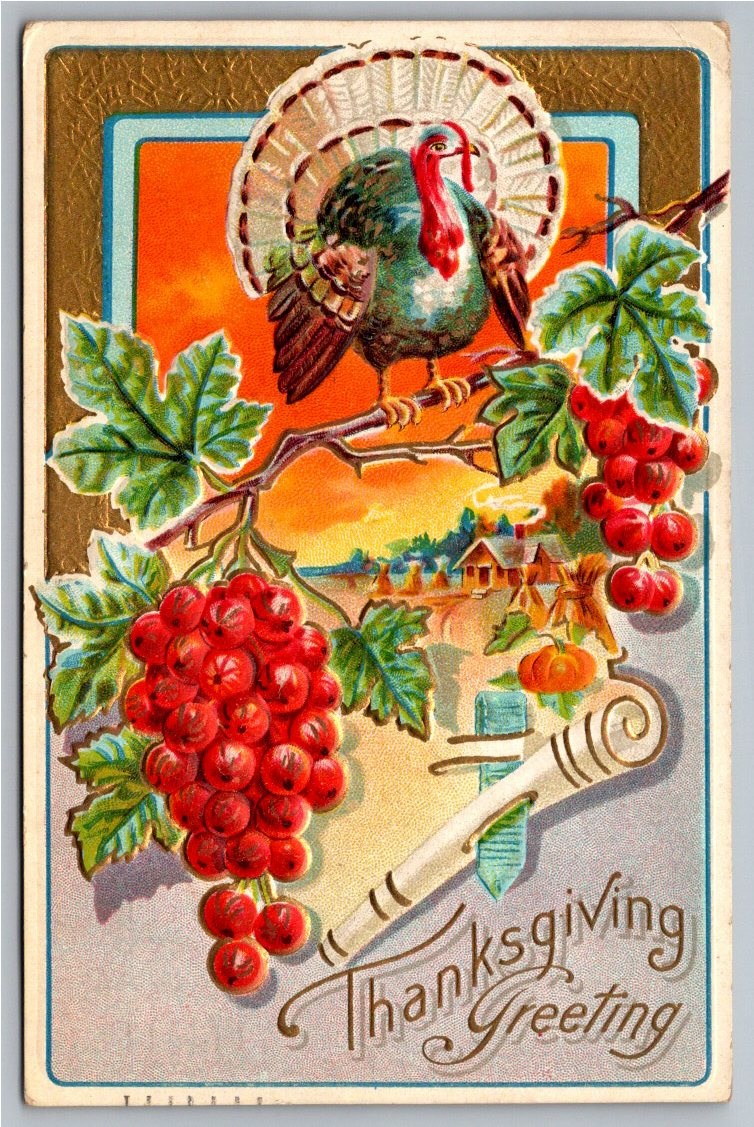
This particular 1910 postcard exemplifies the lavish aesthetic of Edwardian holiday correspondence. Featuring a proud wild turkey perched atop a fruit-laden branch against a backdrop of glowing twilight and stacked corn shocks, the piece radiates the warmth and gratitude associated with the American harvest season.
Chromolithography, Embossing, and Gilded Accents
What sets early 1910s Thanksgiving postcards apart from later flat-printed cards is the tactile, multi-sensory depth created by press-embossing and gold leaf gilding. Printmakers executed multi-color lithography to capture the iridescent sheen on the turkey’s plumage, the deep ruby tones of the heavy berry clusters, and the soft ambient light of a rural sunset.
After printing, heavy steel dies stamped the thick cardstock from behind, giving dimensional relief to every element—from the raised tail feathers of the turkey to the curled scroll bearing the calligraphic inscription "Thanksgiving Greeting." The rich gold border frame, textured with fine geometric stippling, captures ambient room light, elevating the entire composition into a cherished keepsake meant to be displayed on parlor mantels.
A Postal Artifact of 1910 St. Louis
Turning to the reverse side reveals a classic divided-back layout, which the United States Postal Service authorized in early 1907 to allow senders to write messages alongside the recipient’s address. The crisp black cancellation mark records a postmark from the St. Louis, Missouri post office on November 15, 1910 at 11:30 PM—just days prior to Thanksgiving Day that year.
Affixed in the upper corner is a green one-cent Benjamin Franklin stamp, the standard domestic postcard rate of the era. Written in elegant, sweeping cursive penmanship, the handwritten message preserves a quiet snapshot of familial affection, illustrating how these miniature gilded treasures carried warm personal sentiment across the country over a century ago.
Harvest Symbolism and Collector Value
Beyond its aesthetic beauty, the postcard is rich in period iconology. The turkey—a central fixture of traditional American Thanksgiving dinners since the nineteenth century—symbolizes abundance and domestic comfort. Surrounding harvest imagery, including ripe berries and a rustic farmhouse flanked by corn shocks, reinforced traditional rural virtues during a period when urban migration was accelerating across North America. For collectors of holiday ephemera, clean embossed examples featuring intact gilding and clear postmarks from the Golden Age remain highly sought-after treasures of early 20th-century print culture.