Antique 1910s Embossed Purple Clematis Birthday Greeting Postcard
📸 Click any thumbnail to inspect Front, Back & Angles (2 Photos)
As an eBay Partner, we may earn a commission if you make a purchase.
Item Specifications
- Era: 1910s Divided Back Era
- Subject: Purple Clematis Flowers & Rustic Trellis
- Theme: Birthday Greeting
- Printing Technique: Chromolithography & Relief Embossing
- Postage: 1 Cent Green Washington Stamp
- Destination: Raymond, New Hampshire
- Category: Postcards & Ephemera
- Format / Type: Vintage Postcards
Looking for Modern Alternatives?
Explore top-rated, modern Postcards & Ephemera and related historical accessories on Amazon.
Shop Postcards & Ephemera on Amazon →As an Amazon Associate, we earn from qualifying purchases.
Historical Context & Overview
Botanical Elegance of the Edwardian Era
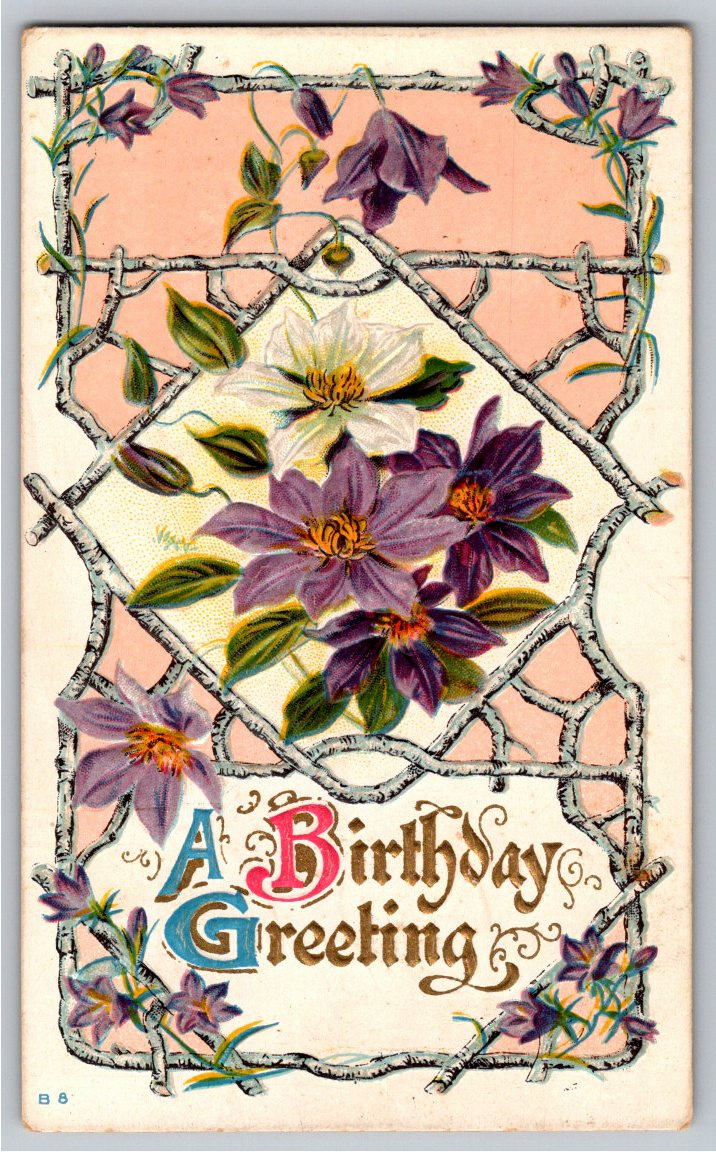
During the Golden Age of Postcards (roughly 1907 to 1915), sending illustrated greetings was one of the most popular forms of social connection in North America and Europe. This exquisite original vintage postcard from the 1910s exemplifies the artistic craftsmanship of the era, featuring a lush floral study centered around rich purple clematis blossoms. Framed within a naturalistic, rustic twig-and-trellis border, the composition seamlessly blends the organic warmth of country gardens with the polished aesthetic of Edwardian print design.
The front image displays striking purple clematis flowers paired with a contrasting white bloom, surrounded by intricate vines and delicate buds. Rendered with stylized typography that reads "A Birthday Greeting," the card reflects the aesthetic transitions occurring at the turn of the century, bridging Victorian decorative detail with early Art Nouveau sensibilities.
Masterful Relief Embossing and Fine Lithography
What sets early 20th-century greeting postcards apart is the incredible tactile quality achieved through multi-stage production processes. High-grade cardstock was first printed using multi-color chromolithography, a process that layered oil-based inks to produce deep, lightfast hues. The stock was then fed through specialized metal dies to press deep relief embossing into the paper fibers from the reverse side.
When viewing the reverse of this card, the pronounced raised impressions of the clematis petals and rustic arbor trellis are vividly preserved. This dramatic embossing gave the recipient a three-dimensional visual and tactile experience, making the postcard feel less like ordinary mail and more like an intimate keepsake.
The Language of Flowers in Turn-of-the-Century Postcards
In Edwardian culture, floriography—the symbolic "language of flowers"—remained a central theme in social art. While roses represented love and lilies signified purity, the clematis carried connotations of mental beauty, ingenuity, and artistic ambition. Paired with a birthday sentiment, sending a clematis illustration expressed admiration for the recipient's intellect, character, and graceful presence.
A Tangible Snapshot of Early American Postal History
Beyond its aesthetic merit, this postcard offers an authentic window into American social history. The reverse features a standard divided-back format introduced by the United States Postal Service in 1907, which allowed senders to write a personal message on the left side while reserving the right exclusively for the recipient's address.
Sent to John E. Cram of Raymond, New Hampshire, and signed simply "From Vivian," the piece retains its original green one-cent U.S. postage stamp featuring George Washington. For ephemera collectors, botanical enthusiasts, and historians of social correspondence, surviving postcards like this serve as cherished artifacts of an era when art and daily communication were beautifully intertwined.