1912 St. Louis Compton Heights Reservoir Park Water Tower
📸 Click any thumbnail to inspect Front, Back & Angles (2 Photos)
As an eBay Partner, we may earn a commission if you make a purchase.
Item Specifications
- Era: Divided Back (1907–1915)
- Postmark Date: September 1, 1912
- City: St. Louis
- State: Missouri
- Subject: Compton Hill Water Tower & Reservoir Park
- Originality: Original Vintage
- Category: Postcards & Ephemera
- Format / Type: Vintage Postcards
Looking for Modern Alternatives?
Explore top-rated, modern Postcards & Ephemera and related historical accessories on Amazon.
Shop Postcards & Ephemera on Amazon →As an Amazon Associate, we earn from qualifying purchases.
Historical Context & Overview
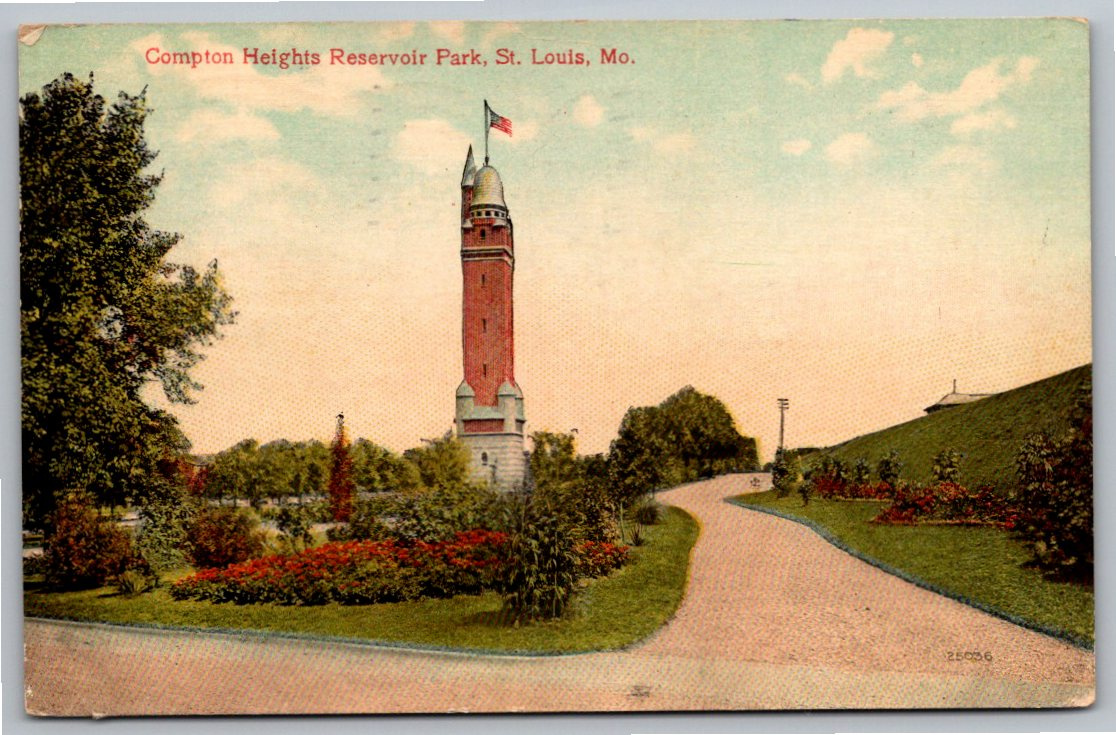
At the turn of the twentieth century, municipal engineering was treated not merely as a matter of utilitarian infrastructure, but as an opportunity for civic artistic expression. Few structures embody this gilded approach to urban public works as magnificently as the Compton Hill Water Tower in St. Louis, Missouri. Published during the golden age of picture postcards, this colorized 1912 artifact captures the ornamental standpipe tower and surrounding parklands in vibrant, idyllic detail.
Architectural Splendor disguising Municipal Function
Constructed in 1898 to replace an earlier 1869 standpipe destroyed by the devastating 1896 tornado, the Compton Hill Water Tower was designed by renowned architect Harvey Ellis. Standing 179 feet tall, the tower was built to disguise a massive 130-foot riveted steel pipe used to surge-absorb pressure fluctuations from the city’s water pumping stations. Rather than erecting a utilitarian metal pipe, the city commissioned an ornate, French Romanesque Revival monument built from red brick, terracotta, and white limestone from Carthage, Missouri.
The design features a picturesque octagonal limestone base, decorative balconies, and a slate-tiled French cap capped with a decorative weather spire. Towering over the surrounding neighborhood, the structure quickly became an icon of South St. Louis architecture, combining civic pride with high European architectural aesthetics.
Reservoir Park as an Urban Oasis
Surrounding the ornamental tower was Compton Heights Reservoir Park, a carefully landscaped 36-acre green space developed atop high ground in South St. Louis. As depicted on the front of the postcard, meticulously tended floral beds, winding gravel pathways, and sprawling manicured lawns framed the majestic stone tower. To the right side of the view rises the sloped grassy embankment of the open-air water reservoir, which supplied clean water to the expanding metropolis.
During the early 1900s, Reservoir Park served as a popular gathering destination for local residents seeking fresh air and elevated views of the cityscape. The park remains one of only three historic water tower parks surviving in St. Louis today, standing alongside the Bissell Street and Grand Avenue towers.
A Snapshot from Late Summer 1912
The reverse side of this postcard offers an intimate glimpse into early 20th-century postal history. Clear postmark impressions show it was cancelled in St. Louis on September 1, 1912, bearing a green one-cent George Washington postage stamp. Mailed to Gallatin, Missouri, the card carries handwritten greetings from "John, May & Mabel," capturing a fleeting personal memory preserved for over a century.
For collectors of Missouri history, American architectural heritage, and Golden Age postcard ephemera, this 1912 view stands as a pristine document of a time when everyday public utility was celebrated with monumental art and civic beauty.