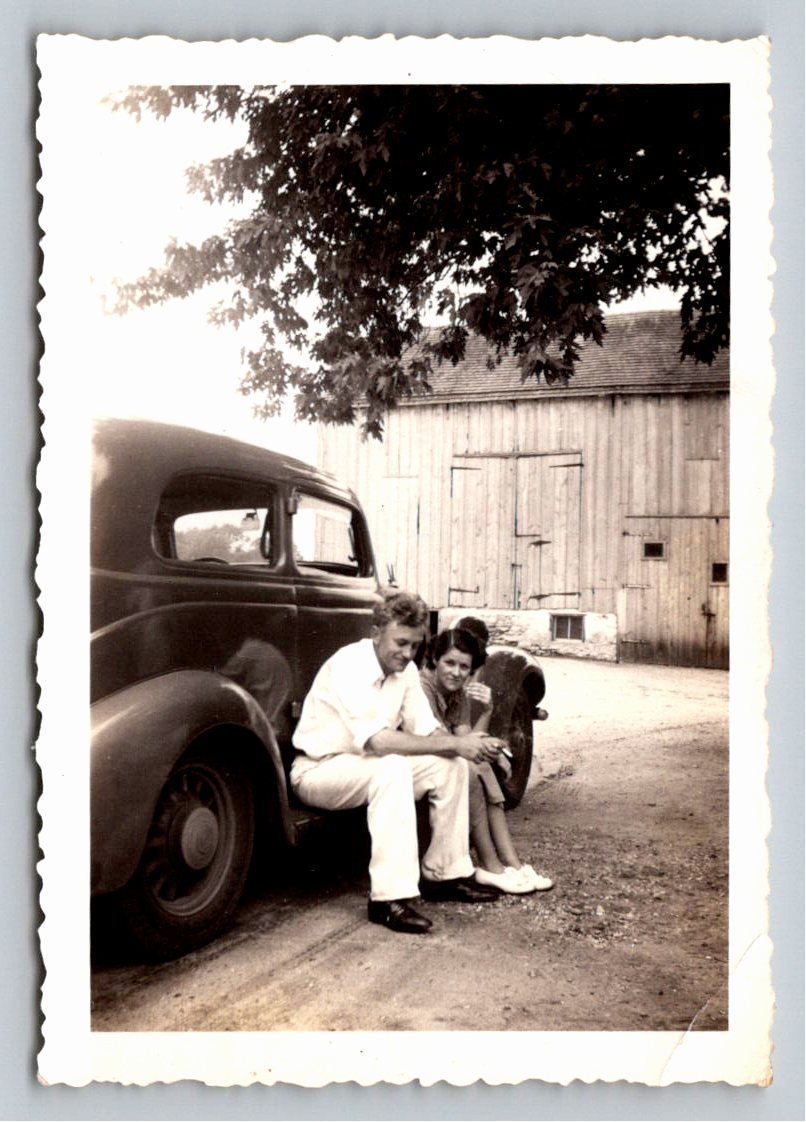
1937 Vintage Photo Couple on Classic Car Running Board
📸 Click any thumbnail to inspect Front, Back & Angles (2 Photos)
🔗 Embed / Cite This Archival Image (Free with Attribution)Get HTML Code
© USA RESELL. Bloggers, historians, and website owners may embed this image for free by copying the HTML code below (which includes the required credit link back to this page):
USA RESELL is a living historical archive. Because original artifacts are one-of-a-kind and source records change rapidly, use the button above to check live marketplace availability or locate surviving examples. As an eBay Partner, we may earn a commission on qualifying purchases.
Item Specifications
- City: Unspecified
- Country: United States
- Era: 1930s
- Subject: Classic Automobile Barn Couple Rural Life
- Theme: Americana
- Year of Production: 1937
- Category: Vintage Photography
- Format / Type: Snapshots
Historical Context & Overview
Visual Overview: Summer Leisure and Rural Americana
Dating precisely to July 2, 1937, this original black-and-white snapshot captures an authentic vignette of American life during the late Great Depression. The focal arrangement centers on a young man and woman relaxing together on the wide steel running board of a 1930s coupe or sedan. Dressed in crisp summer attire—the gentleman sporting light-colored trousers, a short-sleeved open-collar shirt, and dark leather shoes, while his companion wears a casual dress paired with white canvas shoes—the pair conveys an effortless sense of weekend companionship and warmth.
The rustic farmyard setting provides an evocative background that complements the streamlined industrial curves of the automobile. Directly behind the vehicle looms a substantial timber-framed barn featuring vertical wooden board-and-batten siding, large hinged double wagon doors, small square windows, and a raised stone masonry foundation. Overhead, leafy branches from a mature deciduous tree filter the harsh summer sunlight, casting a gentle, dappled shadow pattern across the gravel driveway and the roof of the vehicle.
Historical Context: 1930s Motoring and Commercial Processing
During the 1930s, the family automobile served not merely as a practical mode of conveyance, but as an emblem of personal autonomy and leisure. Posing beside or seated upon the running board was an iconic social ritual of the era, offering a natural perch for candid vernacular portraits. The scene encapsulates a quiet retreat into the countryside, bridging the gap between urban automotive mobility and timeless agrarian architecture in pre-World War II America.
The verso of this print offers valuable historical documentation through its vivid green commercial finisher's stamp. Applied by the Photo Art Co. Inc., the imprint promotes their trademarked "NEVR-FADE PHOTO PRINTS" alongside the processing date of July 2, 1937, and a darkroom sorting code of "584 L." During this golden age of amateur photography, local drugstores and processing labs frequently partnered with commercial photo finishers who used proprietary chemical fixing and washing methods to assure patrons their precious family memories would withstand oxidation and silver mirroring.
Physical Attributes, Preservation, and Collector Appeal
Measuring approximately 2.4 by 3.4 inches, this single-piece vintage snapshot displays the classic deckle-edged or scalloped decorative border widely favored by commercial labs in the late 1930s. Developed on genuine fiber-base photographic paper using standard gelatin-silver emulsion chemistry, the image features balanced tonal gradients, deep rich blacks, and soft highlight retention that attest to the stability of the period darkroom bath.
Physical preservation is notably high, with no creases, tears, or significant surface loss present across the emulsion. The corners remain intact with sharp perimeter serrations, while the blank verso demonstrates only modest, natural paper toning consistent with decades of archival album storage. For collectors of vernacular snapshot photography, vintage automotive culture, and Great Depression social history, this original artifact remains an exceptional primary source.