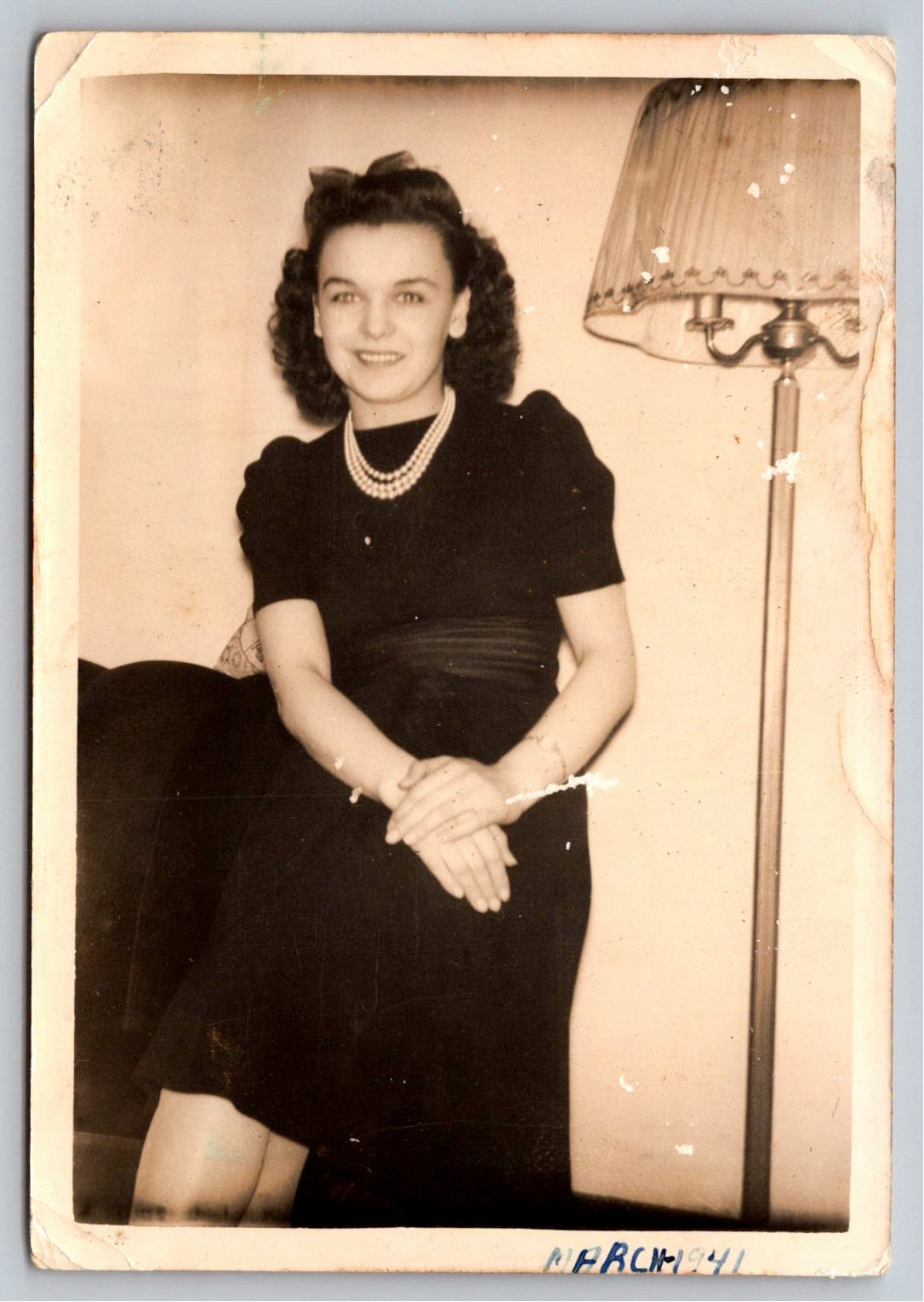
1941 Vintage Photo Stylish Woman in Puffed Dress & Lamp
📸 Click any thumbnail to inspect Front, Back & Angles (2 Photos)
🔗 Embed / Cite This Archival Image (Free with Attribution)Get HTML Code
© USA RESELL. Bloggers, historians, and website owners may embed this image for free by copying the HTML code below (which includes the required credit link back to this page):
USA RESELL is a living historical archive. Because original artifacts are one-of-a-kind and source records change rapidly, use the button above to check live marketplace availability or locate surviving examples. As an eBay Partner, we may earn a commission on qualifying purchases.
Item Specifications
- City: Unspecified
- Country: United States
- Era: 1940s
- Subject: Women
- Theme: Americana
- Year of Production: 1941
- Category: Vintage Photography
- Format / Type: Vintage Photographs
Historical Context & Overview
A Poised Portrait of Pre-War American Domesticity
Dating precisely to March 1941, this evocative color silver gelatin snapshot captures an authentic glimpse into American home life on the eve of the nation's entry into World War II. The composition features a poised young woman seated comfortably within an intimate parlor setting, turned slightly toward the viewer with an engaging, radiant smile. Standing alongside her is a quintessential period floor lamp featuring an intricate gooseneck arm and a pleated, fringe-trimmed shade, illuminating the calm domestic ambiance that defined private residences during the twilight of the Great Depression.
Her styling offers a remarkable study in early 1940s fashion, prior to the stringent fabric and material rationing measures later imposed by the War Production Board. She wears an elegant dark dress distinguished by dramatically puffed shoulders, short sleeves, and a defined, gathered cummerbund waist. Accenting her neckline is a luminous multi-strand pearl choker, perfectly complemented by a dark hair bow resting atop a head of meticulously set victory-style curls. Her folded hands and poised demeanor reflect the refined, aspirational social standards characteristic of pre-war young adults.
Historical Context and Snapshot Culture in Early 1941
The lower white margin of the photograph bears the handwritten notation "MARCH 1941" rendered in blue ink, anchoring the visual record to a deeply transformative moment in modern history. Just months prior to the attack on Pearl Harbor, American popular culture was navigating a delicate intersection of European war news, domestic economic recovery, and vibrant consumer design. Snapshot photography of this nature served as vital visual currency among families, recording milestones, new outfits, and personal relationships before global mobilization scattered millions of households across defense factories and distant theaters of combat.
On the reverse, an inverted studio or lab photofinishing control code reading "C267" confirms commercial development from standard roll film, typical of neighborhood drugstore and photographic counter services of the era. These automated batch stamps were routinely applied by developing laboratories to track film rolls through chemical wash baths and enlargement stations. The plain cream paper stock free of pre-printed postal demarcations reflects the personal vernacular purpose of the print, intended directly for keepsake display or placement within a private family scrapbook.
Physical Attributes, Paper Chemistry, and Archival Preservation
Printed on heavy single-weight photographic stock measuring approximately 3.3 by 4.8 inches, the piece exhibits the characteristic depth, tonal graduation, and high-contrast specular highlights unique to classic silver gelatin emulsion. Rich black tones in the sitter's dress balance against the subtle off-white tones of the background wall and interior furnishings. Along the darker shadow areas and right edge, the print shows honest physical provenance, including subtle surface silver mirroring, faint corner softening, and natural edge handling wear accrued across decades of domestic safekeeping.
The reverse reveals authentic amber toning, soft handling patination, and distinct corner ghosting where mounting adhesive or album corners once held the photograph in place. As surviving domestic visual ephemera from 1941 becomes increasingly scarce, authentic original prints like this remain celebrated primary artifacts for curators, costume designers, and historians of mid-century social life, offering an unvarnished window into everyday style and home decor during a pivotal chapter in twentieth-century America.