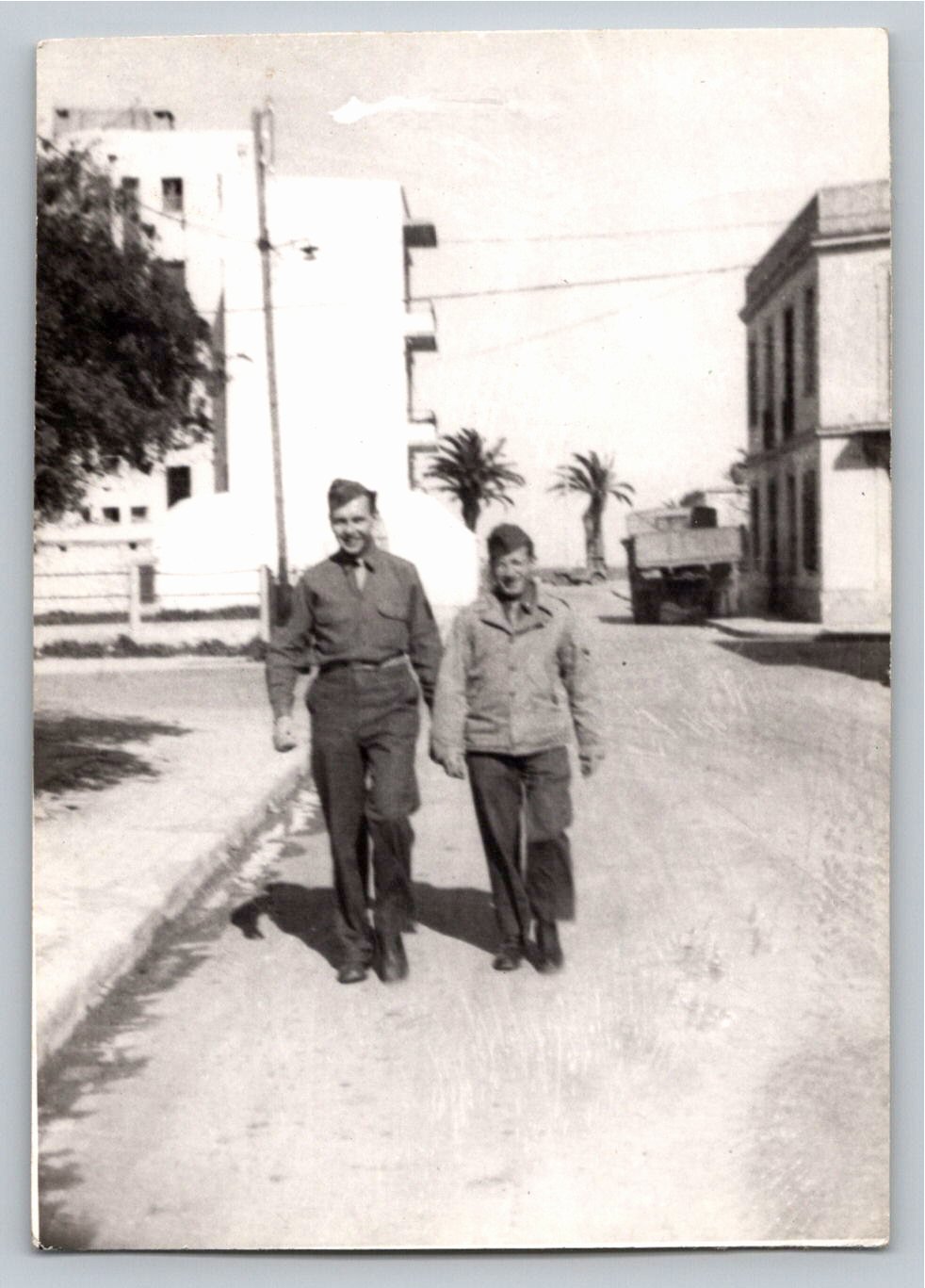
1944 WWII US Army Soldiers Bizerte Tunisia Photo Snapshot
📸 Click any thumbnail to inspect Front, Back & Angles (2 Photos)
🔗 Embed / Cite This Archival Image (Free with Attribution)Get HTML Code
© USA RESELL. Bloggers, historians, and website owners may embed this image for free by copying the HTML code below (which includes the required credit link back to this page):
USA RESELL is a living historical archive. Because original artifacts are one-of-a-kind and source records change rapidly, use the button above to check live marketplace availability or locate surviving examples. As an eBay Partner, we may earn a commission on qualifying purchases.
Item Specifications
- Type: Photograph
- Original/Licensed Reprint: Original Vintage
- Subject: Military Soldiers WWII
- Theme: Militaria History
- Era: World War II (1939-1945)
- Year of Production: 1944
- Category: Vintage Photography
- Format / Type: Snapshots
Historical Context & Overview
Visual & Historical Overview: American GIs in North Africa
Captured in May 1944, this vintage silver gelatin snapshot depicts two cheerful American servicemen strolling side by side along a sunlit street in the coastal city of Bizerte, French Tunisia. Both soldiers are attired in authentic wartime regulation attire, reflecting the daily dress of Allied personnel operating in the Mediterranean theatre. One GI strides forward in an olive drab service shirt paired with standard wool trousers and a tilted garrison cap, while his companion wears an iconic M-1941 field jacket over his military slacks. The bright North African sunlight casts sharp, elongated shadows against the paved roadway, emphasizing the candid warmth of the moment.
The urban background provides an evocative glimpse into wartime Bizerte. Framing the thoroughfare are towering stucco structures reflecting regional colonial architecture, complemented by indigenous Mediterranean palm trees rising against a clear sky. In the mid-ground, a military utility truck sits parked near the curb, underscoring the heavy Allied logistics footprint in the area. Photographed exactly one year after the culmination of the Tunisia Campaign in May 1943, this street scene illustrates the transition of North Africa from an active front line into a vital staging zone for subsequent campaigns across the Mediterranean.
Deeper History: Bizerte as an Allied Staging Ground
Following the surrender of Axis forces in North Africa in the spring of 1943, Bizerte transformed into one of the most vital logistical hubs in the Mediterranean Theatre of Operations. Its deep-water port and strategic position along the northernmost tip of the African continent allowed the United States Army and Allied navies to assemble vast quantities of matériel, ordnance, and personnel. By the spring of 1944, as this image was taken, Allied commands were actively preparing for major movements into Southern Europe, including ongoing operations in Italy and the forthcoming landings in Southern France under Operation Dragoon.
On the reverse of the photograph, personal handwritten notations in period graphite supply valuable individual context. The inscription reads: "5. Ray Herrick / Me - / Bizerte, N. A. / May 1944". This annotation confirms the photographic subject as an intimate snapshot taken for a soldier's personal keepsake album. Rather than an official military press release or staged studio portrait, the vernacular image captures unscripted camaraderie during brief downtime, offering a humanizing look at the daily reality of soldiers stationed thousands of miles away from home.
Provenance, Materiality, & Collector Significance
Developed on authentic vintage matte photographic paper, this silver gelatin print measures approximately 3.0 by 4.3 inches. The absence of commercial photograph printing on the reverse demonstrates that the piece was produced as a private snapshot meant for an overseas photo album. The emulsion exhibits crisp contrast and sharp focal fidelity, maintaining well-defined highlights on the architectural facades and rich shadow tones along the clothing folds and roadway. Tonal balance remains exceptionally stable, highlighting the quality of wartime developing chemistry.
The photograph survives in excellent vintage condition, exhibiting only modest handling wear consistent with prolonged placement in an album. The margins remain straight and square, with light corner softening that does not infringe upon the central visual field. The print is free from major tears, heavy creasing, or distracting emulsion loss. For collectors of World War II militaria, vernacular military photography, and Mediterranean theatre ephemera, this 1944 snapshot stands as an evocative, historically documented artifact of overseas service.