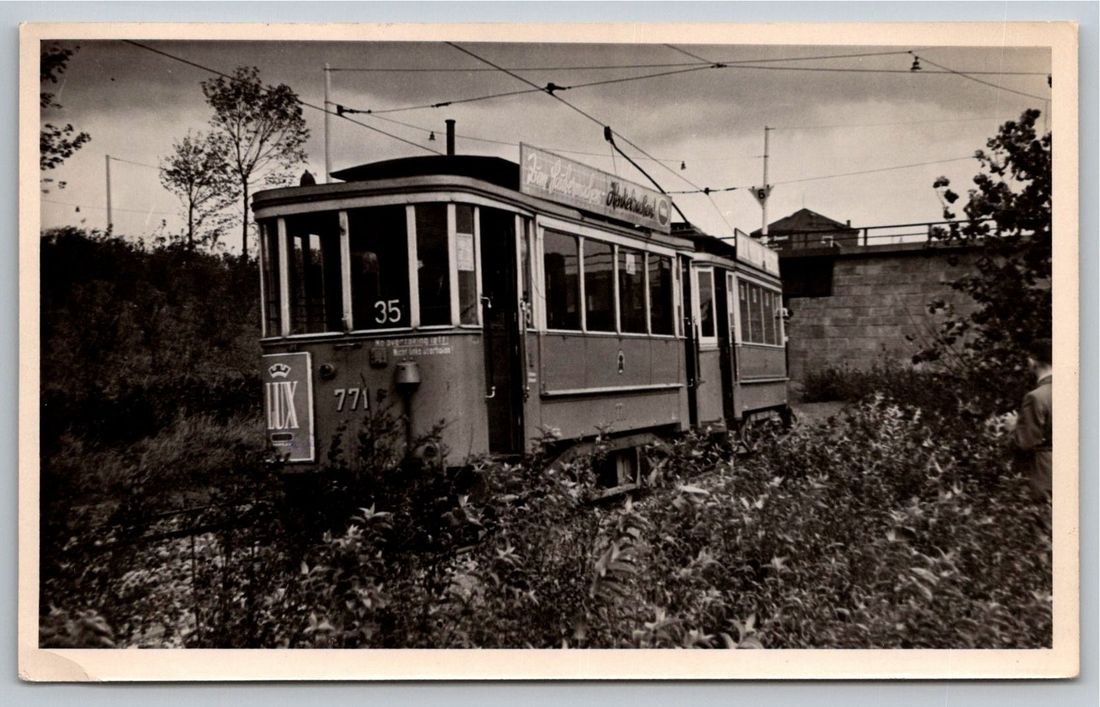
1950 Hamburg Germany Tram No 771 Line 35 Vintage Photo
📸 Click any thumbnail to inspect Front, Back & Angles (2 Photos)
🔗 Embed / Cite This Archival Image (Free with Attribution)Get HTML Code
© USA RESELL. Bloggers, historians, and website owners may embed this image for free by copying the HTML code below (which includes the required credit link back to this page):
USA RESELL is a living historical archive. Because original artifacts are one-of-a-kind and source records change rapidly, use the button above to check live marketplace availability or locate surviving examples. As an eBay Partner, we may earn a commission on qualifying purchases.
Item Specifications
- City: Hamburg
- State: Unspecified
- Country: Germany
- Era: Mid 20th Century
- Subject: Streetcar Tram Transit
- Theme: Transportation
- Category: Vintage Photography
- Format / Type: Snapshots
Historical Context & Overview
Mid-Century Transit Heritage: Hamburger Hochbahn AG Tram No. 771
This authentic 1950 black-and-white silver gelatin photograph captures a classic moment in post-war European urban transport history. Featuring Streetcar No. 771 serving Line 35, the image portrays the electric transit network operated by the Hamburger Hochbahn AG (H.H.A.) in Hamburg, Germany. Navigating a dedicated right-of-way bordered by dense foliage and overhead electric contact lines, the tram reflects the vital role public transit played in reconnecting post-war German city centers to expanding outer districts.
Measuring 5.3 by 3.3 inches, the glossy print showcases remarkable clarity in its side-profile presentation. Notable period details include a prominent front apron advertisement banner for Lux soap, along with roof-mounted route signs and traditional multi-window wooden and steel bodywork. The H.H.A. managed an extensive tramway infrastructure across Hamburg throughout the mid-20th century before the system was ultimately decommissioned in 1978 in favor of underground rail and bus networks, making contemporary photographic records of car No. 771 particularly desirable among transit historians.
Fascinating Post-War Paper Provenance
The reverse side of this photograph offers an intriguing archival glimpse into post-war photographic material distribution. Embossed repeatedly across the paper stock is the "CROWN COPYRIGHT RESERVED" watermark featuring the British Air Ministry ("A M") crown symbol. This indicates the photograph was printed on official British military surplus paper stock utilized in post-war occupied Germany during the early 1950s.
Additionally, the back bears clear handwritten ink identification noting "Germany. Hamburg (H.H.A.)" alongside an original British collector's hand-stamp reading "E.S. HOOPLE, LIVERPOOL 20, LANCASHIRE ENGLAND." Preserved in very good vintage condition, the photo exhibits light edge handling and subtle surface toning typical of genuine mid-century gelatin-silver prints.
Post-War Infrastructure and Commercial Visual Culture
During the early 1950s, Hamburg underwent rapid municipal reconstruction, relying heavily on the Hamburger Hochbahn AG to restore urban mobility across damaged districts. Public transit lines like Line 35 served as vital lifelines, carrying commuters through industrial corridors and newly rising residential neighborhoods during West Germany’s booming Wirtschaftswunder (economic miracle). Beyond their raw functional utility, these municipal streetcars functioned as mobile billboards reflecting the era's evolving commercial landscape. The prominent Lux soap apron banner displayed on Car No. 771 illustrates the swift resurgence of consumer brand marketing in everyday European life, offering social historians a compelling look into mid-century street-level visual culture alongside civil transit engineering.
Transit Ephemera and Silver-Gelatin Archival Value
For railway enthusiasts and vintage paper ephemera collectors, original snapshot photography from this post-war transitional decade holds exceptional documentary significance. Silver-gelatin prints produced on heavy fiber-based stock exhibit impressive chemical stability and fine shadow detail that modern reproductions struggle to match. The convergence of German municipal transit operations, Allied occupation paper distribution, and documented English enthusiast provenance transforms this photographic specimen into a fascinating cross-cultural artifact. As physical records of mid-century streetcar fleets become increasingly rare, well-preserved primary visuals depicting specific fleet vehicles like Hamburg's No. 771 remain invaluable tools for transport historians and municipal heritage archivists.