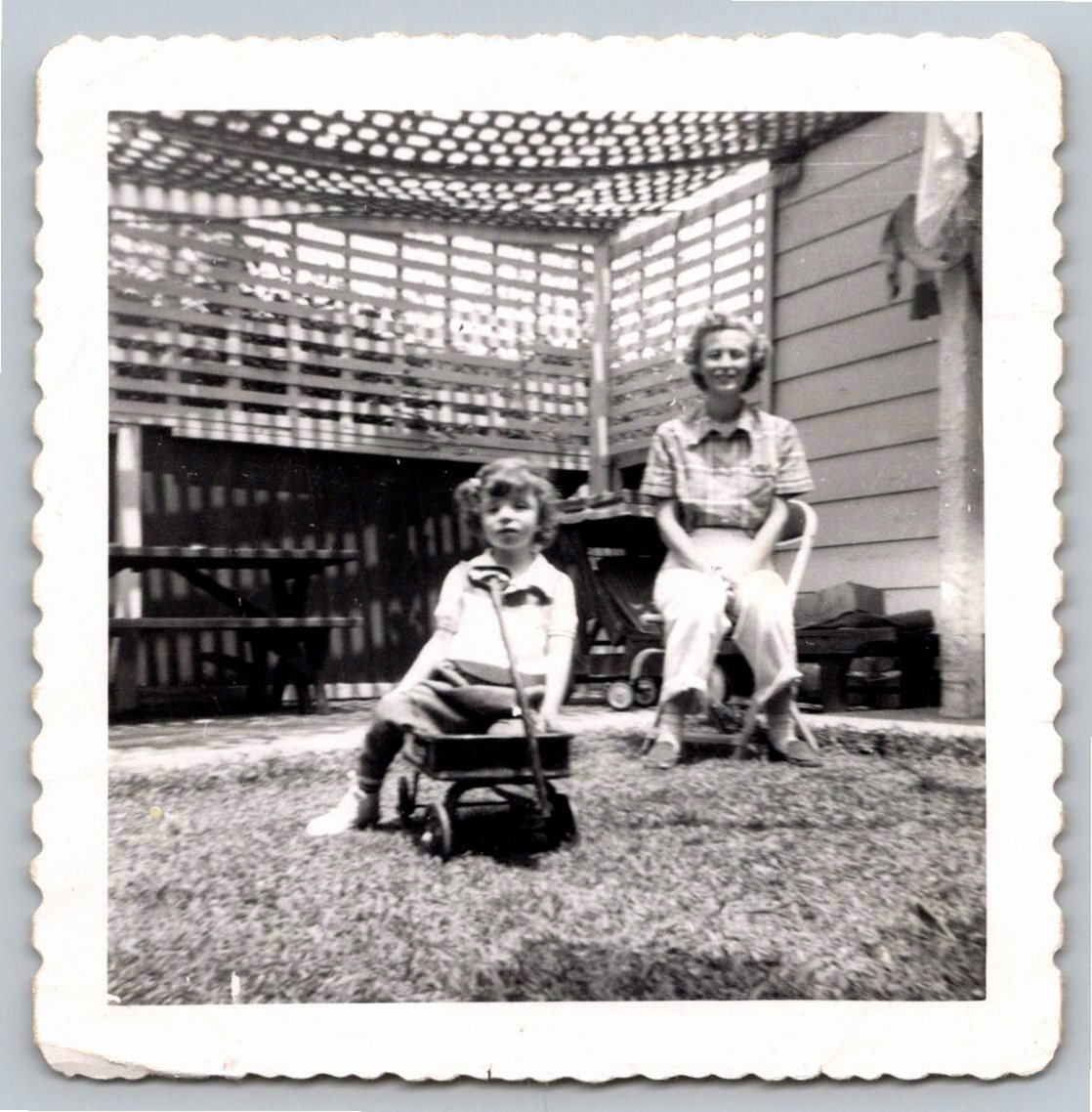
1950s Child in Toy Wagon Mother Backyard Deckle Edge Photo
📸 Click any thumbnail to inspect Front, Back & Angles (2 Photos)
🔗 Embed / Cite This Archival Image (Free with Attribution)Get HTML Code
© USA RESELL. Bloggers, historians, and website owners may embed this image for free by copying the HTML code below (which includes the required credit link back to this page):
USA RESELL is a living historical archive. Because original artifacts are one-of-a-kind and source records change rapidly, use the button above to check live marketplace availability or locate surviving examples. As an eBay Partner, we may earn a commission on qualifying purchases.
Item Specifications
- City: Unspecified
- Country: United States
- Era: 1950s
- Subject: Children Mother Toy Wagon Backyard
- Theme: Americana Domestic and Family Life
- Year of Production: 1955
- Category: Vintage Photography
- Format / Type: Snapshots
Historical Context & Overview
Mid-Century Domesticity and Backyard Leisure
This evocative black-and-white snapshot transports viewers directly into the heart of post-war American domestic life during the mid-1950s. Positioned on a neatly trimmed suburban lawn, a curly-haired toddler perches inside a miniature pull wagon, resting a hand along its metal steering handle. In the background, a smiling young mother sits relaxed on a folding metal lawn chair, outfitted in classic mid-century summer casualwear featuring rolled trousers and a tailored gingham short-sleeve blouse. The setting exudes tranquility, framed by horizontal wood siding, a paved patio threshold, and an overhead garden pergola that casts geometric dappled shadows across the scene.
The composition reflects the quintessential spirit of the 1950s baby boom, where the private residential backyard became the primary theater of family recreation and leisure. Architectural details like the heavy timber trellis, slatted fence partitions, and classic wooden picnic bench speak to the self-contained suburban oasis popular across mid-century American neighborhoods. The spontaneous yet balanced framing captures a serene everyday milestone, exemplifying the relaxed outdoor entertaining culture that defined peacetime domestic routine.
Amateur Photography and Kodak Paper Culture
During the 1950s, consumer photography experienced an unprecedented surge, spurred by user-friendly roll-film cameras from makers like Eastman Kodak. Families documented life's unscripted interludes on 120 or 620 medium format roll film, capturing square-format compositions that brought balanced proportions to spontaneous family records. Rather than relying on rigid studio portraits, parents recorded children naturally engaged in play, transforming everyday items like pedal cars, tricycle tricycles, and miniature wagons into cherished symbols of childhood independence.
This particular photograph was produced on authentic Kodak Velox photographic stock, evidenced by the subtle period watermarking across the reverse. First introduced in the late nineteenth century and continually refined through the twentieth, Velox was celebrated for its consistent gaslight developing speeds, deep d-max blacks, and neutral white highlights. The dynamic range preserved in this print demonstrates the chemical stability of Kodak's mid-century emulsions, maintaining exceptional mid-tone gradation across the garden lattice and fine fabric textures.
Physical Characteristics, Provenance, and Preservation
Measuring approximately 3.4 inches by 3.5 inches, the print displays the iconic deckled, serrated perimeter characteristic of regional photo lab finishing throughout the 1940s and 1950s. These decorative borders were stamped with specialized rotary cutting blades during commercial batch processing, providing amateur family prints with a formal, keepsake appearance. The reverse side remains unposted and free from private ink inscriptions or adhesive remnants, retaining its natural photographic paper texture.
The print survives in very good vintage condition, exhibiting gentle corner softening and faint surface patina commensurate with careful storage in a family album. With no deep crease lines, tears, or emulsion lifting, the artifact remains an exceptional primary source document. For collectors of mid-century vernacular photography and Americana ephemera, it offers an authentic, beautifully preserved window into twentieth-century suburban childhood.