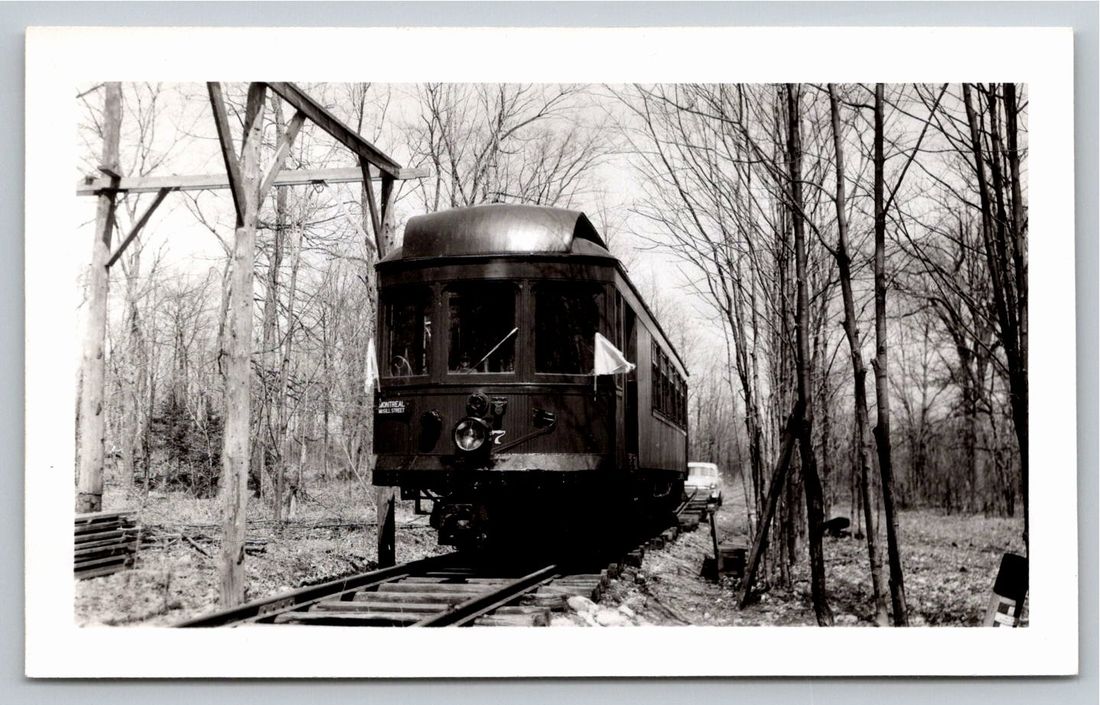
1957 Montreal Southern Counties Interurban Car 107 Photo
📸 Click any thumbnail to inspect Front, Back & Angles (2 Photos)
🔗 Embed / Cite This Archival Image (Free with Attribution)Get HTML Code
© USA RESELL. Bloggers, historians, and website owners may embed this image for free by copying the HTML code below (which includes the required credit link back to this page):
USA RESELL is a living historical archive. Because original artifacts are one-of-a-kind and source records change rapidly, use the button above to check live marketplace availability or locate surviving examples. As an eBay Partner, we may earn a commission on qualifying purchases.
Item Specifications
- City: Unspecified
- Country: Canada
- Era: 1950s
- Subject: Streetcar Railway
- Theme: Transportation
- Year of Production: 1957
- Category: Vintage Photography
- Format / Type: Vintage Photographs
Historical Context & Overview
Preserving Canadian Transit History: Montreal & Southern Counties Railway Car #107
This original vintage black-and-white photograph captures a key moment in mid-century Canadian electric railway preservation. Taken on April 14, 1957, the image shows Montreal & Southern Counties Railway (M&SC) interurban car #107 resting on outdoor tracks surrounded by early spring woods. The historic electric streetcar vehicle is depicted with its destination sign clearly marked "MONTREAL - MCGILL STREET", flanked by white flag markers, documenting its early days under private museum stewardship.
Originally constructed in 1912 by the renowned Ottawa Car Company, Interurban Car #107 served for decades along the regional transit routes connecting Montreal and Granby, Quebec. The Montreal & Southern Counties Railway operated an extensive regional interurban network from 1909 until passenger operations officially ceased in 1956. Following its retirement from revenue service, Car #107 was acquired as the third major rolling stock addition by the Ontario Electric Railway Historical Association (OERHA), marking a foundational step in Canadian railway preservation history.
Archival Details and Provenance
Measuring 4.5 by 2.8 inches, this glossy photographic print offers exceptional contrast and crisp detail across the vehicle's bodywork, headlamp, and surrounding forest environment. Visible to the left of the trolley line is the wooden frame of a partially built carhouse structure, documenting the early construction phase of the museum site.
The reverse side of the print features crisp typed historical documentation alongside a official stamp attributed to Toronto photographer Harold McMann Jr., noting the date, vehicle ownership, and property context. As a genuine piece of mid-20th-century traction lore, this print represents a rare visual record for collectors of Canadian interurban transit history and railfan memorabilia.
Gelatin-Silver Craftsmanship and Photographic Medium
Developed as a classic mid-century gelatin-silver print, this photographic item showcases the rich tonal range and fine resolution characteristic of vintage darkroom developing on era-correct glossy paper stock. The exposure masterfully captures intricate mechanical details of Car #107—from its heavy-duty wheel trucks and undercarriage components to the individual rivets along the car body—set against the sharp, high-contrast shadows of the surrounding foliage. This high level of clarity ensures that fine structural elements, including the overhead trolley pole assembly and the raw timber framing of the nascent carhouse, remain crisp and fully legible for archivist evaluation.
Collector Significance in Canadian Railway Lore
For dedicated scholars of North American electric traction lines and Canadian transit history, original mid-century photographs taken during the transitional post-closure era hold immense historical value. Recorded just months after the Montreal & Southern Counties Railway permanently ended passenger operations, this image serves as a tangible bridge between active commercial transit service and the dawn of organized electric railway preservation in Canada. The presence of direct photographer attribution and typed provenance on the reverse transforms this print from a simple snapshot into an authenticated museum-grade record, making it a prize for serious railfan archivists.