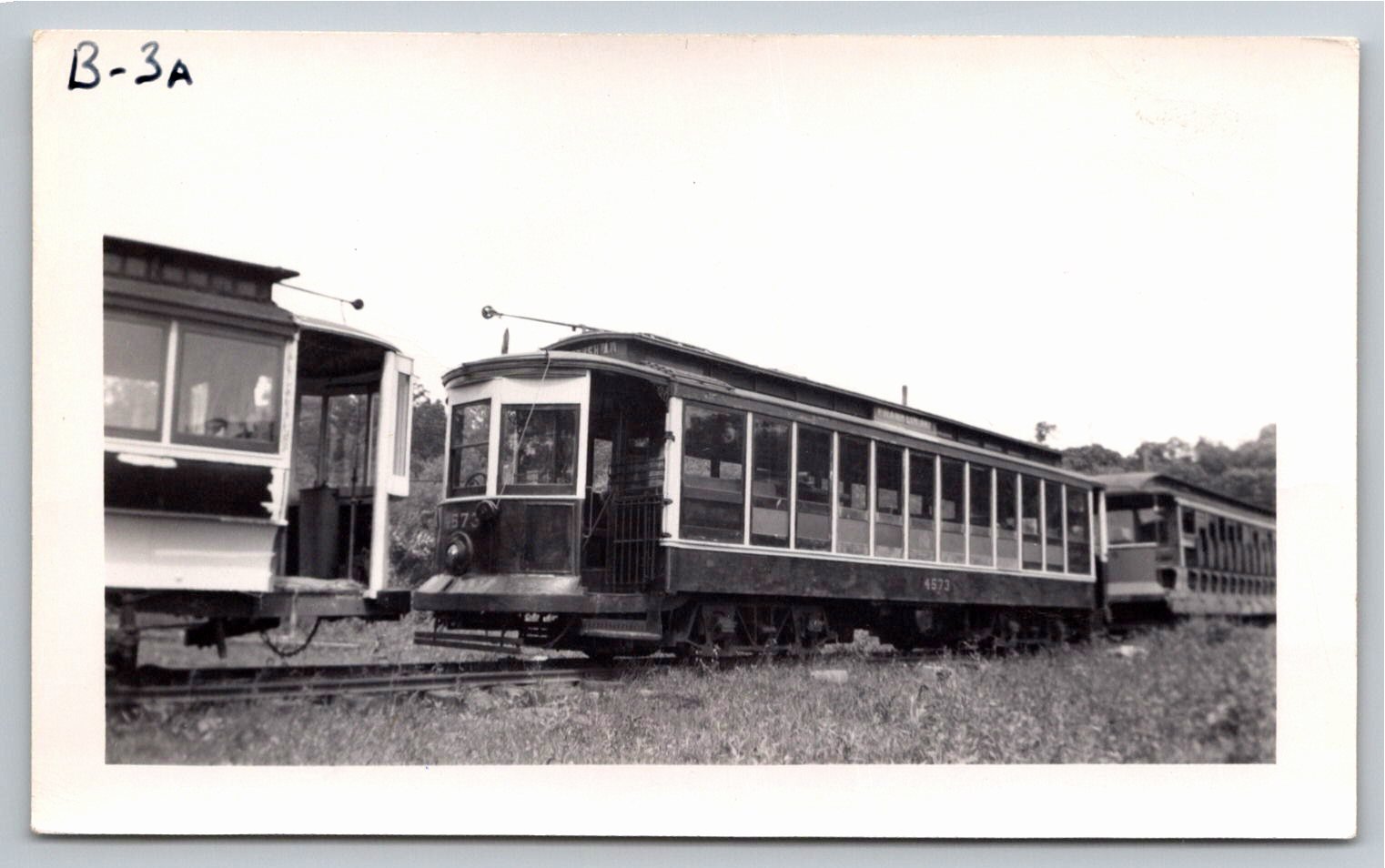
1949 Brooklyn Convertible Streetcar Photo No 4573 Trolley
📸 Click any thumbnail to inspect Front, Back & Angles (2 Photos)
🔗 Embed / Cite This Archival Image (Free with Attribution)Get HTML Code
© USA RESELL. Bloggers, historians, and website owners may embed this image for free by copying the HTML code below (which includes the required credit link back to this page):
USA RESELL is a living historical archive. Because original artifacts are one-of-a-kind and source records change rapidly, use the button above to check live marketplace availability or locate surviving examples. As an eBay Partner, we may earn a commission on qualifying purchases.
Item Specifications
- City: Brooklyn
- State: New York
- Country: United States
- Era: 1940s
- Subject: Streetcars and Trolleys
- Theme: Transportation
- Category: Vintage Photography
- Format / Type: Vintage Photographs
Historical Context & Overview
Captured on May 28, 1949, this original gelatin-silver photograph offers a focused historical record of American municipal transit innovation during the mid-twentieth century. The image showcases Brooklyn Convertible Streetcar No. 4573 positioned along the tracks of the historic Branford Electric Railway, with Open Car No. 923 partially visible in the adjacent background. Measuring 4.8 by 2.9 inches, the vintage print captures fine architectural and mechanical details of electric urban transit hardware as preserved in post-war America.
Engineering Versatility for Urban Transit
Convertible streetcars were engineered specifically to address the variable seasonal climates of major northeastern metropolitan areas like New York City. Manufactured by companies such as Laconia for systems including the Brooklyn Rapid Transit network, these specialized vehicles featured modular construction principles. During the sweltering summer months, transit workers could remove the side sashes or adjust drop panels to transform the trolley into an open-air vehicle that caught coastal breezes. When temperatures dropped during autumn and winter, the panels were reinstalled, creating a fully enclosed shelter to insulate passengers against harsh winter weather.
This dual-purpose design allowed municipal operators to maximize fleet efficiency without maintaining entirely separate summer and winter car fleets. Convertible No. 4573 illustrates the robust framing, intricate window sash alignment, undercarriage trucks, and overhead trolley pole assemblies that defined early 20th-century street railway engineering.
Preserving Electric Railway History
By 1949, streetcar networks across the United States were rapidly undergoing conversion to diesel bus fleets and subterranean subway routes. Heritage organizations and early transit preservationists, such as those operating along the historic Branford line, played a pivotal role in rescuing iconic equipment from scrap yards. Photographing equipment like No. 4573 preserved the visual documentation of municipal transportation infrastructure before these rolling artifacts disappeared from public view.
The photograph itself exhibits crisp tonal contrast and clear structural definition along the bodywork and window frames. The reverse side features handwritten historical annotations detailing the vehicle identification, location, capture date, and surrounding secondary equipment notes, along with a light pencil archival reference marking on the front margin. It remains a compelling artifact for enthusiasts of New York electric railway history, mid-century transportation heritage, and vintage transit photography.
Physical Medium and Photographic Craft
Printed on authentic glossy silver gelatin paper characteristic of late-1940s darkroom stock, this 4.8 by 2.9-inch snapshot reflects the dedicated field documentation conducted by mid-century electric railfans. The monochrome silver halide emulsion maintains impressive edge sharpness across the vehicle's complex undercarriage trucks, window frames, and overhead wire contacts. This demonstrates both the technical precision of post-war photographic materials and the careful preservation of the print over the decades. Compact transit photographs from this transitional era served as vital visual records, capturing high-contrast highlights along the painted Laconia bodywork and deep shadow definition beneath the chassis without sacrificing structural details.
Collector Ephemera and Historical Significance
Beyond its photographic merit, the presence of original handwritten annotations on the reverse alongside the discrete front pencil inventory code 'B-3A' endows this print with verified archival provenance. These physical markings transform the image into a fully contextualized primary source document, offering historians confirmed operational data regarding car assignments, location settings, and preserved rolling stock like Open Car No. 923. For specialized collectors of New York municipal history and vintage transportation ephemera, authentic period silver gelatin prints of Brooklyn Convertible streetcars represent increasingly scarce physical artifacts that honor the legacy of American urban transit engineering.