1940s Streetcar Trolley Workers Group Photo Bear Master Service
📸 Click any thumbnail to inspect Front, Back & Angles (2 Photos)
🔗 Embed / Cite This Archival Image (Free with Attribution)Get HTML Code
© USA RESELL. Bloggers, historians, and website owners may embed this image for free by copying the HTML code below (which includes the required credit link back to this page):
USA RESELL is a living historical archive. Because original artifacts are one-of-a-kind and source records change rapidly, use the button above to check live marketplace availability or locate surviving examples. As an eBay Partner, we may earn a commission on qualifying purchases.
Item Specifications
- City: Unspecified
- Country: United States
- Era: 1940s
- Subject: Streetcar Workers Trolley Transit Men
- Theme: Transportation Americana Occupational
- Year of Production: 1945
- Category: Vintage Photography
- Format / Type: Vintage Photographs
Historical Context & Overview
Mid-Century Transit Crews and Everyday Americana
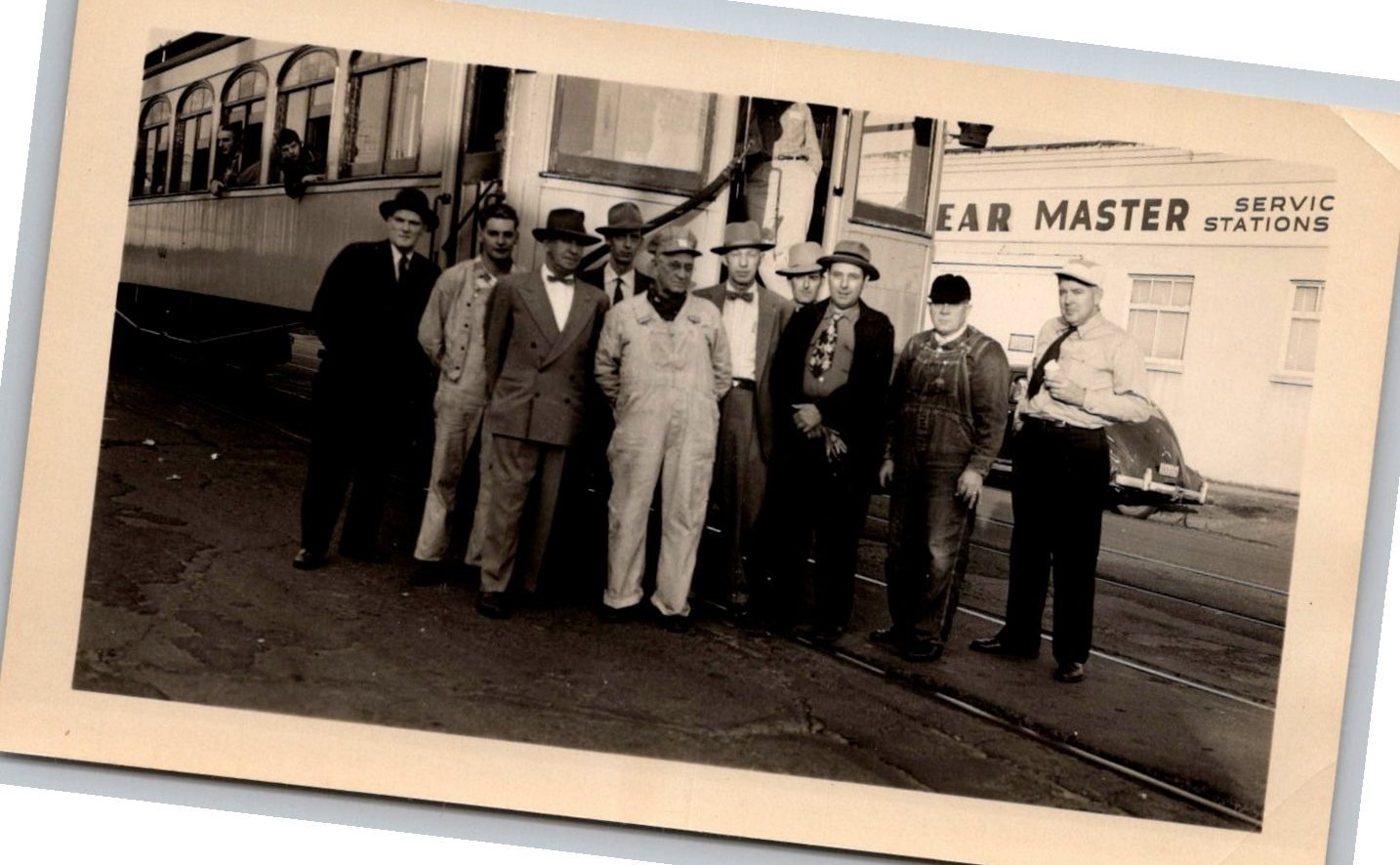
This authentic 1940s black-and-white gelatin silver photograph offers a captivating slice of mid-century American occupational life. The candid snapshot captures a crew of streetcar and public transit workers gathered along urban tracks, standing alongside an electric trolley car. The men display a wide range of period working-class attire, from classic double-breasted suits and fedoras to rugged work overalls, cloth caps, and bow ties, illustrating the varied roles required to keep urban transit networks moving during the peak of mid-century mass transit.
Commercial Details and Historical Significance
Beyond the central portrait of the crew, the background features fascinating historical context. Passengers can be seen looking out from the open windows of the streetcar, while across the street, distinct commercial painted lettering advertises "BEAR MASTER SERVICE STATIONS." This prominent storefront branding provides a compelling visual anchor to 1940s roadside business history. The image captures a pivotal era in American transit history, taken just before many municipal streetcar networks were systematically dismantled or replaced by motor buses in the post-war expansion.
Archival Quality and Snapshot Condition
Printed on classic glossy fiber photographic paper measuring 4.5 by 2.7 inches, this original vintage snapshot exhibits rich tonal range, sharp clarity, and deep contrast. The reverse side remains completely blank and unwritten, preserving the clean integrity of the period paper stock. Exhibiting only slight edge age and minor handling typical of authentic mid-20th-century vernacular photography, this artifact stands as an exceptional piece for collectors of occupational portraits, streetcar ephemera, and historic Americana.
The Role of Urban Transit Crews in 1940s America
During the war and immediate post-war era of the 1940s, electric streetcar systems were vital lifelines for industrial cities, transporting millions of factory workers, office clerks, and daily commuters every day. Group portraits like this offer a rare, unscripted glimpse into the working-class brotherhood that maintained these vast municipal transit networks under intense daily pressure. The casual alignment of drivers, conductors, and track maintenance men alongside their electric trolley highlights both personal pride in their trade and the shared camaraderie of mid-century urban labor.
Photographic Craft and Collector Value
Produced using standard gelatin-silver printing techniques on sturdy paper stock, this small-format pocket print has retained exceptional image stability over more than seven decades. The rich silver emulsion captures micro-details, from the subtle fabric textures of period work clothes to the fine reflective metallic elements of the streetcar tracks and hardware. Preserving such silver prints requires standard archival care, such as housing the photo in acid-free polyethylene sleeves away from direct sunlight to prevent silvering or emulsion yellowing over time.
For transportation historians, ephemera archivists, and regional Americana enthusiasts, original snapshots showing identifiable commercial storefronts and transit vehicles carry high historical utility. Because municipal streetcar networks were rapidly replaced by municipal bus fleets during the post-war automotive boom, candid imagery documenting active trolley lines remains exceptionally scarce. This photograph stands out as a genuine visual record of American municipal infrastructure during one of its most transformative decades.