1959 Vintage Flamingos Botanical Garden Zoo Photograph
📸 Click any thumbnail to inspect Front, Back & Angles (2 Photos)
🔗 Embed / Cite This Archival Image (Free with Attribution)Get HTML Code
© USA RESELL. Bloggers, historians, and website owners may embed this image for free by copying the HTML code below (which includes the required credit link back to this page):
USA RESELL is a living historical archive. Because original artifacts are one-of-a-kind and source records change rapidly, use the button above to check live marketplace availability or locate surviving examples. As an eBay Partner, we may earn a commission on qualifying purchases.
Item Specifications
- City: Unspecified
- Country: United States
- Era: 1950s
- Subject: Flamingos Birds Zoo Botanical Garden
- Theme: Americana Animals Tourism
- Year of Production: 1959
- Category: Vintage Photography
- Format / Type: Snapshots
Historical Context & Overview
Visual & Historical Overview of the Mid-Century Zoological Scene
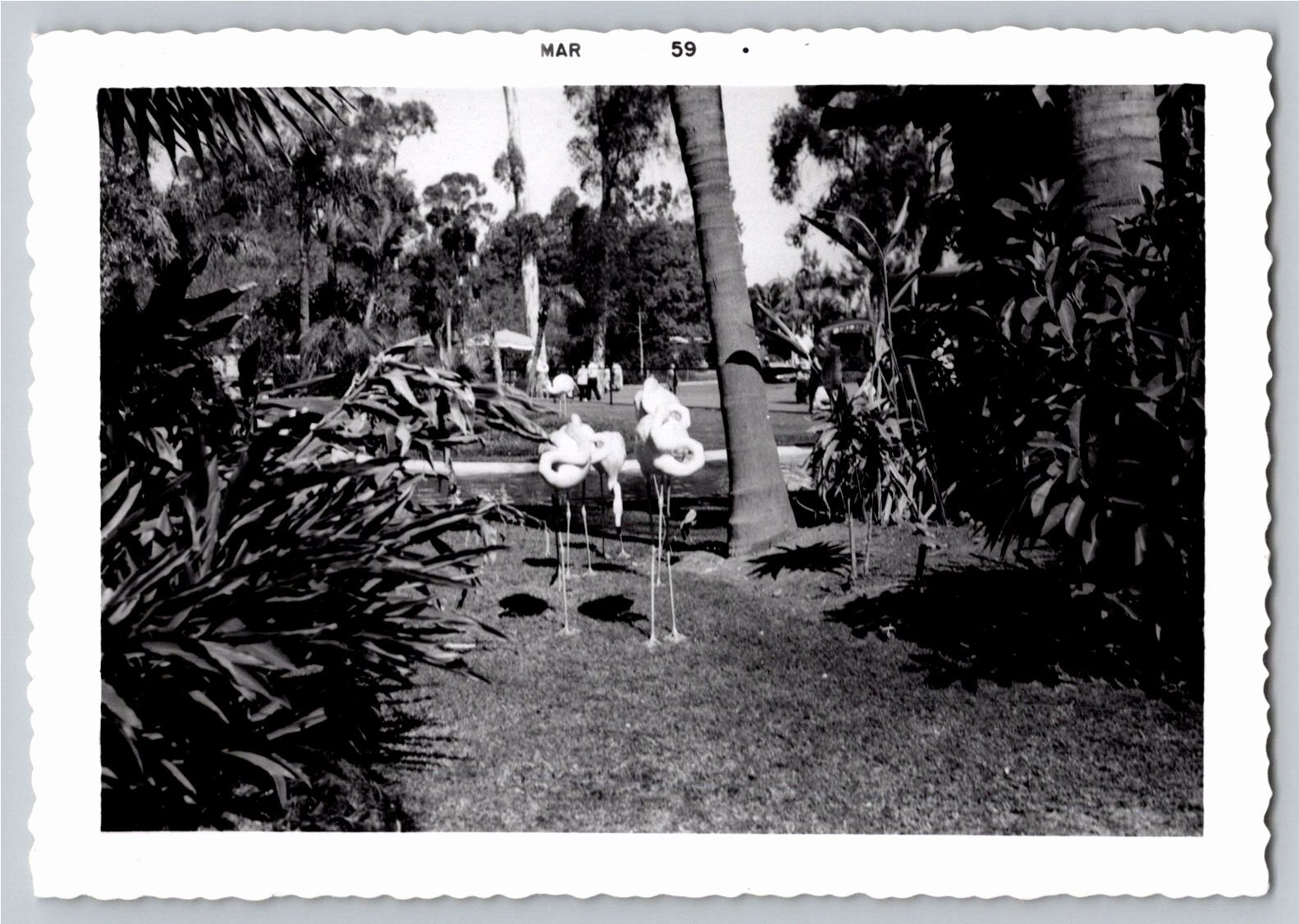
Dating to the late 1950s, this original snapshot offers an evocative glimpse into mid-century leisure and nature tourism. The composition centers on a cluster of flamingos standing gracefully upon a manicured lawn, nestled within a verdant setting filled with dramatic foliage. Towering palm trunks cast long, deliberate shadows across the grass, while dense tropical shrubs frame the left foreground, drawing the eye toward the luminous plumage of the birds. In the sunlit background, strolling park patrons wander along landscaped walkways, creating an unmistakable atmosphere of postwar outdoor leisure.
The visual staging carries the distinct character of popular travel destinations during the golden age of American road trips. During the 1950s, roadside attractions, private botanical preserves, and municipal zoological gardens flourished across warm-weather corridors like Florida and Southern California. Families and travelers frequently stopped to admire exotic species showcased in open-air, garden-like habitats. This print encapsulates that tranquil vacation allure, blending natural history with postwar suburban travel culture in a single candid perspective.
Mid-Century American Tourism & Botanical Roadside Attractions
Throughout the 1950s, the expansion of interstate travel and widespread private automobile ownership fueled an unprecedented surge in scenic roadside attractions. Establishments often paired rare tropical flora with exotic avian wildlife to entice motorists seeking a taste of paradise. Flamingos rapidly evolved into an indelible symbol of mid-century aesthetics, widely celebrated in decorative arts, pop culture, and leisure architecture. Seeing these majestic birds roaming freely across shaded park grounds was a quintessential highlight for travelers touring regional parks and historic botanical conservatories.
The casual mastery of this framing highlights the spontaneous yet artistic eye of mid-century vernacular photographers. By balancing the deep, textured shadows of indigenous greenery against the brightly illuminated resting birds, the photographer achieved a balanced dynamic between wildlife and designed landscape architecture. The presence of distant park visitors reinforces the documentary nature of the image, recording an authentic moment in tourist park history just as springtime travel commenced in 1959.
Provenance, Physical Dimensions & Collector Significance
Measuring approximately 5.0 by 3.5 inches, this authentic photograph is printed on glossy mid-century paper stock distinguished by ornate, die-cut deckled edges. Along the upper white border, a crisp factory photofinishing imprint reads "MAR 59 ·", providing undeniable physical verification of its development in March 1959. The reverse side remains blank and unwritten, exhibiting only minor, age-appropriate tonal patina and a small stray production mark along one edge.
Preserved in very good vintage condition, the print maintains sharp scalloped edges, smooth corners, and strong tonal clarity across both highlights and deep shadow details. Lacking creases or surface abrasions, it represents a well-kept artifact from an era defined by vernacular snapshot albums. Collectors of mid-century Americana, historical zoological documentation, avian photography, and roadside tourism ephemera will recognize this piece as an exceptional, fully dated snapshot of postwar American travel heritage.