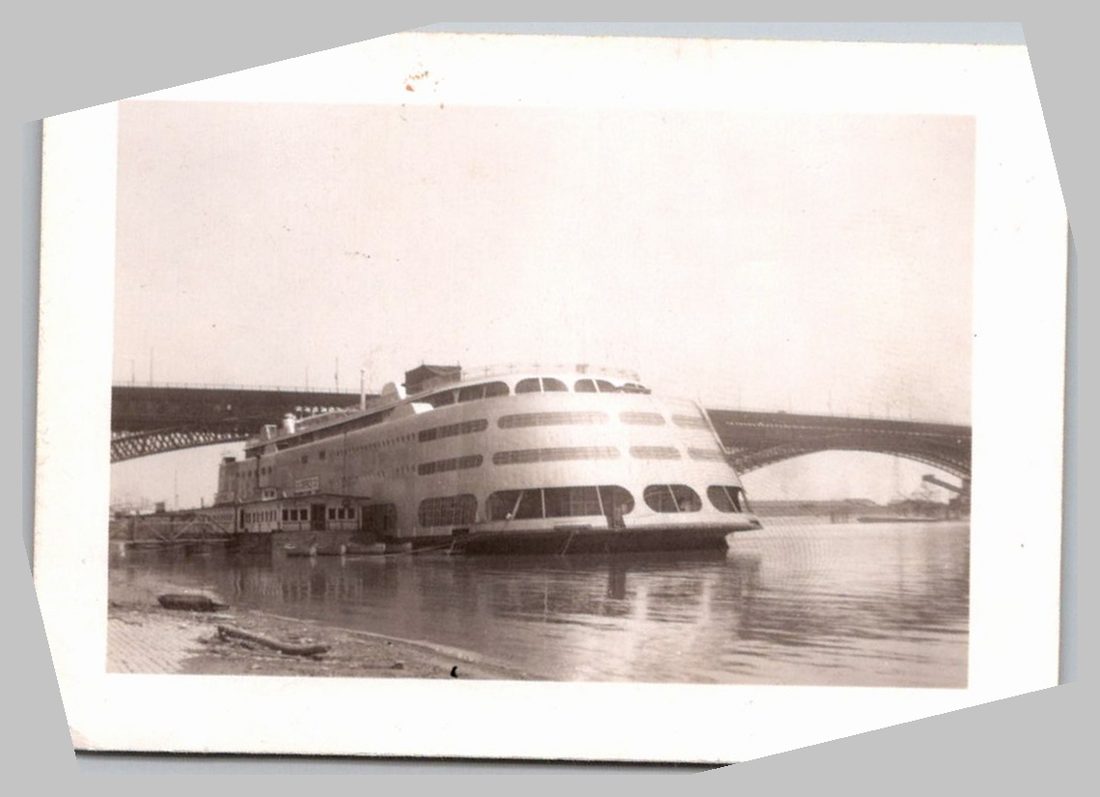
1943 SS Admiral Streamliner Riverboat St. Louis Photo
📸 Click any thumbnail to inspect Front, Back & Angles (2 Photos)
🔗 Embed / Cite This Archival Image (Free with Attribution)Get HTML Code
© USA RESELL. Bloggers, historians, and website owners may embed this image for free by copying the HTML code below (which includes the required credit link back to this page):
USA RESELL is a living historical archive. Because original artifacts are one-of-a-kind and source records change rapidly, use the button above to check live marketplace availability or locate surviving examples. As an eBay Partner, we may earn a commission on qualifying purchases.
Item Specifications
- City: St. Louis
- State: Missouri
- Country: United States
- Era: WWII (1939-1945)
- Subject: SS Admiral Riverboat
- Theme: Transportation
- Category: Vintage Photography
- Format / Type: Snapshots
Historical Context & Overview
Visual & Historical Overview: The Art Deco River Queen and Eads Bridge
This striking original silver gelatin snapshot photograph frames an evocative mid-century scene along the Mississippi River at St. Louis, Missouri. Towering in the foreground is the unmistakable futuristic silhouette of the SS Admiral, moored calmly along the levee. Rising dramatically in the background are the sweeping steel arches of James Buchanan Eads’ iconic Eads Bridge, completed in 1874 as a pioneering engineering feat that seamlessly complements the vessel's groundbreaking metallic geometry. The composition provides an arresting juxtaposition between late-19th-century structural industrialism and high 20th-century Streamline Moderne design.
Commissioned by Streckfus Steamers and entering service in 1940, the SS Admiral was converted from the 1907 railroad ferry *Albatross* into an avant-garde excursion palace. Styled by industrial designer and fashion illustrator Maizie Krebs, its sleek, rounded, all-steel casing was unlike anything else plying North American inland waterways. Krebs gave the massive sidewheeler a seamless, torpedo-like exterior finished in gleaming silver paint, complete with aerodynamic horizontal bands and wraparound observation tiers. In this candid period capture, the vessel sits anchored against the cobblestone bank, casting gentle reflections upon the river's calm surface.
WWII Home Front Inscription and Wartime Inactivity
While the SS Admiral was conceived as a vibrant entertainment showcase featuring ballrooms, lounges, and massive open-air promenades, the geopolitical realities of World War II dramatically altered its early operations. On the reverse of this photograph, written in dark fountain pen script, is a poignant personal notation: "a boat on the Miss. which wasn't running because of the war." Beside the handwriting rests a modest alphanumeric lab production stamp reading "C 907." This quiet inscription grounds the image in the realities of the American civilian home front during the height of wartime mobilization in 1943.
During the war years, civilian leisure travel and pleasure excursions were severely curbed across the nation due to fuel rationing, material conservation, and security restrictions along vital strategic shipping corridors like the Mississippi. The Admiral was temporarily tied up at the riverfront, unable to host the thousands of dancing passengers for which it was meticulously engineered. As a consequence, this snapshot serves not merely as a portrait of a river vessel, but as a rare piece of vernacular historical documentation reflecting how global conflict silenced local leisure culture along the St. Louis waterfront.
Physical Attributes, Technical Quality, and Collector Significance
The physical photograph measures approximately 3.5 by 2.4 inches, a classic period snapshot format executed on genuine silver gelatin photo paper. The print exhibits crisp image resolution, excellent tonal gradation across the steel hull, and deep, balanced contrast highlighting the latticework of Eads Bridge. The paper preserves clean, authentic white borders and possesses natural vintage warmth consistent with mid-century fiber-based silver prints.
In terms of preservation, the snapshot remains in outstanding vintage condition. The paper stock is flat, sturdy, and entirely free of severe creasing, paper tears, or damaging surface abrasions, retaining only slight handling softening at the outer corners. For collectors of St. Louis local history, maritime artifacts, World War II home front ephemera, and Streamline Moderne architecture, this unique wartime relic offers an irreplaceable snapshot into mid-century American transportation heritage.