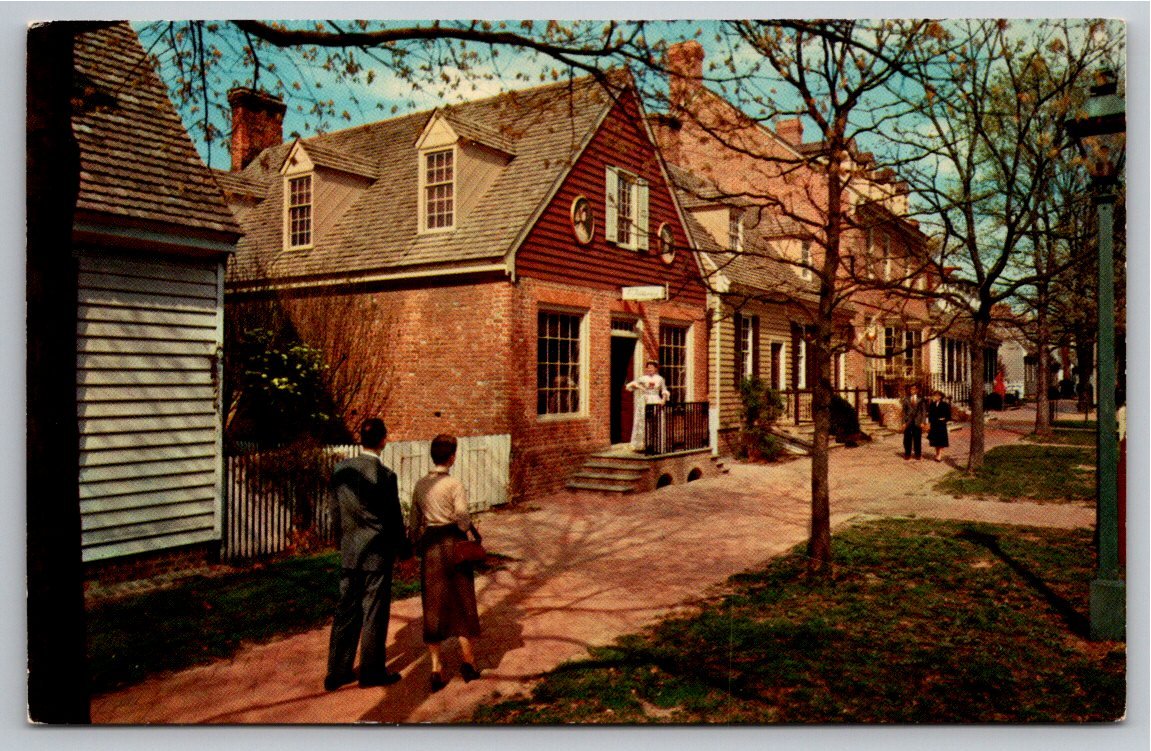
Vintage Williamsburg Postcard Margaret Hunter Shop & Golden Ball
📸 Click any thumbnail to inspect Front, Back & Angles (2 Photos)
As an eBay Partner, we may earn a commission if you make a purchase.
Item Specifications
- Type: Chrome Postcard
- Era: Mid-20th Century
- Publisher: H. S. Crocker Co.
- Location: Williamsburg, Virginia
- Subject: Margaret Hunter Shop & The Golden Ball
- Series: Official Colonial Williamsburg Card
- Category: Postcards & Ephemera
- Format / Type: Vintage Postcards
Looking for Modern Alternatives?
Explore top-rated, modern Postcards & Ephemera and related historical accessories on Amazon.
Shop Postcards & Ephemera on Amazon →As an Amazon Associate, we earn from qualifying purchases.
Historical Context & Overview
Strolling down Duke of Gloucester Street in Colonial Williamsburg offers an immersive journey into eighteenth-century Virginia. Among the meticulous architectural restorations along this historic thoroughfare, the Margaret Hunter Shop and the nearby Golden Ball represent two vital facets of colonial commercial life: fashion and fine metalwork. Captured during the mid-twentieth-century height of American heritage travel, this vintage color postcard published by the H. S. Crocker Company reflects both the living history movement and the enduring preservation of historic Williamsburg.
The Legacy of Margaret Hunter’s Millinery Shop
In colonial Virginia, millinery shops were unique hubs for female entrepreneurship and social gathering. Margaret Hunter, an English native who arrived in Williamsburg around 1767, operated her millinery trade on Duke of Gloucester Street. At a time when legal and economic independence for women was rare, Hunter managed a thriving business importing fine English textiles, ribbons, bonnets, cloaks, and accessories tailored for Williamsburg's gentry. Today, the restored brick structure serves as a functional historic millinery, demonstrating traditional hand-sewing, mantua-making, and period leatherwork to modern visitors.
The Sign of the Golden Ball: Fine Silversmithing
Located adjacent to the millinery shop stands the trade site marked by the sign of the Golden Ball, established in 1765 by jeweler and silversmith James Craig. In eighteenth-century Williamsburg, silversmiths were highly respected craftsmen who forged everything from silver spoons and teapots to intricate gold pocket watch frames and fine jewelry for wealthy Virginians, including members of the House of Burgesses. The restored workshop preserves these traditional metallurgical techniques, where master artisans continue to utilize historical anvils, hammers, and coal-fired hearths to create works of grace and beauty.
Mid-Century Heritage Tourism and Ephemera
Designated as an Official Colonial Williamsburg Card, this piece was produced using H. S. Crocker Co.’s signature "Mirro-Krome" printing process, renowned for rich color saturation and high gloss. Following John D. Rockefeller Jr.’s ambitious restoration of Virginia's colonial capital, mid-twentieth-century tourists flocked to the historic area, sending home cards like this one to friends and family across the country. The candid photograph depicts visitors in 1950s attire engaging with a costumed interpreter on the shop steps, capturing a quintessential moment in American open-air museum history. For ephemera collectors and historians alike, this postcard remains a cherished record of Virginia's colonial trade heritage and modern preservation legacy.