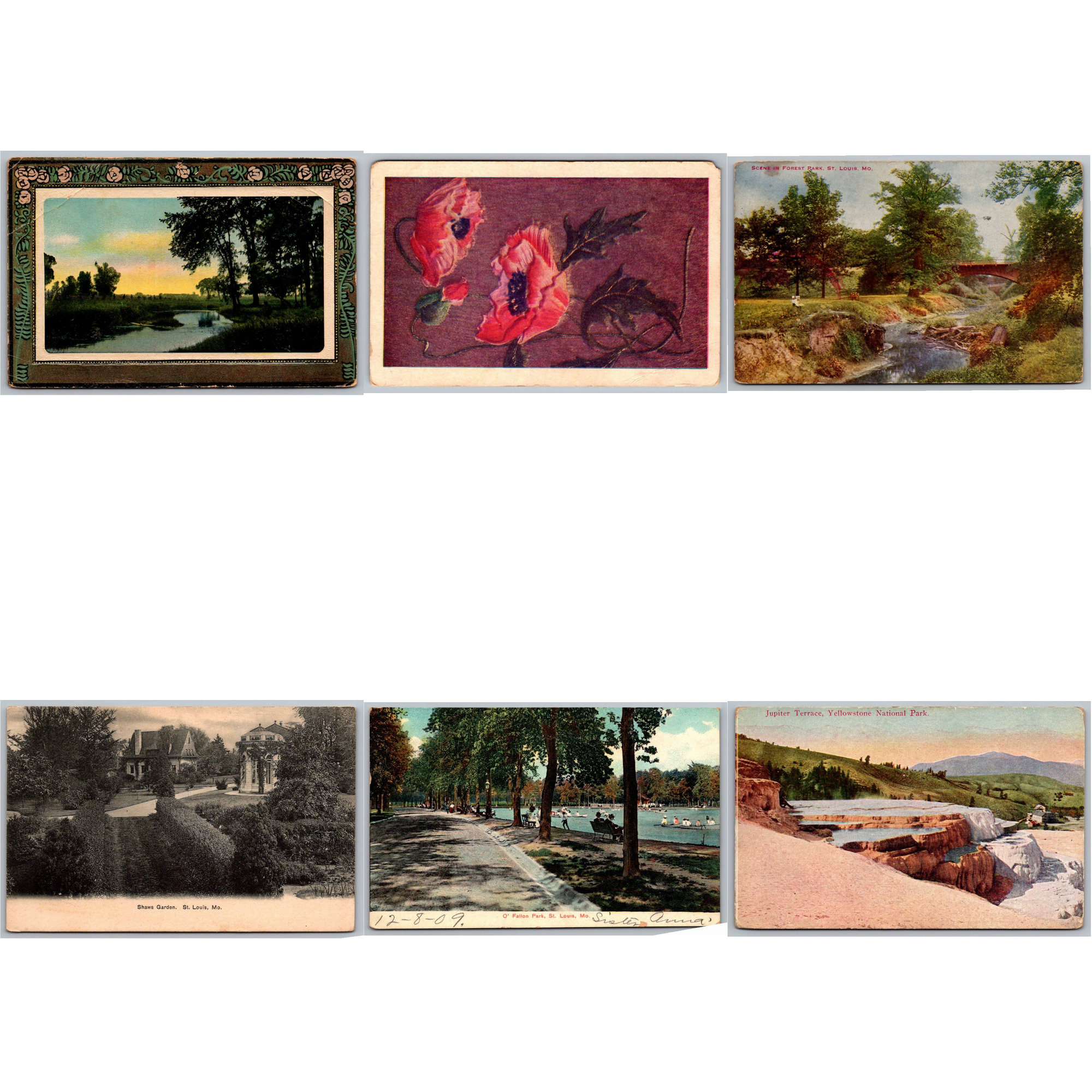
Vintage Mixed Postcards Lot of 6 Antique Postcrossing Ephemera
As an eBay Partner, we may earn a commission if you make a purchase.
Item Specifications
- Type: Vintage Ephemera
- Era: Early 1900s to Mid-20th Century
- Quantity: Set of 6
- Subject: Architecture & Landscapes
- Condition: Used Vintage
- Originality: Original Vintage Print
- Category: Postcards & Ephemera
- Format / Type: Vintage Postcards
Looking for Modern Alternatives?
Explore top-rated, modern Postcards & Ephemera and related historical accessories on Amazon.
Shop Postcards & Ephemera on Amazon →As an Amazon Associate, we earn from qualifying purchases.
Historical Context & Overview
A Window into Early 20th-Century Daily Life
Before the digital era revolutionized instant visual communication, picture postcards served as the primary medium for sharing travel experiences, architectural highlights, and personal reflections across distances. During the late 19th and early 20th centuries, postcard fever swept across America and Europe, sparking a worldwide phenomenon of collecting and exchanging physical ephemera. This curated group of six vintage postcards offers a compelling slice of history, capturing varied landscapes, local landmarks, and intimate snapshots preserved on paper.
The Magic of Real Photo Postcards and Lithographs
The turn of the 20th century witnessed two major movements in postcard production: high-volume photomechanical reproduction and silver gelatin real photo prints. In 1903, the Eastman Kodak Company introduced the Folding Pocket Kodak camera, designed specifically to use film that produced prints with pre-printed postcard backs. This innovation allowed ordinary individuals, local printers, and traveling photographers to document everyday life, historic buildings, and scenic vistas with startling clarity.
Alongside these real photographic views were sophisticated color-tinted lithographs and early half-tone prints. Produced by skilled lithographers who often hand-colored monochrome base images, these cards rendered parks, civic monuments, and grand architecture with vibrant, nostalgic charm. Examining a mixed set reveals the evolution of printing techniques, shifting aesthetic trends, and changing postal standards over several decades.
Historical Context Written on the Reverse
Beyond the visual appeal of the front imagery, the reverses of antique postcards hold immense historical value for deltiologists and genealogists alike. Undivided-back cards—predominantly produced before 1907—required messages to be written across the front photo space, leaving the back exclusively for the recipient's mailing address. The introduction of the divided back allowed sender messages and addresses to coexist, encouraging richer personal narratives, localized postal markings, and glimpses into early transit networks through distinct postmark cancellations.
A Treasure for Postcrossing and Ephemera Collectors
In contemporary collecting circles, multi-card sets provide a rich foundation for scrapbooking, historical research, and international Postcrossing exchanges. Postcrossing—a global community dedicated to sending and receiving postcards from around the world—has sparked a renewed passion for genuine vintage items. Exchanging an authentic piece of history creates a tangible link between past correspondence traditions and modern global connections.
Archival Care for Antique Paper
Preserving fragile vintage ephemera requires careful storage and handling. To protect original photographic emulsions and aged cardstock from moisture, skin oils, and ultraviolet light, store each postcard in an acid-free, archival polypropylene sleeve. Displaying these items away from direct sunlight preserves their rich sepia tones, delicate color lithography, and original ink signatures for future generations of historians and enthusiasts.