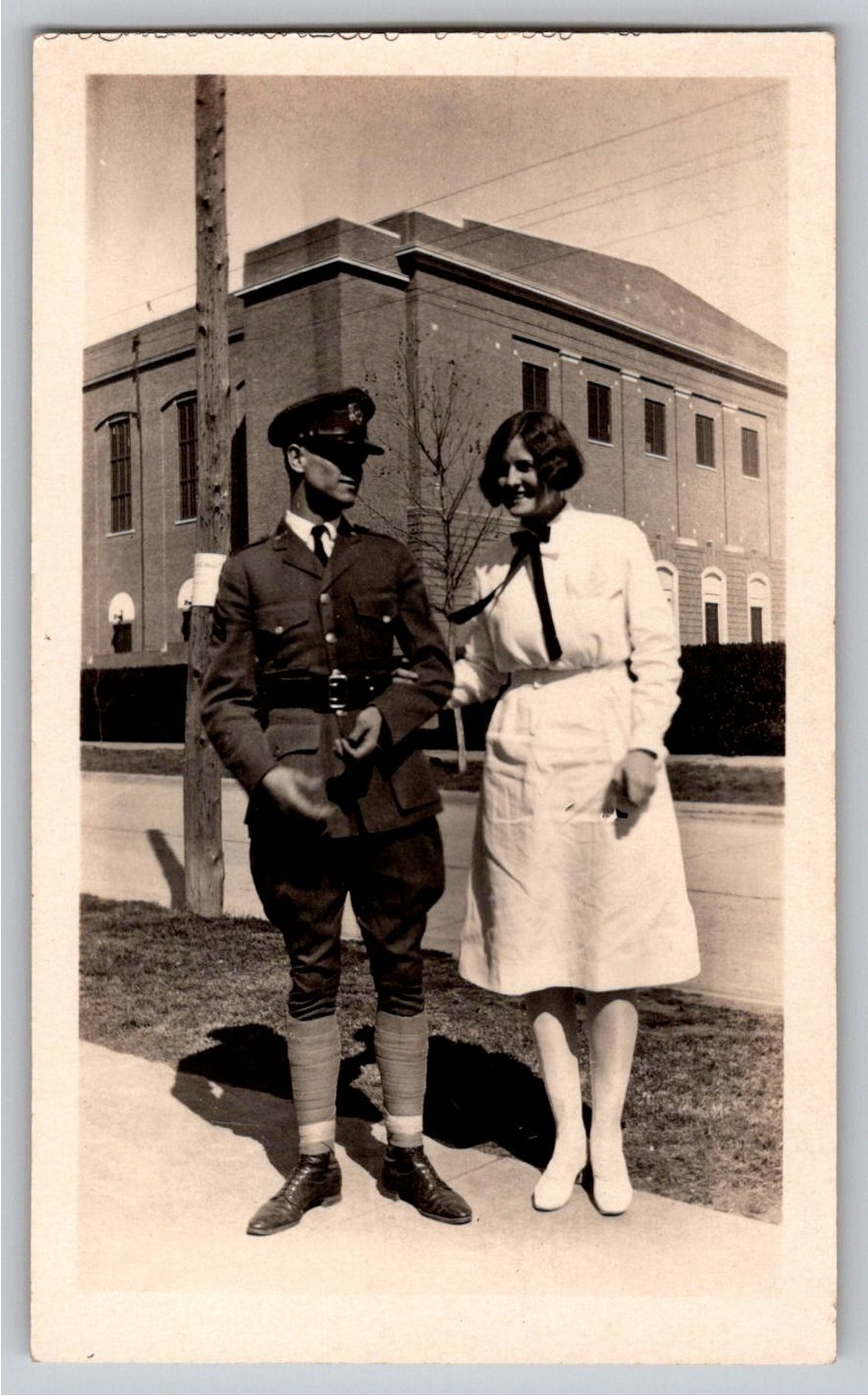
1920s Military Officer in Puttees & Nurse Photo Snapshot
📸 Click any thumbnail to inspect Front, Back & Angles (2 Photos)
🔗 Embed / Cite This Archival Image (Free with Attribution)Get HTML Code
© USA RESELL. Bloggers, historians, and website owners may embed this image for free by copying the HTML code below (which includes the required credit link back to this page):
USA RESELL is a living historical archive. Because original artifacts are one-of-a-kind and source records change rapidly, use the button above to check live marketplace availability or locate surviving examples. As an eBay Partner, we may earn a commission on qualifying purchases.
Item Specifications
- Type: Photograph
- Original/Licensed Reprint: Original
- Image Color: Black and White
- Production Technique: Gelatin-Silver Print
- Material: Paper
- Finish: Semi-Gloss
- Category: Vintage Photography
- Format / Type: Snapshots
Historical Context & Overview
Visual & Historical Overview of an Interwar Couple
Captured in crisp contrast and bright sunlight, this candid 1920s gelatin silver photograph provides an evocative glimpse into interwar American life. The composition features a young military officer standing arm-in-arm on a paved sidewalk with a companion dressed in pristine white service attire. Behind them, an imposing multi-story red brick municipal structure—characteristic of a collegiate armory, civic auditorium, or field gymnasium from the Roaring Twenties—anchors the background. Manicured roadside hedges and a wooden utility pole frame the streetscape, establishing a quintessential post-World War I domestic environment.
The uniforms on display highlight the distinct aesthetic transitions of the mid-1920s. The officer is outfitted in full interwar service regalia, including a structured peaked visor cap, collared tunic with necktie, Sam Browne waist belt, flared cavalry-style breeches, and wrapped canvas or woolen puttees extending downward over dark laced service shoes. Standing beside him, the young woman sports a stylish bobbed haircut typical of the flapper era, complemented by a tailored white dress uniform adorned with large patch pockets, a high collar, an eye-catching dark ribbon bow, and white low-heel pumps. Her attire reflects the traditional vocational uniforms worn by registered nurses, Red Cross aides, or collegiate medical trainees of the period.
Uniformity, Social Milieu, and the Interwar Transition
Following the Armistice of 1918, the United States military underwent substantial reorganizations, transitioning from mass wartime mobilization to smaller peacetime standing forces and National Guard units. The soldier depicted here wears elements that carried over directly from the Great War—most noticeably the wrapped leg puttees and high-cut breeches—which remained standard service dress well into the late 1920s before being phased out in favor of straight trousers and taller leather boots. The presence of the Sam Browne belt, originally popularized by European and Allied officers, signifies his commissioned status during peacetime parade or garrison duty.
Concurrently, the woman's professional dress embodies the expanding role of women in organized healthcare and institutional service following World War I. Professional nursing programs in the 1920s mandated crisp, starched white linens and modest collars, balancing feminine style with rigorous clinical utility. The easy rapport and warm interaction between the pair suggest an informal off-duty moment, perhaps outside an urban training facility, hospital barracks, or university campus hosting an ROTC detachment during an open assembly day.
Physical Print Attributes, Paper Toning, and Collector Appeal
This original snapshot measures approximately 2.7 inches by 4.5 inches, an authentic vintage dimension commonly produced by personal roll-film cameras like the Kodak Vest Pocket or No. 2 Autographic Brownie. The photograph is developed on medium-weight vintage photographic stock with a subtle semi-gloss surface that preserves fine textures, from the woven folds of the officer's puttees to the brickwork of the grand auditorium. The top margin displays an authentic deckled edge, a popular laboratory finishing detail of the 1920s.
The reverse side of the print is blank, exhibiting light, natural paper toning appropriate to an artifact nearly a century old. A faint purple inspection or processing stamp mark is visible near the upper margin, further confirming its provenance as an authentic silver halide snapshot rather than a modern reproduction. This piece offers militaria enthusiasts, medical history collectors, and 1920s photography archivists a superb cross-section of early twentieth-century fashion and military tradition.