1920s Cemetery Mourning Couple Graveside Funeral Photo
📸 Click any thumbnail to inspect Front, Back & Angles (2 Photos)
🔗 Embed / Cite This Archival Image (Free with Attribution)Get HTML Code
© USA RESELL. Bloggers, historians, and website owners may embed this image for free by copying the HTML code below (which includes the required credit link back to this page):
USA RESELL is a living historical archive. Because original artifacts are one-of-a-kind and source records change rapidly, use the button above to check live marketplace availability or locate surviving examples. As an eBay Partner, we may earn a commission on qualifying purchases.
Item Specifications
- City: Unspecified
- Country: United States
- Era: Interwar (1918-1939)
- Subject: Cemetery Funeral Mourning Grave Floral Arrangements
- Theme: Americana Social History Domestic and Family Life
- Year of Production: 1925
- Category: Vintage Photography
- Format / Type: Snapshots
Historical Context & Overview
Visual & Historical Overview of the Interwar Mourning Scene
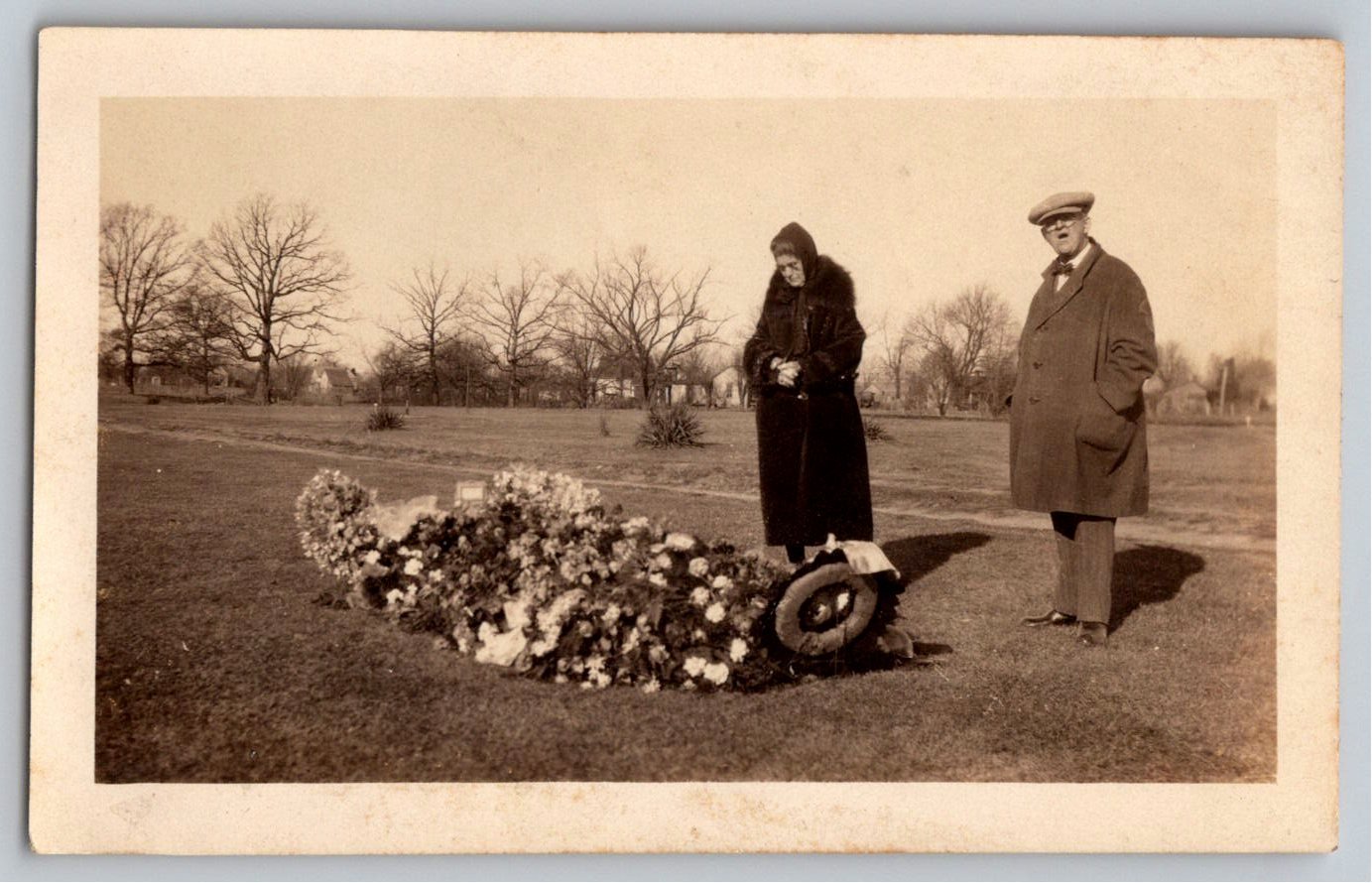
Dating to the mid-1920s, this poignant vernacular print records an intimate moment of sorrow and quiet remembrance. Set against an expansive rural or suburban lawn dotted with bare late-autumn or winter trees, the image captures a somber couple standing in respectful contemplation beside a freshly covered burial plot. The grave mound itself is entirely concealed beneath a dense cascade of funeral tributes, including an abundance of cut blooms and a prominent, circular wreath resting at the foot of the plot. The stark, barren branches in the distance accentuate the emotional gravity of the occasion, creating an evocative interwar cemetery vista.
The apparel worn by the subjects provides an immediate window into 1920s American winter fashion. The woman stands with head bowed and hands clasped forward, enveloped in a substantial dark coat accented by a plush fur trim and a hooded head covering designed to ward off the chill. Beside her, an older gentleman peers directly into the lens, attired in a tailored wool overcoat, trousers, spectacles, and a classic wool flat cap. Their solemn postures and substantial outerwear vividly evoke the reality of standing vigil in cold open grounds during a family farewell.
Social History and the Tradition of Vernacular Graveside Portraits
Throughout early twentieth-century America, vernacular camera documentation of funeral arrangements and graveside services held deep sentimental importance. While Victorian post-mortem portraiture had largely transitioned away from photographing the deceased directly in parlor settings, family members routinely photographed floral displays, cemetery gatherings, and burial plots as tangible mementos of loved ones. Such prints served as lasting proof of community affection, recording the generosity of neighbors who sent costly floral wreaths and honoring the final resting location of departed kin.
The historical significance of this specific snapshot is heightened by handwritten graphite inscriptions preserved across the reverse. Written in fluid period cursive, the pencil notations identify the attendees and the resting place: "Ola Daniel / Geo Sharp / at Catherine's grave." These names transform an anonymous depiction of sorrow into a documented familial milestone, linking distinct individuals to an emotional crossroads during the interwar era. Vernacular records of this nature remain vital primary artifacts for genealogists and cultural historians investigating regional funerary customs.
Provenance, Technical Medium, and Physical Condition
This authentic period artifact is produced as a gelatin-silver photograph on sturdy, semi-gloss photo paper, measuring approximately 4.3 by 2.7 inches. Framed by a neat white perimeter border typical of 1920s consumer developing labs, the print demonstrates strong dynamic range and rich sepia-toned values. Fine photographic details remain crisp, revealing subtle woven textures in the heavy wool garments, facial contours, and individual flower petals within the elaborate arrangement.
In terms of preservation, the artifact survives in very good vintage condition, exhibiting gentle signs of handling entirely consistent with a century of album storage. The paper retains good structural integrity without major creases, tears, or tape mending. Minor edge and corner softening is present alongside light natural paper toning and faint surface age spotting across the blank reverse. For curators, collectors of American funerary history, and enthusiasts of vintage vernacular photography, this identified snapshot stands as a moving testament to memory and devotion.