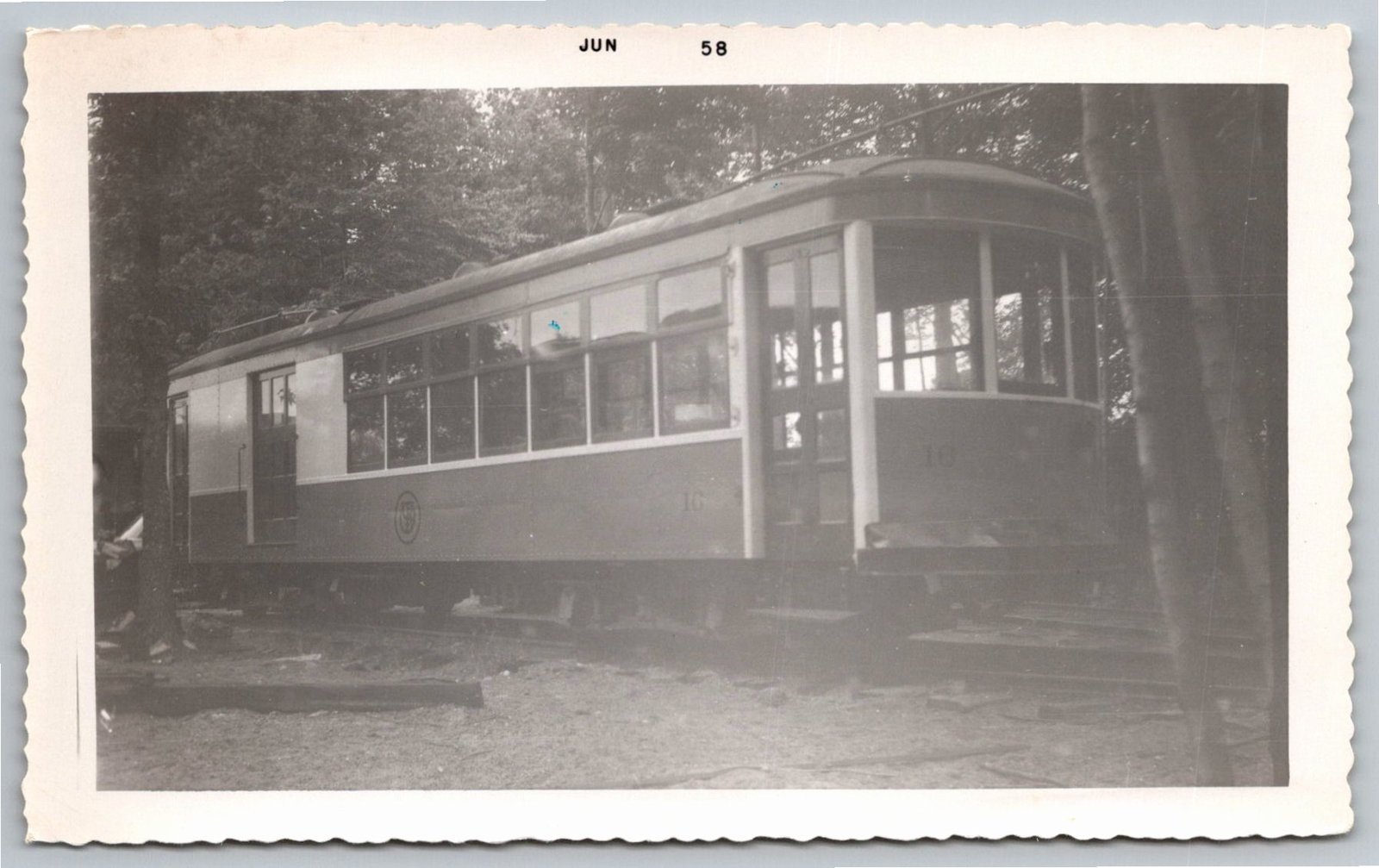
1958 Springfield Terminal Railway Trolley Car 16 Photo
📸 Click any thumbnail to inspect Front, Back & Angles (2 Photos)
🔗 Embed / Cite This Archival Image (Free with Attribution)Get HTML Code
© USA RESELL. Bloggers, historians, and website owners may embed this image for free by copying the HTML code below (which includes the required credit link back to this page):
USA RESELL is a living historical archive. Because original artifacts are one-of-a-kind and source records change rapidly, use the button above to check live marketplace availability or locate surviving examples. As an eBay Partner, we may earn a commission on qualifying purchases.
Item Specifications
- City: East Windsor
- State: Connecticut
- Country: United States
- Era: 1950s
- Subject: Springfield Terminal Railway Trolley Car 16
- Theme: Transportation
- Category: Vintage Photography
- Format / Type: Vintage Photographs
Historical Context & Overview
Mid-Century Transit Preservation: Springfield Terminal Railway Car #16
This authentic black-and-white photograph captures Springfield Terminal Railway combination trolley car #16 during the summer of 1958. Preserved at the Connecticut Electric Railway Association grounds in East Windsor, Connecticut, the image highlights a crucial transitional era in American electric traction history. Stamped "JUN 58" along the top margin, the photograph features the classic scalloped deckled borders that characterized mid-century consumer photofinishing.
Manufacturing Origin and Technical Profile
Originally constructed in 1926 by the renowned Wason Manufacturing Company of Springfield, Massachusetts, Car #16 represents classic interurban equipment design. Engineered as a combination suburban car, it served both passenger travel and light freight duties. The vehicle's architecture showcases classic wooden window frames, end entry doors, dual overhead trolley poles, and distinctive side emblem detailing designed to navigate regional traction lines connecting Vermont and New Hampshire across the Connecticut River valley.
Preservation Era and Collector Significance
As electric interurban networks scaled back operations in the mid-20th century, equipment like Car #16 moved into utility work before being rescued by early railway preservation organizations. Hand-written commentary in teal ink on the reverse side notes the car's updated "Orange & Cream" livery under the stewardship of the Connecticut Electric Railway Association. Measuring 5.7 by 3.5 inches on matte paper, this historical print provides rail historians and vintage transportation collectors with an authentic visual documentation of early light-rail preservation efforts.
Photographic Craft and Mid-Century Archival Characteristics
Produced as a traditional gelatin-silver print on heavy matte paper, the photograph exhibits the distinct processing hallmarks of late 1950s camera finishing. The crisp deckled scalloped borders and stamped "JUN 58" top margin reflect standard period processing techniques favored by mid-century amateur photographers. Despite decades in private collections, the print retains excellent visual clarity with deep silver-gelatin tones and remarkably clean margins, showing only minimal surface handling wear.
Regional Transit History and Collector Provenance
The Springfield Terminal Railway occupied a unique niche in Northern New England transit history, running a vital electrified line connecting industrial Springfield, Vermont, across the Connecticut River into New Hampshire. Dual-purpose suburban combine cars like Car #16 were essential to regional commerce, carrying local passengers and light express cargo before transitioning into line maintenance service to keep the electric overhead wires operational during the waning years of commercial trolley service.
The candid teal ink annotation on the print's reverse offers a rare glimpse into the early railfan photographic network, preserving a personal moment of informal critique between vintage transit enthusiasts. This primary-source commentary elevates the piece from a simple visual record to a rich historical document. Today, the snapshot serves as a treasured artifact for New England traction historians and collectors dedicated to preserving American electric railway heritage.