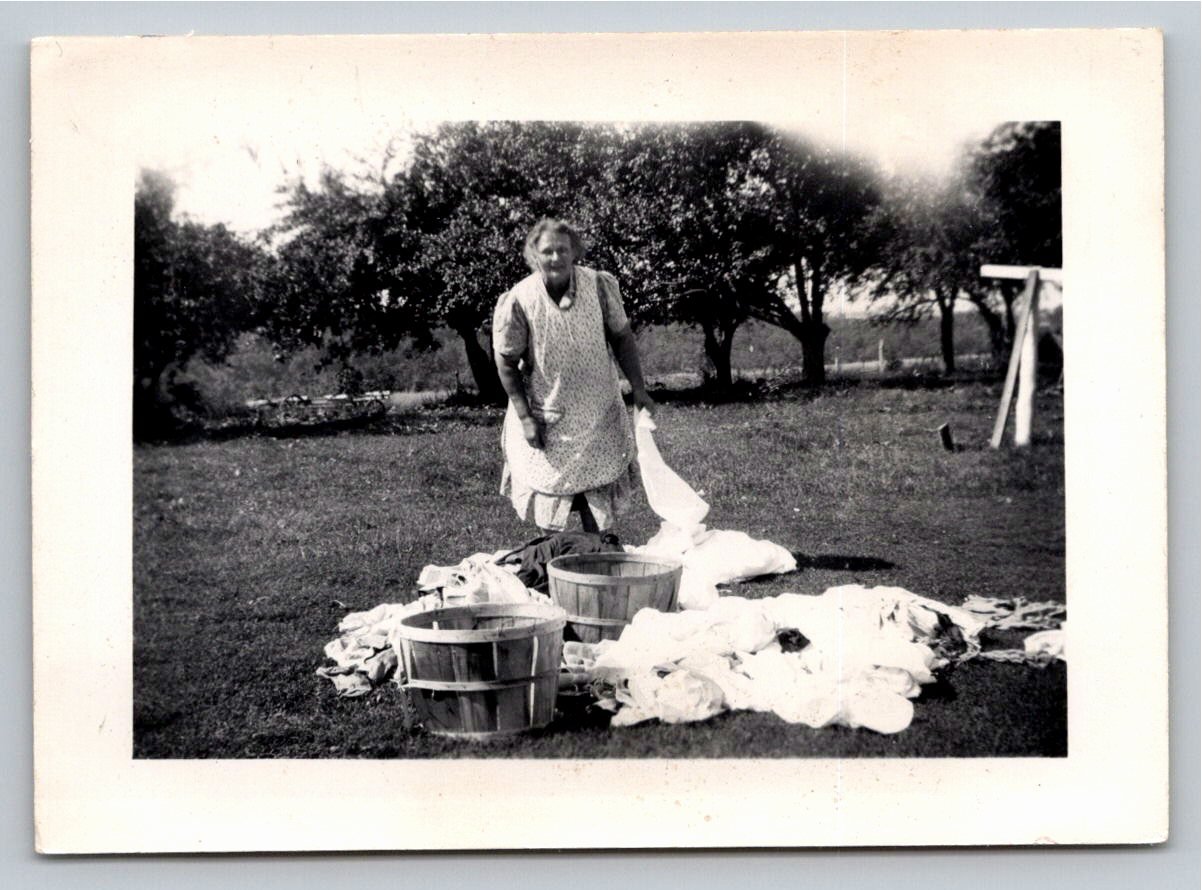
1930s Farm Woman Doing Wash Day Laundry Yard Snapshot Photo
📸 Click any thumbnail to inspect Front, Back & Angles (2 Photos)
🔗 Embed / Cite This Archival Image (Free with Attribution)Get HTML Code
© USA RESELL. Bloggers, historians, and website owners may embed this image for free by copying the HTML code below (which includes the required credit link back to this page):
USA RESELL is a living historical archive. Because original artifacts are one-of-a-kind and source records change rapidly, use the button above to check live marketplace availability or locate surviving examples. As an eBay Partner, we may earn a commission on qualifying purchases.
Item Specifications
- City: Unspecified
- Country: United States
- Era: 1930-1939
- Subject: Women Doing Laundry Rural Domestic Life Farm Chores
- Theme: Americana Domestic and Family Life Agriculture
- Year of Production: circa 1935
- Category: Vintage Photography
- Format / Type: Snapshots
Historical Context & Overview
A Candid Glimpse into Depression-Era Wash Day
This authentic vernacular photograph presents an intimate and unvarnished window into the domestic rhythm of rural American life during the mid-1930s. The composition centers on a mature farm woman standing in the middle of a sun-dappled yard, surrounded by the natural backdrop of orchard fruit trees and a distant clothesline post. Spread across the grass before her is a sprawling bounty of freshly laundered linens, punctuated by two sturdy, slatted wooden bushel baskets used to haul the damp textiles. Wearing a traditional patterned house dress shielded by a full apron, she pauses mid-motion with a white cloth in hand, offering a direct, candid gaze toward the camera lens.
Conducting laundry outdoors was a widespread and practical tradition for American farming families throughout the early twentieth century. During the warmer spring and summer months, boiling water inside a farmhouse kitchen created stifling, unbearable indoor temperatures on wood-burning cookstoves. Homemakers frequently moved wash kettles, galvanized tubs, and manual wringers into the shade of the yard to take advantage of natural breezes and direct sunshine for drying. This snapshot freezes that exact homestead routine in time, offering collectors a striking example of unposed, documentary-style rural Americana.
The Physical Rigors of Homemaking Before Electrification
Dating to circa 1935, this image dates from an era when modern domestic conveniences were still largely out of reach for rural homesteads. Before the widespread expansion of the Rural Electrification Administration, farm wash day—often referred to universally as "Blue Monday"—required grueling physical endurance. Water had to be drawn by hand from outdoor pumps or wells, hauled by the bucketful, heated over open fires or outdoor stoves, and agitated manually. Doing the family wash was easily one of the most physically demanding chores of the week, requiring hours of heavy lifting and tireless manual labor.
The scene also provides fascinating visual documentation of early agricultural and domestic tools. The prominent wooden bushel baskets resting in the grass were common utilitarian fixtures on rural properties, typically employed for harvesting apples, potatoes, and vegetables, but frequently repurposed on wash days to transport heavy loads of wet linens out to the clotheslines. The subject's calico print working dress and sturdy apron reflect the thrifty, resilient ethos of Great Depression-era homemakers who maintained both intensive domestic households and family agricultural operations with quiet fortitude.
Physical Specifications, Darkroom Markings, and Condition
This original black-and-white snapshot measures approximately 3.7 by 2.7 inches and was developed on authentic period photographic paper with a standard glossy surface. Produced using traditional gelatin-silver print methods, the photograph retains pleasing contrast, deep blacks, and balanced midtones that effectively highlight the bright sunlight filtering through the orchard trees. The reverse side is entirely blank, featuring only an original stamped darkroom processing code reading "A73" in the lower corner, identifying the print run from an era when film was processed in local commercial developer batches.
Preserved in very good vintage condition, the snapshot exhibits crisp central focus and well-defined borders. Authentic signs of age are gentle and unobtrusive, consisting of subtle edge toning and minor surface handling marks consistent with genuine 1930s family photographic prints. For enthusiasts of vernacular photography, women's social history, and Great Depression-era domestic culture, this captivating image stands as an enduring, authentic testament to the quiet perseverance of twentieth-century American farm women.