1932 Cedar Breaks Utah Canyon Landscape Vintage Photograph
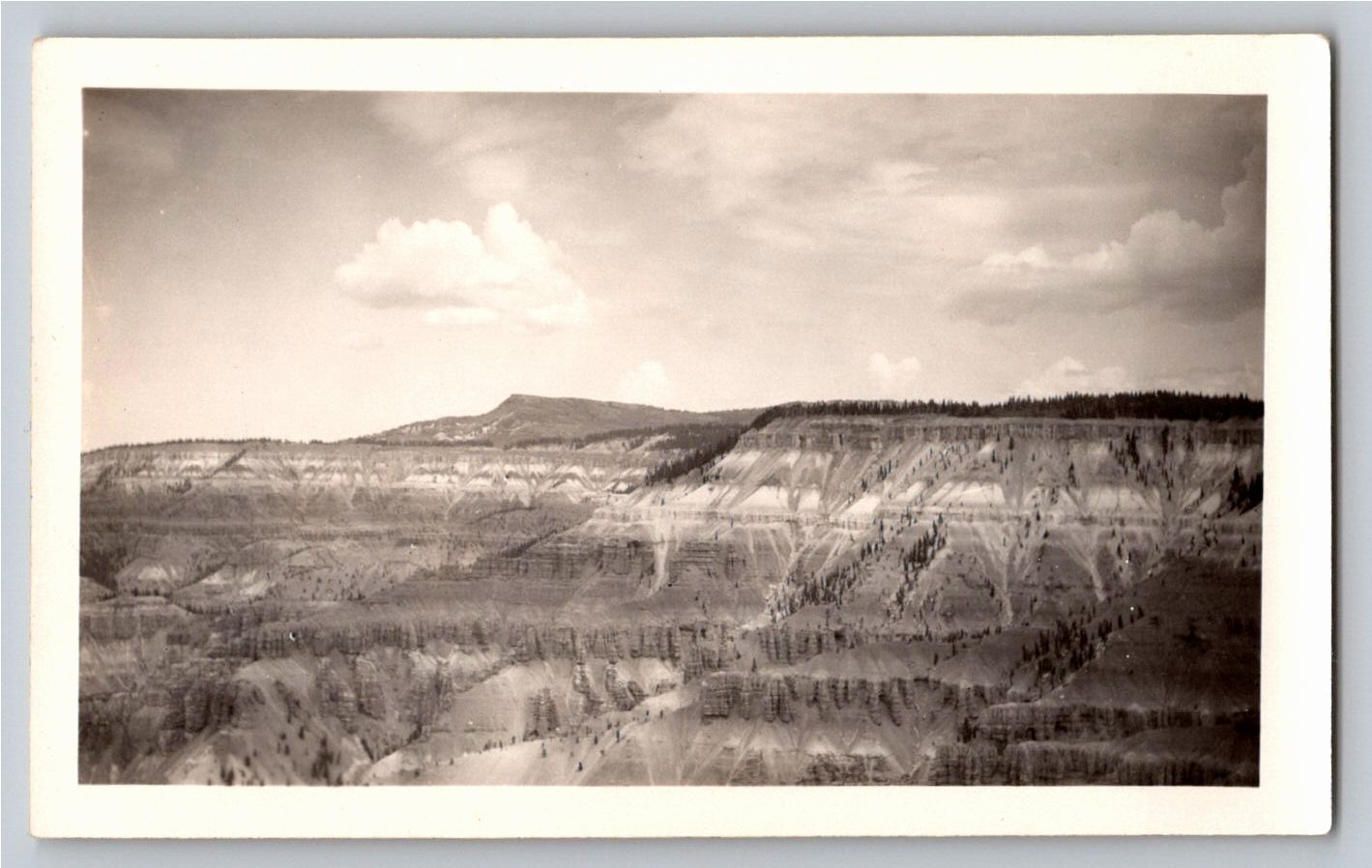
📸 Click any thumbnail to inspect Front, Back & Angles (2 Photos)
🔗 Embed / Cite This Archival Image (Free with Attribution)Get HTML Code
© USA RESELL. Bloggers, historians, and website owners may embed this image for free by copying the HTML code below (which includes the required credit link back to this page):
USA RESELL is a living historical archive. Because original artifacts are one-of-a-kind and source records change rapidly, use the button above to check live marketplace availability or locate surviving examples. As an eBay Partner, we may earn a commission on qualifying purchases.
Item Specifications
- City: Unspecified
- State: Utah
- Country: United States
- Era: Interwar (1918-1939)
- Subject: Cedar Breaks Canyons Geological Formations Landscape
- Theme: Americana Travel National Parks Topography
- Category: Vintage Photography
- Format / Type: Snapshots
Historical Context & Overview
Visual & Historical Overview of Cedar Breaks
Captured in the high plateau country of southern Utah during the late summer of 1932, this authentic vintage photograph frames the sweeping geological amphitheater known today as Cedar Breaks. Taken from an elevated vantage point along the rim, the composition reveals layered sedimentary rock strata, eroded cliff faces, and delicate spires descending into the canyon basin. Dense bands of subalpine forest crown the highest ridges, providing a dark, organic counterpoint to the pale, calcified bands of stone illuminated beneath a bright sky dotted with drifting clouds.
The photograph stands as an evocative artifact of Interwar Americana and early automotive tourism in the American West. Prior to the widespread paving of highland desert routes, venturing into southern Utah’s high plateaus demanded deliberate planning and endurance. This snapshot reflects the quintessential early twentieth-century road traveler’s eye, capturing the raw, untouched topography of the Markagunt Plateau just before the site became an officially designated tourist corridor under federal oversight.
Deeper History, Inscription, and Pre-Monument Topography
Cedar Breaks was officially proclaimed a National Monument by President Franklin D. Roosevelt on August 22, 1933, making this August 25, 1932 snapshot a rare visual record from precisely one year prior to federal protection. At an elevation exceeding 10,000 feet, the natural amphitheater drops over 2,000 feet into the Pink Cliffs formation of the Claron Formation. While indigenous Southern Paiute communities historically referred to the dramatic formation as ku-ung-wic (meaning "circle of painted cliffs"), early Euro-American settlers misidentified the surrounding juniper trees as cedars and termed the steep badlands "breaks," giving rise to the geographic name inscribed on this print.
The reverse side of the photographic print carries valuable period documentation penned in dark blue ink. The traveler carefully recorded: "CEDER BREAKS. UTAH. Aug. 25, 1932. 25-32- 100- N.W. - 1:30." These meticulous field notes offer extraordinary context, indicating the date, the directional orientation (facing northwest), the time of afternoon light (1:30 PM), and exposure settings (f/32 at 1/100 of a second). In the lower right corner, a subtle stamped developer sequence number "30" confirms commercial photofinishing typical of amateur roll film processing during the Great Depression era.
Physical Attributes, Preservation, and Collector Value
Printed on classic medium-weight paper stock, this original gelatin silver snapshot measures approximately 4.4 by 2.7 inches. It retains the clean, unbordered wide margins characteristic of amateur darkroom contact prints and commercial photo envelopes from the early 1930s. The tonal range remains remarkably well balanced, presenting rich middle grays, sharp dark evergreen silhouettes along the ridge, and clear separation across the striated limestone and sandstone ledges.
The photograph survives in superb vintage condition. The photographic emulsion exhibits a smooth semi-gloss sheen without heavy silvering, tears, or creasing. The perimeter edges display only gentle age toning consistent with authentic Interwar paper artifacts, with no traces of destructive album glue, mounting hinges, or tape residue on the reverse. For collectors of National Parks history, Western Americana, and vintage landscape photography, this piece offers an impeccably dated and documented snapshot of an American natural wonder on the cusp of national recognition.