1940s African American Woman in Vintage Automobile Photo
📸 Click any thumbnail to inspect Front, Back & Angles (2 Photos)
🔗 Embed / Cite This Archival Image (Free with Attribution)Get HTML Code
© USA RESELL. Bloggers, historians, and website owners may embed this image for free by copying the HTML code below (which includes the required credit link back to this page):
USA RESELL is a living historical archive. Because original artifacts are one-of-a-kind and source records change rapidly, use the button above to check live marketplace availability or locate surviving examples. As an eBay Partner, we may earn a commission on qualifying purchases.
Item Specifications
- City: Unspecified
- Country: United States
- Era: 1940s
- Subject: African American Woman Automobile Black Americana
- Theme: Americana Domestic and Family Life Transportation Social History
- Year of Production: 1940
- Category: Vintage Photography
- Format / Type: Vintage Photographs
Historical Context & Overview
Visual & Historical Overview of the Mid-Century Candid Portrait
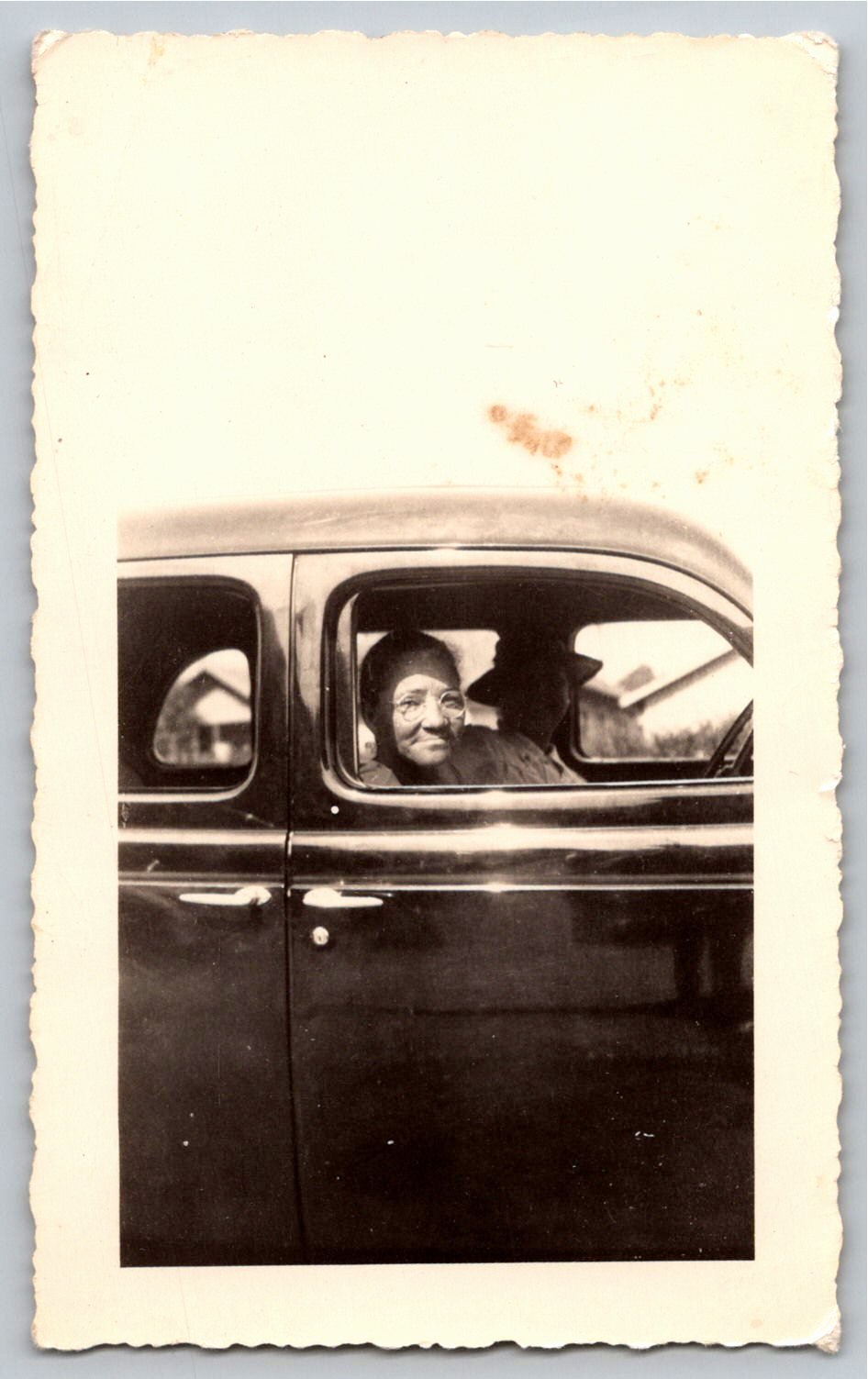
This original vintage snapshot presents a striking and intimate glimpse of mid-20th-century American life. Positioned within the passenger cabin of a dark late-1930s or early-1940s sedan, an older African American woman peers directly outward toward the viewer. Wearing traditional round wire-rimmed spectacles, her expression conveys a quiet composure and gentle warmth. Beside her sits a companion silhouetted in soft shadow, crowned with a classic fedora hat. The framing of the car window and polished door panel naturally isolates the subjects, creating a portrait that feels spontaneous yet remarkably balanced.
In the background, hints of neighborhood residential architecture and bright sky suggest a warm afternoon drive. The vehicle itself—with its distinct door handles, rounded roofline, and robust steel body panels—serves as both setting and historical anchor. Candid automotive photography from this era provides a rare window into vernacular life, highlighting moments of everyday travel, leisure, and personal connection that frequently eluded formal studio sessions.
Automotive Mobility and African American Social History
During the 1930s and 1940s, automobile ownership was fundamentally intertwined with personal autonomy and mobility for African American families. In an era marked by Jim Crow legislation, segregated public transit, and unpredictable travel conditions, owning a private vehicle offered vital independence, dignity, and safety. Personal cars allowed travelers to navigate long journeys while bypassing the humiliations of segregated railway cars and waiting rooms, giving rise to essential travel guides and close-knit cross-country networks.
Snapshots capturing authentic moments of Black vehicle ownership and domestic routine are invaluable cultural documents. Unlike posed commercial imagery or newspaper photojournalism, vernacular artifacts celebrate genuine family pride, community accomplishment, and leisure. The subtle interplay between the stylish fedora-wearing driver and the matriarch gazing from the window speaks volumes about mid-century familial bonds and the quiet triumphs of everyday mobility.
Physical Artifact Details, Condition, and Archival Provenance
Physically, this authentic gelatin-silver photograph measures approximately 2.9 by 4.7 inches and is distinguished by delicate deckled (scalloped) borders characteristic of mid-century commercial photofinishing. The reverse of the print is unwritten except for a distinct mechanical laboratory processing stamp reading "2 5 9 K", reflecting standard amateur photo-finishing practices of the 1940s. The photographic surface retains rich tonal variation, featuring deep blacks in the automobile lacquer and luminous highlights along the car's exterior frame.
The print remains in good vintage condition. A faint area of natural age toning and foxing is visible along the upper white margin, though it remains completely separate from the primary subject and central composition. With sharp facial detail and authentic period charm, this vernacular photograph stands as a poignant piece of American social history and an exceptional acquisition for collectors of historical photography, automotive culture, and African American heritage.