1944 WWII US Soldier & Dog Mascot Quonset Hut Photo - Snapshots
📸 Click any thumbnail to inspect Front, Back & Angles (2 Photos)
🔗 Embed / Cite This Archival Image (Free with Attribution)Get HTML Code
© USA RESELL. Bloggers, historians, and website owners may embed this image for free by copying the HTML code below (which includes the required credit link back to this page):
USA RESELL is a living historical archive. Because original artifacts are one-of-a-kind and source records change rapidly, use the button above to check live marketplace availability or locate surviving examples. As an eBay Partner, we may earn a commission on qualifying purchases.
Item Specifications
- City: Unspecified
- Country: United States
- Era: WWII (1939-1945)
- Subject: Military Mascot Soldier Dog
- Theme: Militaria Americana Domestic and Family Life
- Year of Production: 1944
- Category: Vintage Photography
- Format / Type: Snapshots
Historical Context & Overview
Wartime Companionship: A WWII US Soldier and Camp Mascot
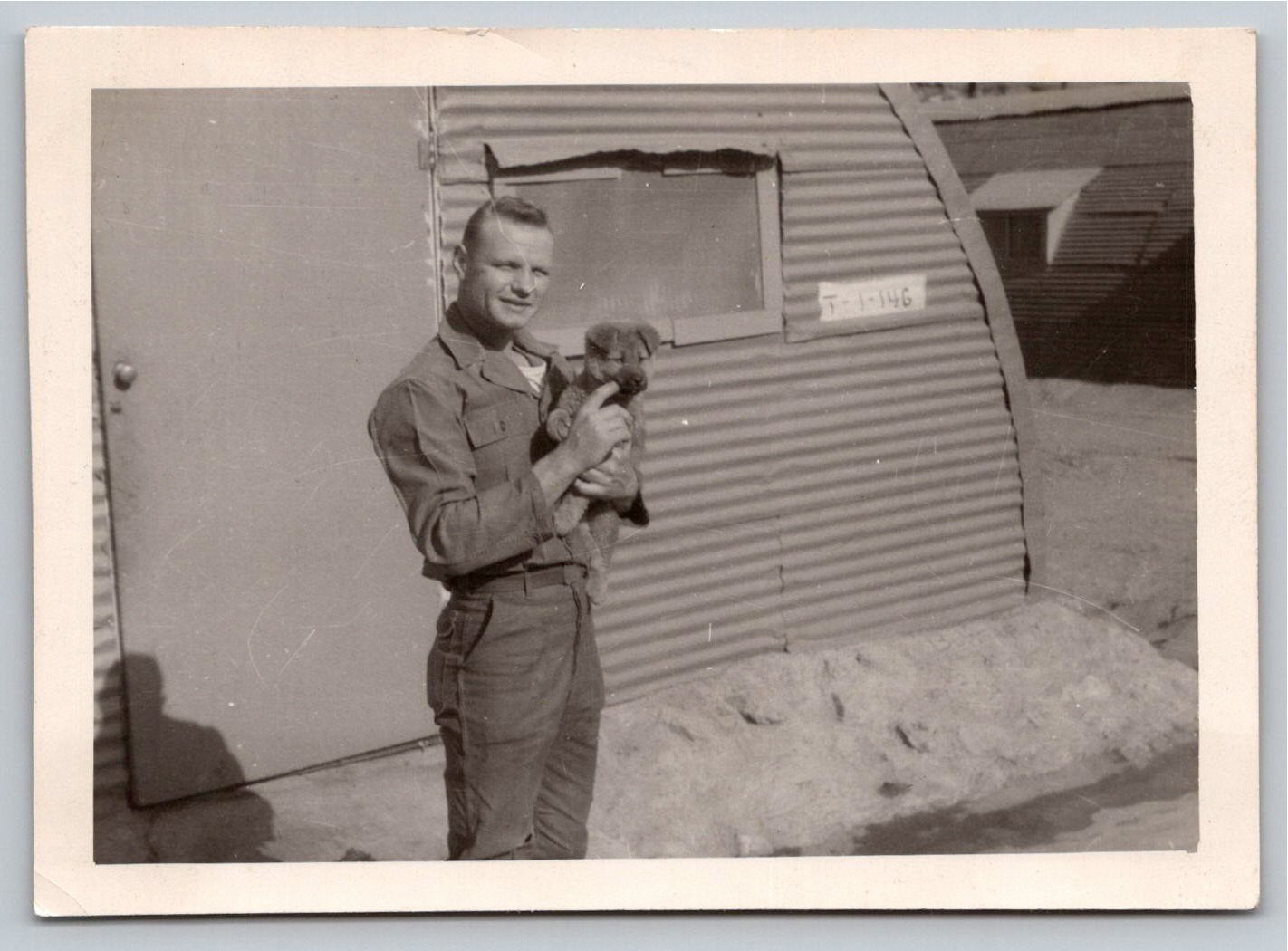
This original black-and-white gelatin silver snapshot offers an intimate glance into daily military life during the Second World War. Dated to circa 1944, the photograph depicts an American serviceman standing proudly in his field uniform while cradling a young puppy mascot close to his chest. Set against the distinct background of a military base, the contrast between the rigid structure of military duty and the gentle warmth of holding a camp mascot encapsulates the human side of wartime service.
The soldier stands in front of a classic corrugated steel Quonset hut, marked clearly with the tactical building designation "T-1-146." These prefabricated structures were synonymous with World War II military encampments, serving as living quarters, administrative offices, and medical stations across both domestic training bases and overseas theaters. The clear focal depth highlights the fine details of the soldier's field shirt and trousers alongside the distinct texture of the arched metal shelter.
The Role of Mascot Animals in Military Camp Life
Throughout World War II, stray dogs and local puppies frequently found their way onto American military posts. Troops routinely adopted these animals as unit mascots, providing servicemen with much-needed emotional support, camaraderie, and relief from the monotony and stress of active duty. Mascots became vital symbols of home, boosting morale and fostering a sense of shared responsibility among squad members living in communal barracks.
Informal candid snapshots like this one were taken by soldiers using personal portable cameras to preserve memories of non-combat moments. Unlike official military photography produced for press releases or tactical documentation, these personal snapshots capture genuine emotion and unscripted life within the camps. The gentle interaction between the young GI and his canine companion illustrates how domestic affection persisted even amidst global conflict.
Physical Attributes, Archival Condition, and Collector Value
Measuring approximately 3.2 by 4.4 inches, this authentic historical photograph is printed on classic matte paper stock using traditional gelatin-silver chemistry. The image quality remains sharp, exhibiting strong tonal contrast, deep shadow details, and clean highlight preservation across the serviceman's expression and the textured coat of the puppy.
The reverse side presents a clean, unposted photographic paper back featuring natural light age toning and a single light pencil marking, confirming its status as an original personal snapshot rather than a commercial photograph print. Free from major creases or tear damage, this piece represents a compelling acquisition for collectors of WWII Militaria, historical canine photography, and social history artifacts of the 1940s home front and overseas bases.