1940s Outdoor Hair Washing Enamel Basin Vernacular Photo
📸 Click any thumbnail to inspect Front, Back & Angles (2 Photos)
🔗 Embed / Cite This Archival Image (Free with Attribution)Get HTML Code
© USA RESELL. Bloggers, historians, and website owners may embed this image for free by copying the HTML code below (which includes the required credit link back to this page):
USA RESELL is a living historical archive. Because original artifacts are one-of-a-kind and source records change rapidly, use the button above to check live marketplace availability or locate surviving examples. As an eBay Partner, we may earn a commission on qualifying purchases.
Item Specifications
- City: Unspecified
- Country: United States
- Era: Mid-Century
- Subject: Hair Washing Domestic Life Hygiene
- Theme: Americana Domestic and Family Life
- Year of Production: circa 1945
- Category: Vintage Photography
- Format / Type: Snapshots
Historical Context & Overview
Visual Composition and Everyday Domestic Life
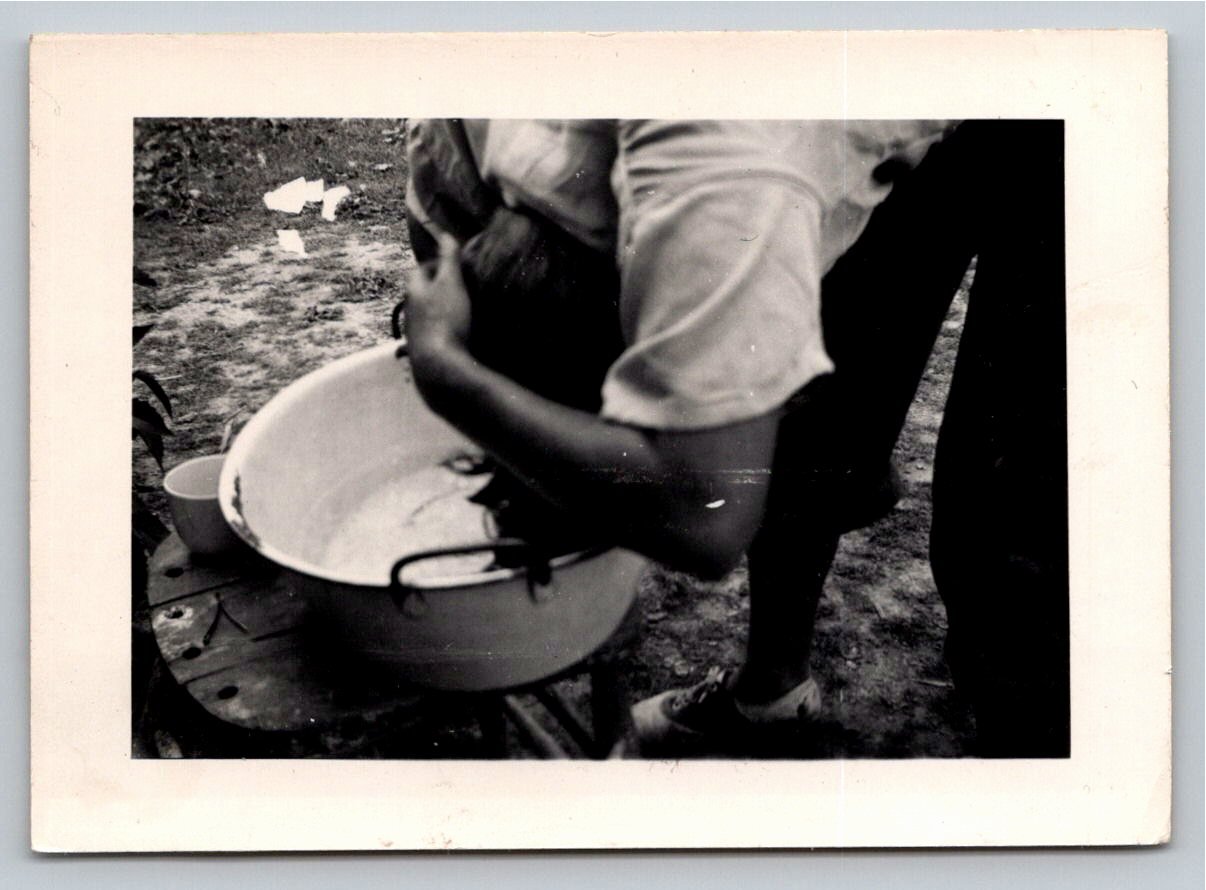
This striking mid-1940s vernacular photograph offers an unvarnished glimpse into rural or open-air domestic routines of mid-century America. The central composition focuses on an individual bent forward from the waist, vigorously tending to their hair over a generous porcelain-enameled washbasin. Resting on a sturdy, weathered wooden circular stool, the wide basin catches water droplets amidst an unpaved outdoor yard or rustic camp environment. Beside the wash basin, a simple ceramic cup or mug sits balanced on the stool's edge, ready for dipping and rinsing. The subject wears casual period clothing and two-tone lace-up shoes, emphasizing the practical, unposed reality of everyday personal grooming before the widespread ubiquity of modern indoor plumbing fixtures in every corner of the country.
The photographer chose an intimate, close-up perspective that prioritizes action and texture over conventional portraiture. Sunlight filters through the scene, illuminating the crisp fabric of the subject's shirt and throwing deep shadows across the folds of dark trousers and the ground below. By eliminating extraneous background distractions, the image captures a timeless chore with remarkable clarity. Such candid glimpses of personal hygiene are exceptionally scarce in vernacular photography collections, where family members usually posed stiffly in Sunday best rather than immortalizing routine washday rituals.
Historical Context: Hygiene and Home Routines in the 1940s
During the Second World War and immediate postwar period, open-air hair washing remained a practical tradition across many American rural communities, summer cottages, and outdoor work camps. Even as urban and suburban developments standardized modern residential bathrooms complete with running hot water, rural electrification and plumbing modernization were gradual processes that extended well through the mid-20th century. Utilizing an enamel metal washpan on the back porch or out in the yard allowed individuals to heat rainwater or well water on a kitchen stove, carrying it outside to take advantage of warm breezes and natural light to dry long hair quickly.
Enamelware vessels were ubiquitous utilitarian staples of the era, prized for their light weight, affordability, and resistance to rust. The accompanying ceramic mug provided a simple ladle system, demonstrating resourceful self-reliance. As a historical document, this candid print illustrates how personal care routines bridged Victorian-era methods of basin washing with modern mid-century casualness. The spontaneous nature of the framing reflects the burgeoning accessibility of personal roll-film cameras, which empowered amateur photographers to record unscripted moments of familial daily living.
Material Properties, Photographic Technique, and Collector Value
The original image is rendered as a classic gelatin-silver print on glossy paper stock, measuring approximately 3.7 by 2.7 inches. Framed by a neat white period margin, the photograph features rich monochromatic tonal values, ranging from deep charcoal blacks in the trousers and footwear to luminous highlights on the bright porcelain rim and wet hair. On the reverse, the smooth white backing is uncaptioned, preserved with only a crisp commercial lab finishing stamp reading "A73" in the lower right quadrant. Such alphanumeric stamps were standard diagnostic marks applied by regional photo processing laboratories during the 1940s and early 1950s to track amateur film rolls through chemical development tanks.
Preserved in very good vintage condition, the photograph displays sharp image definition, robust paper integrity, and clean margins showing only light, natural age-appropriate toning along the perimeter. Without tears, severe creasing, or distracting emulsion abrasions, the print remains structurally sound. For collectors of vernacular photography, vintage Americana, and mid-century social history, this snapshot stands out as an exceptional, highly evocative artifact of authentic everyday life.